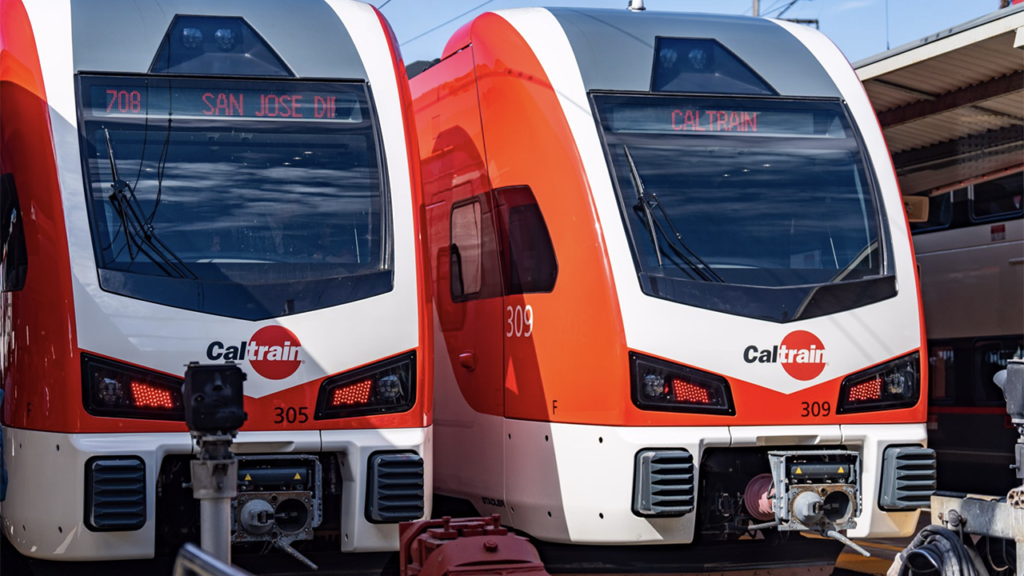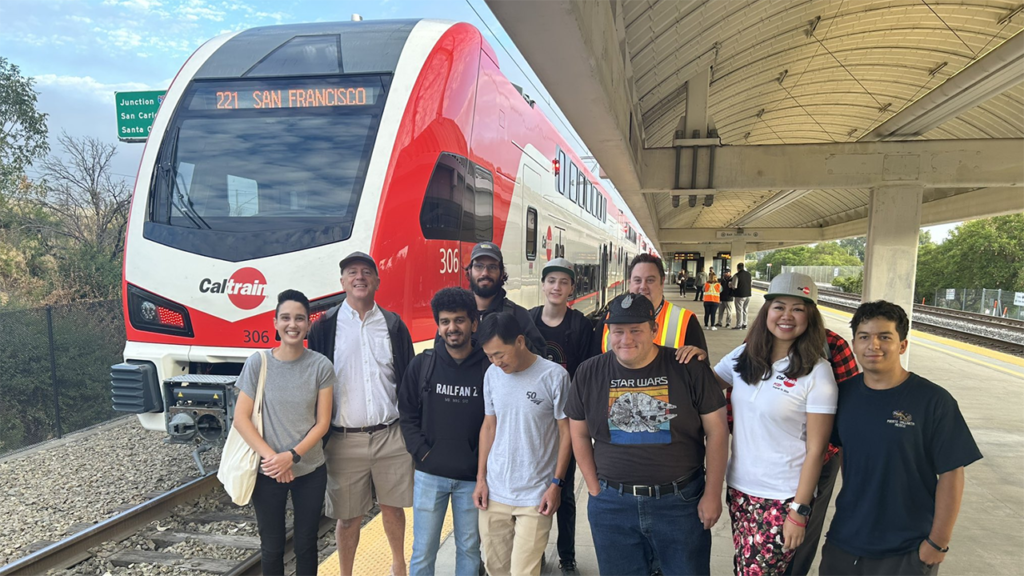
Ahead of next month’s launch of fully electrified service between San Francisco and San Jose, Calif., Caltrain on Aug. 11 began a phased roll-out of its Stadler Rail-built KISS bilevel EMUs (electric multiple-units).
Two trains entered revenue service, according to Fox 2 KTVU. Caltrain spokesman Dan Lieberman told SFGATE that the agency did not announce where the EMUs would run “as not to crowd them for safety reasons or displace regular riders … Moving forward, until the official launch of the entire fleet next month, Lieberman said Caltrain is ‘introducing more electric trains every week.’”
Once all 23 new trains are in service on Sept. 21, Caltrain said it will be able to run faster and more frequent service, with 16 stations receiving trains every 15 to 20 minutes during peak hours, compared with seven stations today; weekend trains arriving twice hourly vs. hourly today; and express service from San Francisco to San Jose in under an hour, compared with 65-plus minutes today. Additionally, the new trains will offer digital onboard displays, customer-facing Wi-Fi, power outlets at each forward-facing seat, energy-efficient lighting, baby changing tables in restrooms, security cameras, and expanded storage under the cantilevered seats.
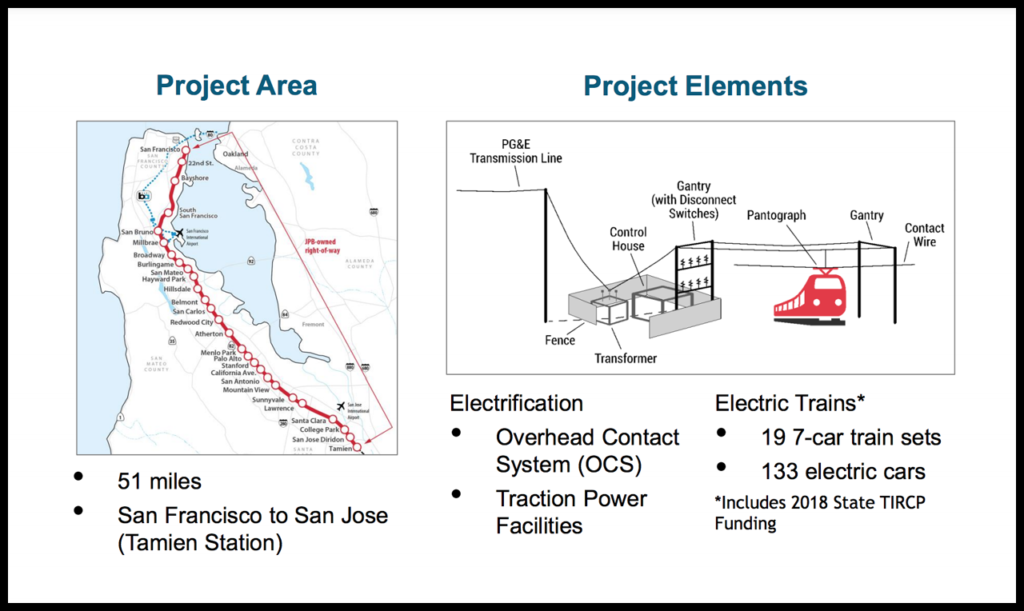
Caltrain’s electrified service is arriving two years later than planned. The commuter railroad’s $2.4 billion Electrification Project is upgrading and electrifying its double-track system from the 4th and King Station in San Francisco to the Tamien Station in San Jose and replacing trains. Caltrain awarded Stadler a $551 million contract to supply 16 six-car EMUs in August 2016 with an option to extend these sets to seven-car trains exercised in December 2018. The 110-mph-capable trainsets were built at the manufacturer’s plant in Salt Lake City, and there are options worth $385 million under the original contract to supply up to 96 additional railcars. The EMUs will replace trains powered by F40 diesel locomotives—approximately 75% of Caltrain’s diesel fleet—which entered service in 1985. Its newer locomotives will be retained to operate the non-electrified Dumbarton extension and services south of Tamien.
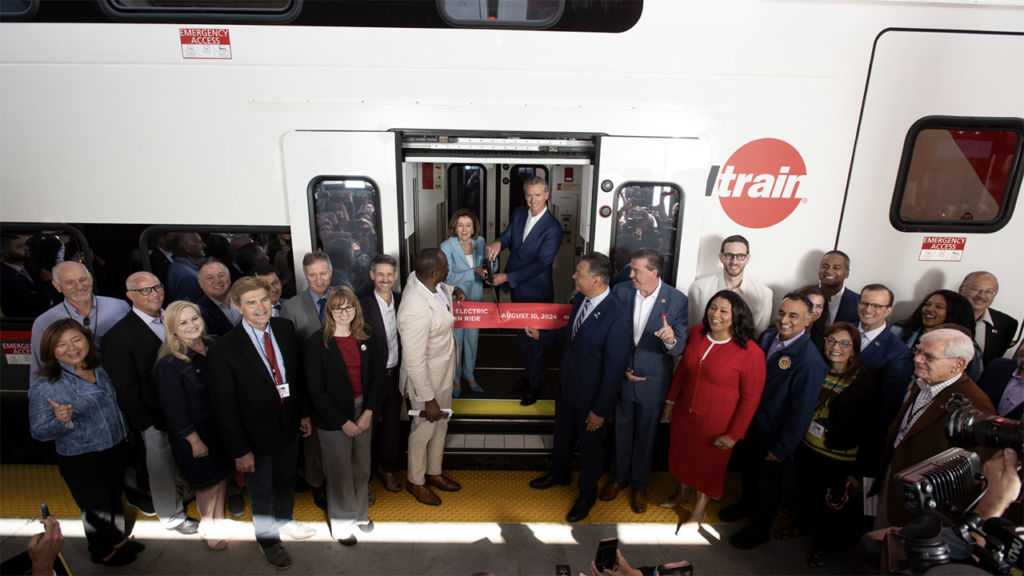
The day before Caltrain put into revenue service its first new EMUs, the railroad was joined by federal, state, and local officials, as well as transportation, business and labor leaders to celebrate. It hosted a “VIP” invitation-only event, including a 30-minute round-trip train ride starting in San Francisco. The event followed Caltrain’s third public tour of its new EMUs, which was held in May.
“Safe, affordable and accessible public transit is key to San Francisco’s economic success and to saving the planet from the climate crisis,” said House Speaker Emerita Nancy Pelosi, who was part of the Aug. 10 VIP event. “Caltrain electrification means shorter commutes, cleaner air and good-paying jobs in the Bay Area and beyond. It was my great pleasure to join so many leaders for the first ride on Caltrain’s new electric fleet.”
“High-speed rail linked to an electrified Caltrain will not just get Californians where they’re going faster, it’s connecting communities and driving economic growth,” said California Gov. Gavin Newsom, another event attendee. “The completed Caltrain project is an integral part of high-speed rail and the story California is telling about clean transportation. And Californians are already seeing the results for themselves as we electrify Caltrain, finish structures, lay track, design and build stations, and buy trains. We’re making rail real in California.”
“The electrification of our railroad has been a goal for decades, and it has taken a tremendous effort to make it happen,” Caltrain Board Chair Dev Davis said. “I am delighted for the public to finally see the future of Caltrain for themselves, and I invite everyone to get on board and enjoy the next generation of public transit.”
“We’re thrilled to celebrate this historic milestone with Caltrain as they operate their first passenger train on this innovative commuter rail system,” added Mark Konchar, Balfour Beatty US Civils President and Managing Director of US Rail Operations. “Our teammates’ and industry partners’ dedication to constructing the project’s OCS and rail infrastructure has been paramount in delivering the corridor’s groundbreaking technology, converting diesel to electric power, setting a new standard for sustainable public transit. We’re honored to have contributed to the Caltrain Electrification project that will significantly enhance regional mobility and reduce environmental impact, showcasing the power of partnership and innovation in modern infrastructure development.”
“We are thrilled to see these state-of-the-art electric trains enter service for Caltrain,” noted Martin Ritter, CEO of Stadler US Inc., and one of Railway Age’s 25 “Fast Trackers” under 40 honorees for 2024. “Since our partnership began in 2017, it has been a pleasure to work with such a forward-thinking organization. Caltrain stands out as a true pioneer in the transit industry, setting a new standard by fully electrifying and modernizing their infrastructure. This makes them a model for transit agencies nationwide. As the vehicle provider, we are honored to contribute to this significant modernization project. We are confident that these new trains will enhance the commuting experience through Silicon Valley by making it more comfortable, convenient, reliable, faster and, most importantly, emission-free. We extend our heartfelt thanks to Caltrain for their trust in us and look forward to continuing our collaboration with this innovative agency.”