Wabtec
Wabtec on March 13 reporting landing multiple contracts to supply more than 680 pantographs for six major commuter rail and metro projects across India, including Chennai Metro Phase II; Mumbai Metro Lines 4, 5, and 6; Indian Railways’ MEMU (Mainline Electric Multiple Unit) and Vande Bharat Sleeper programs. The pantograph systems, it said, “will improve overall fleet availability for the projects providing more reliable, efficient, and sustainable rail operations.”
Wabtec will manufacture the systems at its Transit facility in Hosur, Tamil Nadu, with deliveries scheduled to begin in late 2026.
“India continues to make substantial investments in modernizing and expanding its commuter rail infrastructure,” said Ajay Mani, Managing Director for Wabtec Transit India. “These orders underscore the trust our customers place in Wabtec and our longstanding commitment to the country’s rail ecosystem. Our proven pantograph technology is designed for modern mobility needs and capable of operating in even the most demanding service conditions.”
Wabtec’s pantograph technology is said to feature “lightweight, high stiffness frames and optimized linkages that ensure stable current collection across varying speeds and overhead equipment conditions.” According to the company, “precision controlled contact force, aerodynamic collector heads, and low-wear carbon strips help reduce arcing and wire wear, improving power collection efficiency.” The pantographs are equipped with “advanced damping for consistent performance,” and meet EN and IEC international rail standards, it noted.
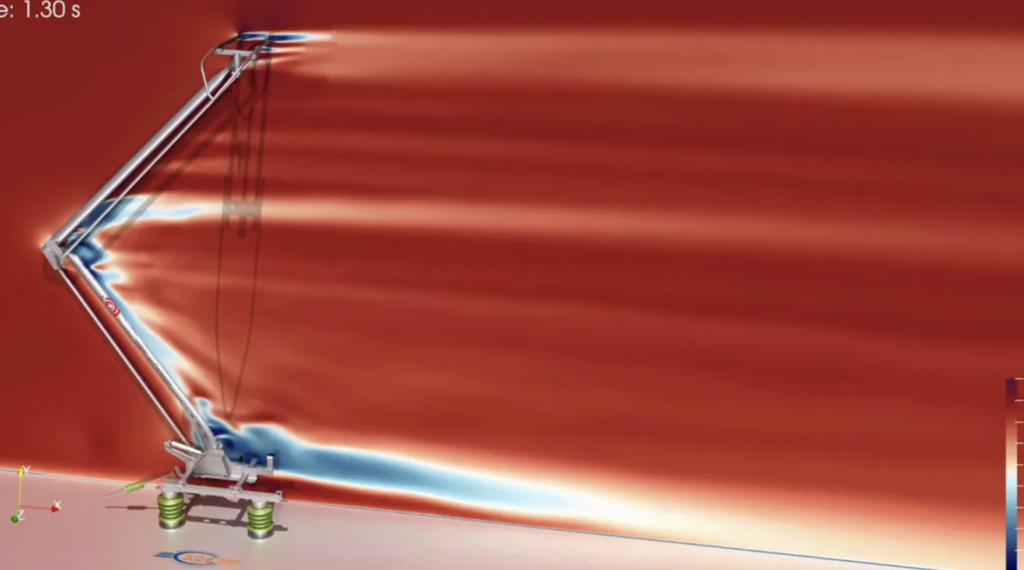
“While the invention of the ‘diamond shaped’ pantograph traces back to John Q. Smith and commuter train travel in the San Francisco Bay of 1903, the perfection of the panto is widely attributed to Wabtec forebear Louis Faiveley,” according to Wabtec. “Not only did he improve upon the diamond style panto with his own enhanced design in the early 1920s, he eventually broke the mold entirely with the invention of the single-arm panto. Faiveley’s step-change design went on to set the world speed record (331 kmh/206 mph) for an electric powered train that same year, 1955, and is the industry standard to this day.”
Wabtec in 2016 acquired a majority stake in Faiveley Transport of France, a manufacturer and supplier of pantographs, as well as products ranging from braking systems and couplers, passenger access systems and platform screen doors, air conditioning, and passenger information systems. It acquired the remaining shares in 2017.
Further Reading:
- Wabtec: ‘Strong’ 4Q25, Full-Year Results
- For CSX, $670MM Power Upgrade Order
- Wabtec Lands $1.2B UP Locomotive Overhaul Order
- CPKC, NS Advance Locomotive Modernizations
- Wabtec Acquires Frauscher
- Wabtec Expanding Brazilian Footprint
- Wabtec Lands $4.2B Kazakhstan Locomotive Contract
- Driving the Future of Rail: A Conversation With Wabtec’s Eric Gebhardt
Alstom
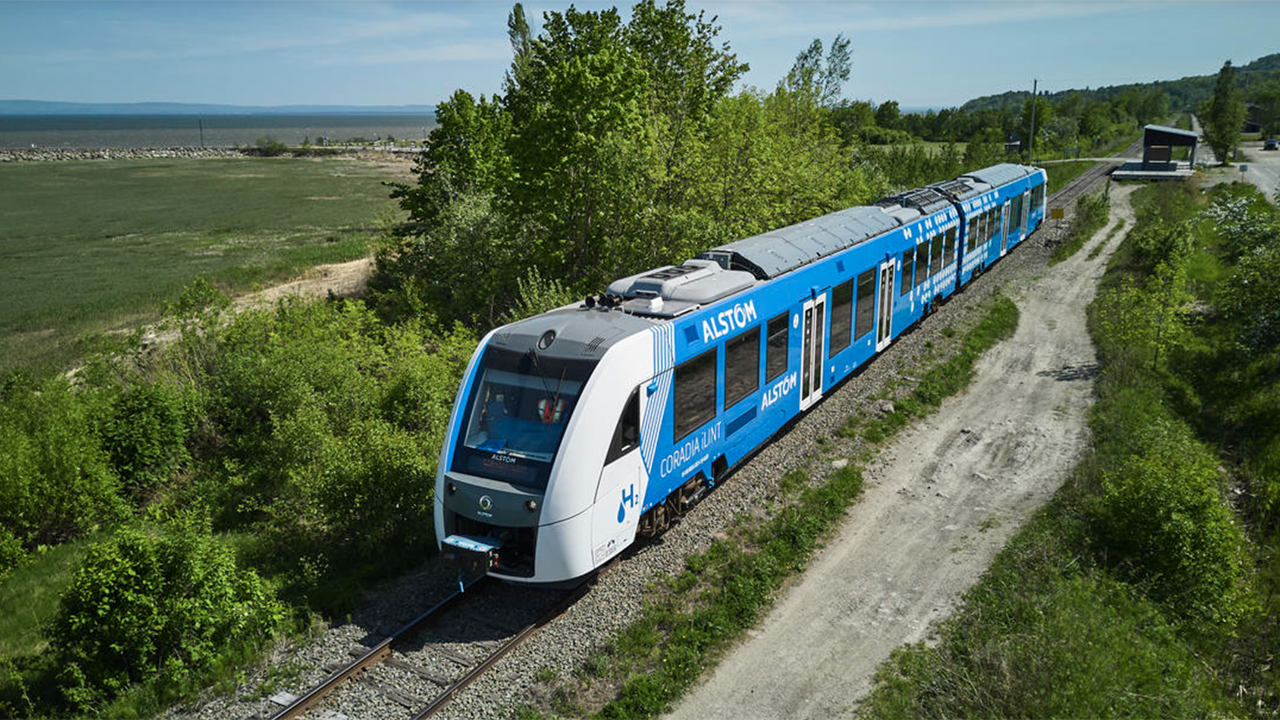
Four Alstom Innovia R APM vehicles began serving riders at Tampa International Airport (TPA) on March 13 as part of a modernization project, according to the manufacturer.
TPA has ordered a total of 16 cars to replace 30-year-old cars, which have logged more than 1 million miles each and were produced by Bombardier Transportation, which Alstom acquired in 2021. The third-generation model is “quieter, easier to maintain, and more energy efficient,” according to Alstom, which noted that interiors feature improved lighting, updated video information screens, and doors with obstacle-detection systems. In addition, Alstom is installing its Urbalis Flo automatic train control system, which it said “allows trains to run more frequently, increasing the system’s capacity and reducing passenger wait times.”
The first four Innovia R vehicles are serving as the Blue shuttles to and from the A and C concourses (known as “airsides”). By the end of the year, the APM connections to three of the airport’s four airsides will be equipped with new vehicles and the new signaling system, according to Alstom. Alstom said it is also building the guideways, signaling system, and vehicles for the future Airside D, which is expected to open in 2028.
All the APM vehicles are being manufactured at Alstom’s plant in West Mifflin, Pa., near the site where the first APMs were developed and tested in the 1960s.
TPA opened in April 1971 with a Bombardier Transportation-made APM system to connect riders from its central terminal to four airsides. Bombardier, and now Alstom, has also maintained the APM system at Tampa since its launch.
“Since 1971 Alstom has worked with the Tampa airport to keep passengers moving swiftly and reliably; some of the cars we’ve provided have logged over 1 million miles,” Alstom America President Michael Keroullé said. “Today we’re proud to celebrate a new milestone in this decades-long partnership, introducing our latest and most advanced APM vehicles into service, designed and manufactured in the United State. This is an important part of our broader commitment to support the improvement of the airport’s shuttle system.”
“TPA’s signature shuttles go back to our opening in 1971, and were the first of their kind at any airport in the world when they debuted,” TIA CEO Michael Stephens said. “Now we are proud to offer another first, with TPA being the first airport in the world to offer these brand-new shuttles coupled with the new technology and operating system that will be guiding them.”
Separately, last May Hartsfield-Jackson Atlanta International Airport took delivery of the first of 29 Innovia APM 300R vehicles from Alstom.
Further Reading:
- Toronto Orders New Subway Train Fleet
- IAM Alstom Members Ratify First Contract
- Mexico Awards $1B Passenger Fleet Contract
- From Expo 86 to Everyday Essential: SkyTrain Marks 40 Years
- Finch West LRT Opens
- Alstom, CTDOT Unveil Commuter Railcar Mockup
- Montreal REM Segment 2 Launches
- NJT Slates $917MM Multilevel I, II Overhaul
Duos

From left to right (front): Gary Fairbank, Staff Director, Motive Power & Equipment Division | Fei Kwong, VP Investor Relations & Corp. Comm., Duos | Jeff Necciai, Chief Technological Officer, Duos Technologies Rail Division | David Fink, Administrator, FRA | Adrian Goldfarb, President, Duos Technologies Rail Division | Kar Gazarov, Deputy Staff Director, Motive Power & Equipment Division. (Courtesy of Duos)
FRA Administrator David Fink and key staffers on March 10 visited the Jacksonville headquarters of Duos, which is described as a developer of “intelligent vision-based solutions using Machine Vision and AI to analyze fast-moving freight, passenger, transit trains, and trucks.”
During the visit, Duos executives demonstrated the company’s Railcar Inspection Portal (RIP®), Mobile Railcar Inspection Portal (m-RIP™), centraco® and other patented technologies that the company said are “designed to enhance rail safety, operational efficiency, and real-time monitoring across the U.S. rail network.”
Administrator Fink and FRA representatives toured the facility and reviewed how Duos’ inspection technologies help railroads detect mechanical defects, identify safety risks, and improve monitoring across freight and passenger rail operations, according to the company.
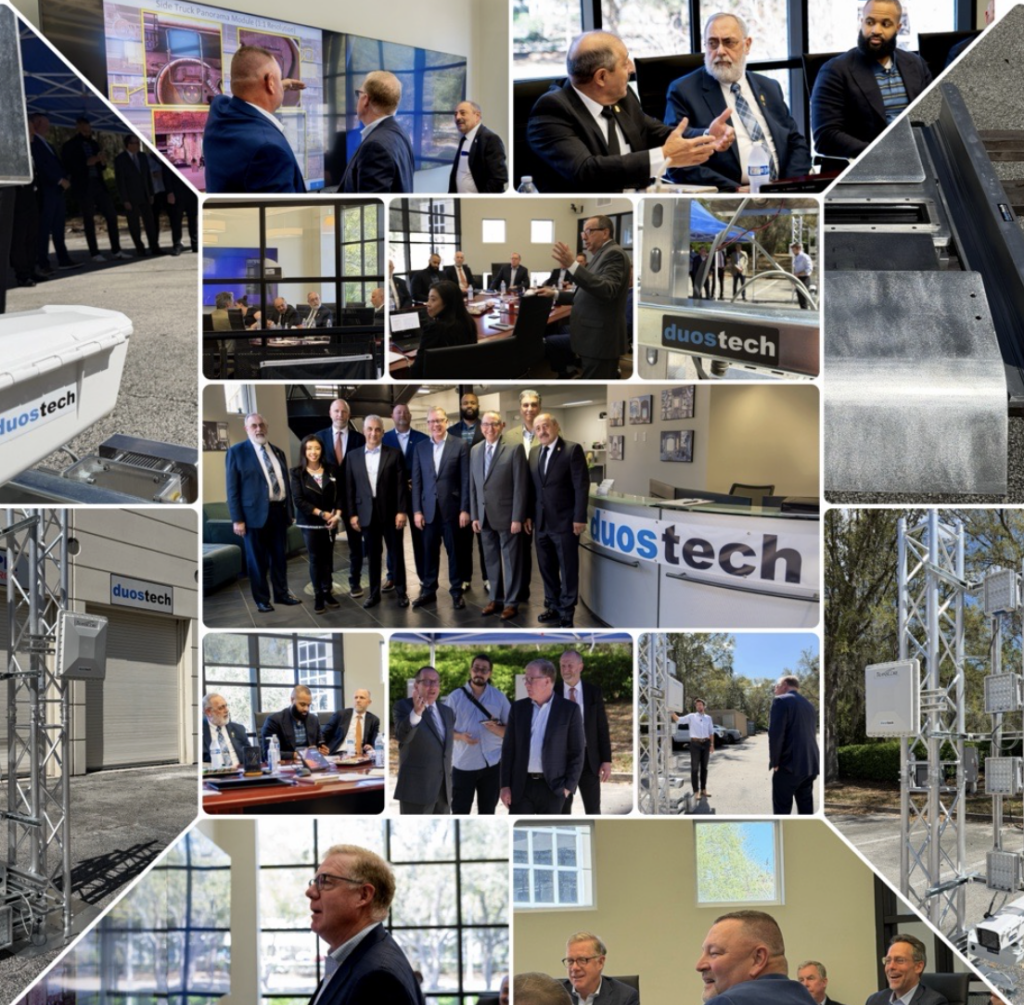
“Hosting Administrator Fink provided an opportunity for us to demonstrate how our RIP can identify potential mechanical issues, significantly enhancing rail safety,” said Adrian Goldfarb, President of Duos Technologies rail subsidiary. “Our technology can inspect every railcar passing through the system at speeds up to 125 mph, and within 60 seconds, alert the operator to potential safety issues, including a potential derailment.”
According to Duos, the visit also “highlighted the importance of collaboration between industry innovators and federal regulators in modernizing rail inspection technologies.” By combining AI-powered inspection and “actionable” intelligent data with real-time analytics, Duos said it supports “the broader mission of the Federal Railroad Administration to improve rail safety, strengthen infrastructure oversight, and promote innovation across the U.S. rail system.”