Railway Age proudly recognizes Union County Industrial Railroad (UCIR), a North Shore Railroad Company affiliate, and Georgia Central Railway (GC), a Genesee & Wyoming subsidiary, as our 2026 Short Line and Regional Railroads of the Year, respectively. Sierra Northern Railway (SERA) has earned Short Line Honorable Mention, and R. J. Corman Railroad Company’s Nashville & Eastern Railroad (NERR) has earned Regional Honorable Mention.
All four small roads will receive specially designed award plaques; UCIR and GC executives will be presented with them at the American Short Line and Regional Railroad Association (ASLRRA) 2026 Conference & Exhibition, to be held April 12-14 at the Minneapolis Convention Center in Minneapolis, Minn.
“Our Honorees and Honorable Mentions are not only achieving growth through strategic investment, a collaborative approach to industrial development, and a commitment to service excellence, but also positioning themselves as technology innovators delivering value to the industry, their partners and customers, and the communities they serve every day,” Railway Age Executive Editor Marybeth Luczak said. “All of us at Railway Age congratulate them on their outstanding achievements and thank all 20-plus finalists who were part of this year’s strong program.”
The four winning railroads share their stories below.
SHORT LINE OF THE YEAR
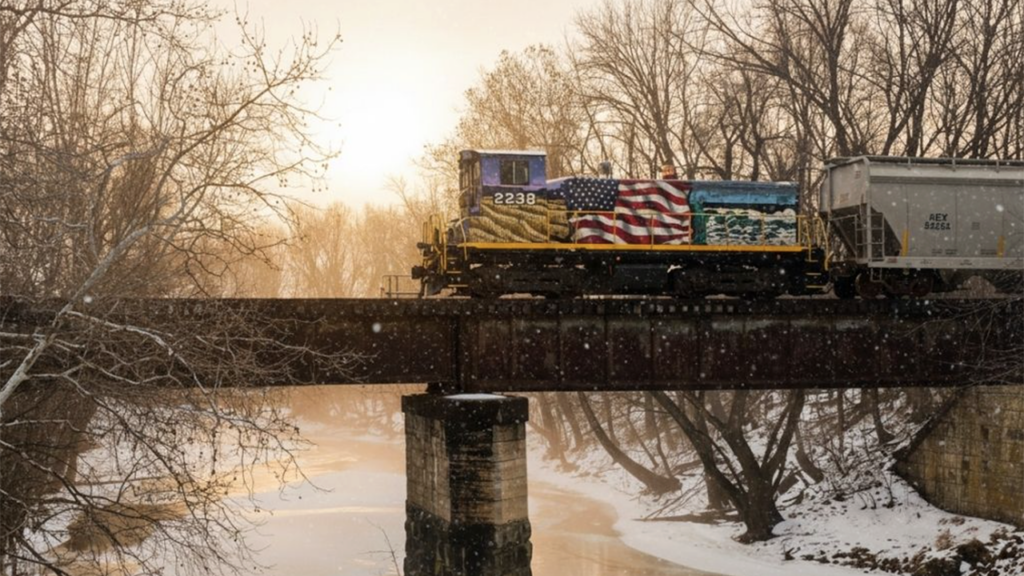
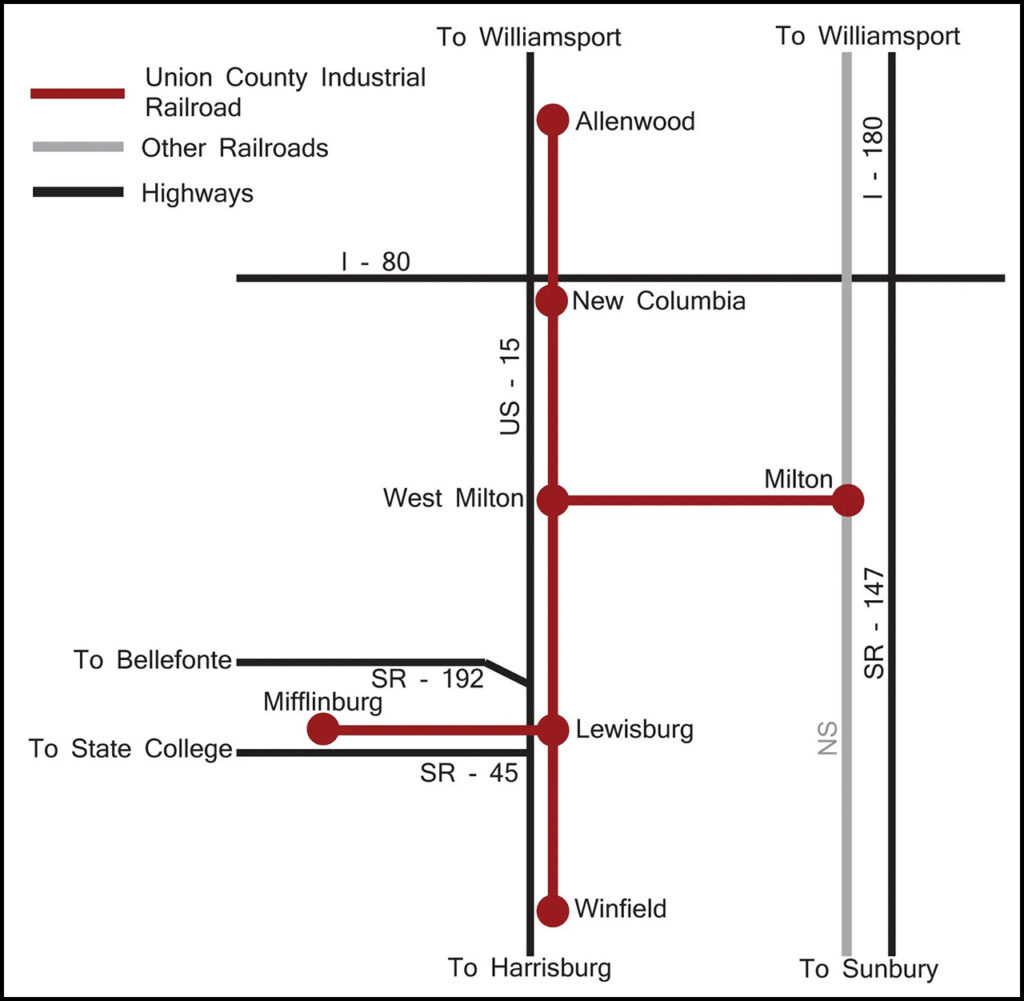
Founded on March 30, 1995, the Pennsylvania-based Union County Industrial Railroad (UCIR) operates 18.2 miles of track owned by three private companies (see map below). The Class III over the past 31 years has grown almost twentyfold—from handling some 200 railcars annually to nearly 4,000 today—and achieved more than 13 consecutive years without an FRA-reportable injury. It serves customers across Milton, West Milton, New Columbia, Winfield, and Allenwood, and interchanges with Norfolk Southern (NS) and Canadian Pacific Kansas City (via haulage) in Northumberland.
UCIR’s success is rooted in focused marketing, innovative operations, and exceptional customer service—from the office to the field—delivered by Operations, Customer Logistics, Marketing, and Maintenance of Way teams alike.
Growth Through Strategic Partnerships
UCIR has experienced growth in both infrastructure and customer base over the past 15 years. The railroad constructed three new sidetracks and runarounds, including a 1,700-foot runaround (installed in 2020) and two additional runarounds (completed last year). Since 2017, it has invested more than $8 million in infrastructure.
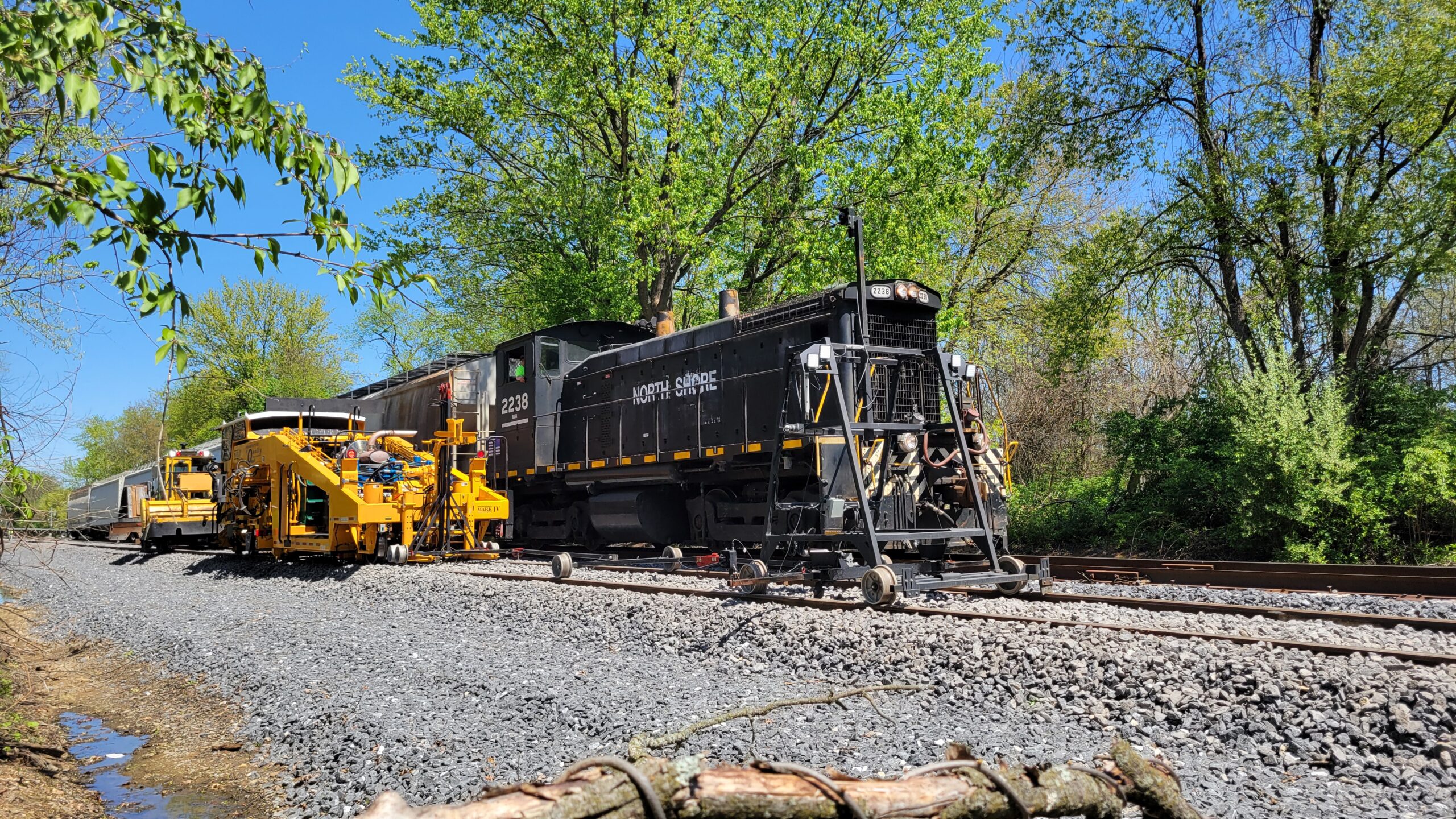
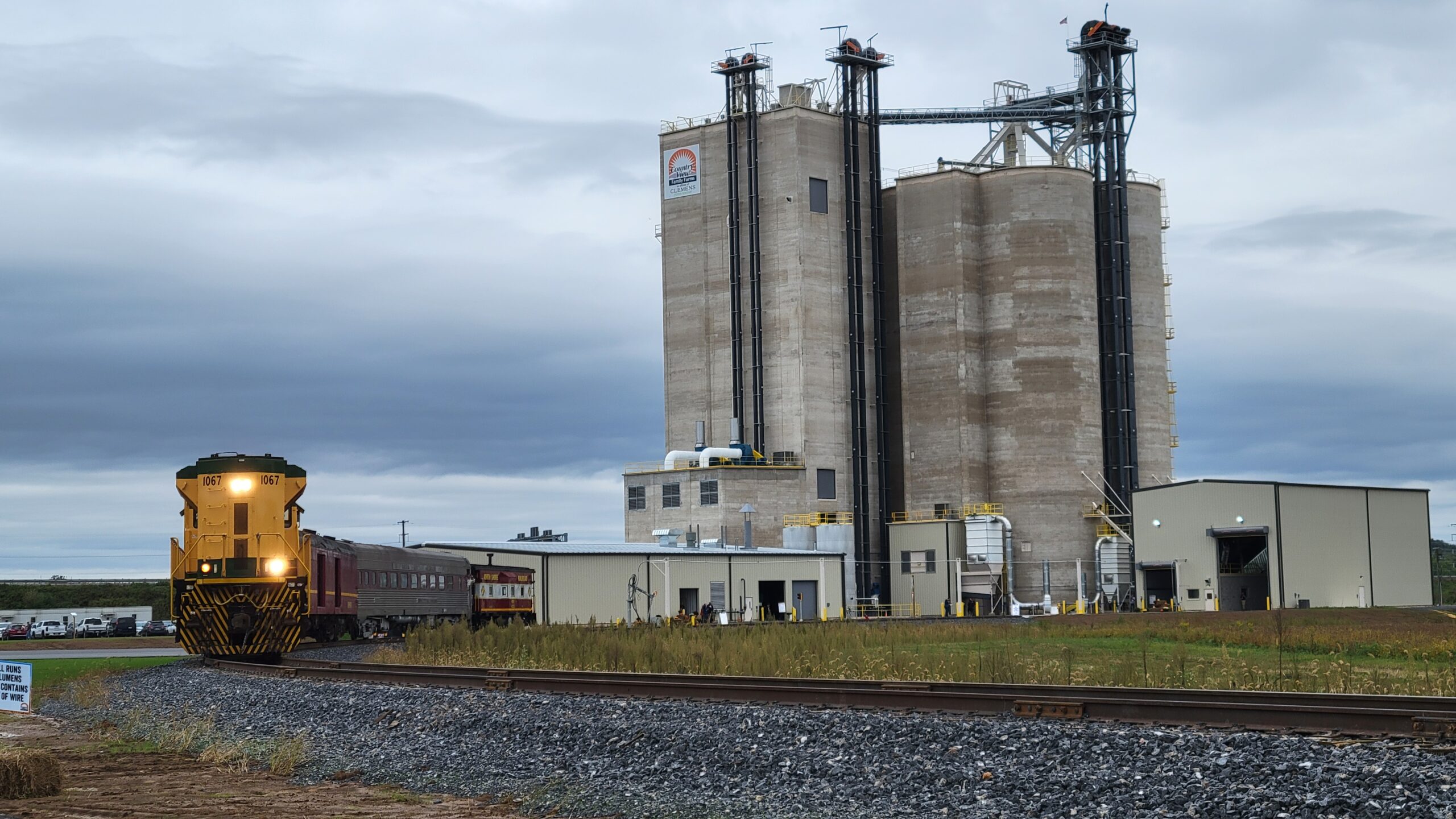
One of the most impactful examples of UCIR’s growth is its partnership with Country View Family Farms. In 2022, CVFF—a family-owned business and one of the top hog producers in the United States—was seeking a location for a hog feed facility capable of handling both manifest traffic and unit trains. After more than a year of unsuccessful searches elsewhere, UCIR stepped in with a creative solution. Its local marketing team identified a property not previously on the market and facilitated discussions between CVFF and the landowner. The resulting agreement allowed the former landowner to continue farming within a 115-railcar loop track built around the property. One year after groundbreaking, CVFF celebrated the $55 million facility’s launch in 2024. It includes a 600,000-bushel silo and an 8,250-foot loop track designed to handle unit trains. UCIR and NS teamed to secure new trackage rights through the Surface Transportation Board, enabling seamless unit train service without disrupting main line operations. UCIR now assists with unloading trains and manages all manifest traffic to the facility. Production ramped up in 2025. CVFF now supplies feed to farms within a 50-mile radius—enough to support nearly one million hogs. It also created 50 permanent jobs and supports 30 full-time truck drivers.
“This was the largest project I was ever involved with,” UCIR Chief Marketing Officer Todd Hunter noted, “and the railroad is extremely proud to now be a part of the CVFF family.”
UCIR’s customer growth also includes major industrial partners such as GAF, a leading North American roofing and waterproofing manufacturer with 30 U.S. locations, and White Deer Gas.
UCIR first connected with GAF in 2015, and after evaluating multiple sites, GAF chose New Columbia for its East Coast manufacturing facility. Following a $75 million investment, the plant became operational in 2018. GAF later expanded with an additional $100 million investment. It built a second 400,000-square-foot facility and two rail spurs, which UCIR began serving in 2021. The company publicly cited “excellent rail service” as a key reason for the expansion. It has brought more than 60 family-sustaining jobs to the region. Beyond rail service, UCIR has supported GAF by assisting with hiring efforts, community connections, and special events, including an inaugural railcar ribbon-cutting ceremony attended by regional leaders.
UCIR in 2017 attracted White Deer Gas to New Columbia. The company invested more than $10 million in a new transfer facility located on the railroad; it began receiving shipments in 2018 and handled nearly 200 railcars in its first year. The terminal is among the largest of its kind east of the Mississippi River.
Community Commitment
UCIR’s success extends beyond freight service. The short line is active in industry associations, economic development organizations, and local chambers of commerce, serving on boards and committees. It is also devoted to the community, donating passenger excursions for Scouting America (Boy Scouts), veterans’ organizations, community celebrations, and special-needs events. In 2024 and 2025, UCIR brought to fruition and hosted the Veterans Benefit Voyage, raising nearly $32,000 for nonprofit organizations supporting U.S. Veterans.
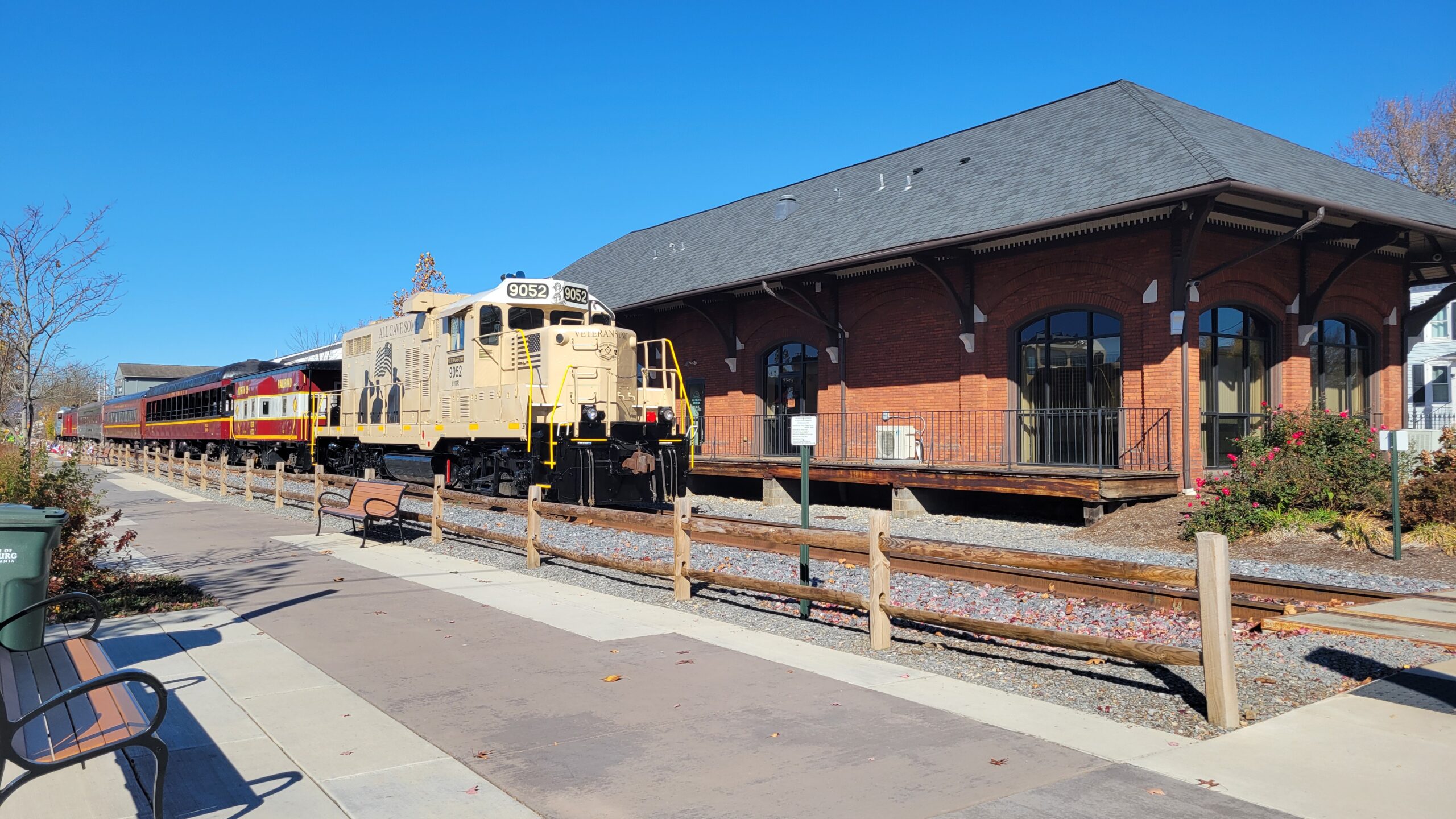
The railroad has also hosted Toys for Tots collections in conjunction with the North American Railcar Operators Association, the day after the North Shore Railroad Toys for Tots drive. Combined, NSHR and UCIR have gathered more than 10,000 toys and raised more than $25,000 over the past seven years for this Marine Corps initiative.
Additionally, UCIR has invested heavily in public safety and infrastructure, including the complete rehabilitation of the Winfield grade crossing in partnership with the Pennsylvania Department of Transportation, and upgrades to accommodate high-and-wide dimensional shipments.
Looking Ahead
UCIR is proud to have a hand in growing Central Pennsylvania manufacturing. The projects UCIR has been involved in have brought more than 150 jobs to the area and had a positive impact on local farming and the agriculture and building and construction industries. This comes after $8 million in infrastructure and $240 million in new project investment over the past decade.
UCIR’s steady growth demonstrates that strategic investment, strong partnerships, and a commitment to customer service drive long-term success. As railcar volumes continue to rise, it remains well-positioned to serve the area’s industries, communities, and economy for decades to come.
“The communities located along the Union County Industrial Railroad were a hidden gem of Central Pennsylvania for a long time,” North Shore Railroad Company & Affiliates President and CEO Jeb Stotter said. “Over the past decade, this gem has been discovered and has enhanced the corporations that were wise enough to see the incredible potential therein. The introduction of two large corporations to New Columbia in such a short time is nothing less than phenomenal. GAF and CVFF saw the potential in this rural area and are wonderful additions to this community. It would not have made sense for these companies to take a risk on Union County if it were not for the talent and customer-focused efforts of the employees working on the UCIR. From track to train, they make UCIR what it is. They deserve this award; our crews have earned it. Thank you!”
“We are so proud of our team’s accomplishments on the Union County Industrial Railroad,” North Shore Railroad Company & Affiliates Treasurer/Controller Diana Williams noted. “We can’t wait to see what UCIR will do in 2026 and beyond. I have faith that courage will carry our team to heights they have never imagined before.”
“We are honored to receive this award, and it’s the result of many months and even years of communication, negotiations, and cooperation with many public and private partners to grow the Union County Industrial Railroad,” Todd Hunter added. “We have a great team here that makes the difficult look easy!”
REGIONAL OF THE YEAR
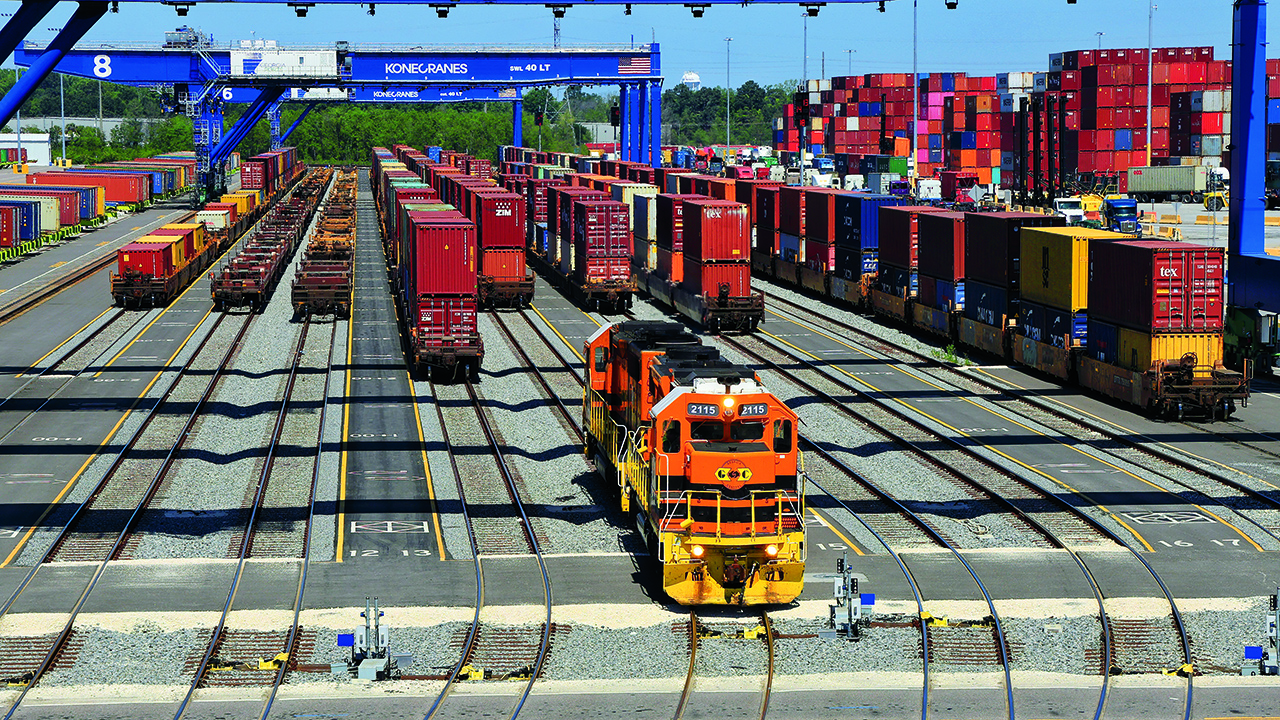
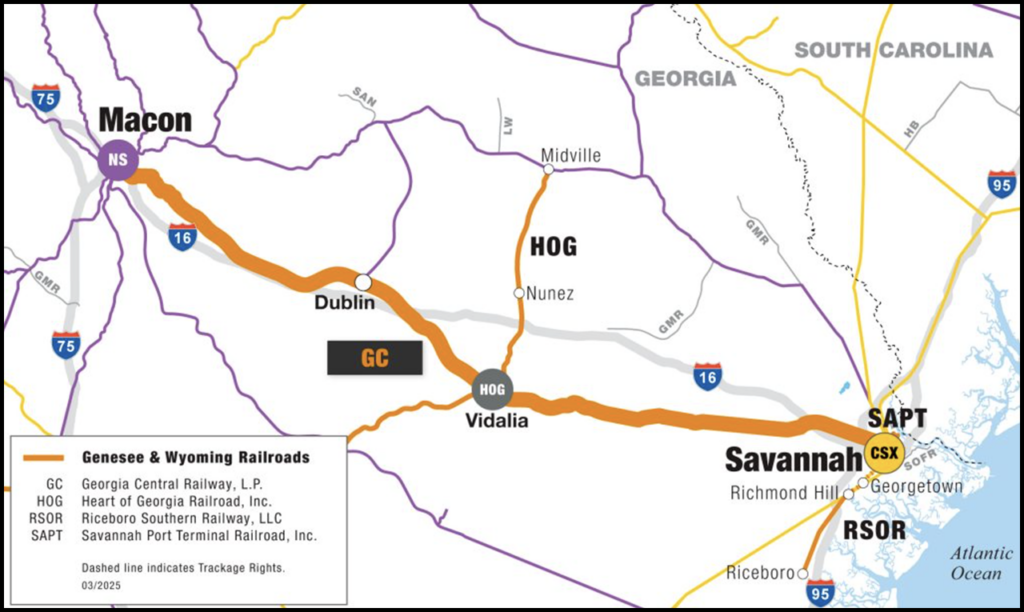
The 211-mile Georgia Central Railway (GC), which runs from Savannah to Macon, Ga., and interchanges with CSX and Norfolk Southern, is a case study in how small roads can help boost regional economies, deliver value through strategic vision and disciplined execution, and lead the rail industry into a new chapter (see map below).
In 2025, GC positioned itself at the forefront of innovation, becoming the first freight railroad in North America to receive FRA approval to pilot test Parallel Systems’ zero-emission, self-propelled rail technology on portions of its line. If the pilot proves successful, the technology has the potential to capture new container business moving to and from the Port of Savannah, as well as reinvigorate traffic on rural rail lines and revive inland ports in Georgia—all while removing trucks from the region’s roads. Two of the seven pilot phases were completed last year.
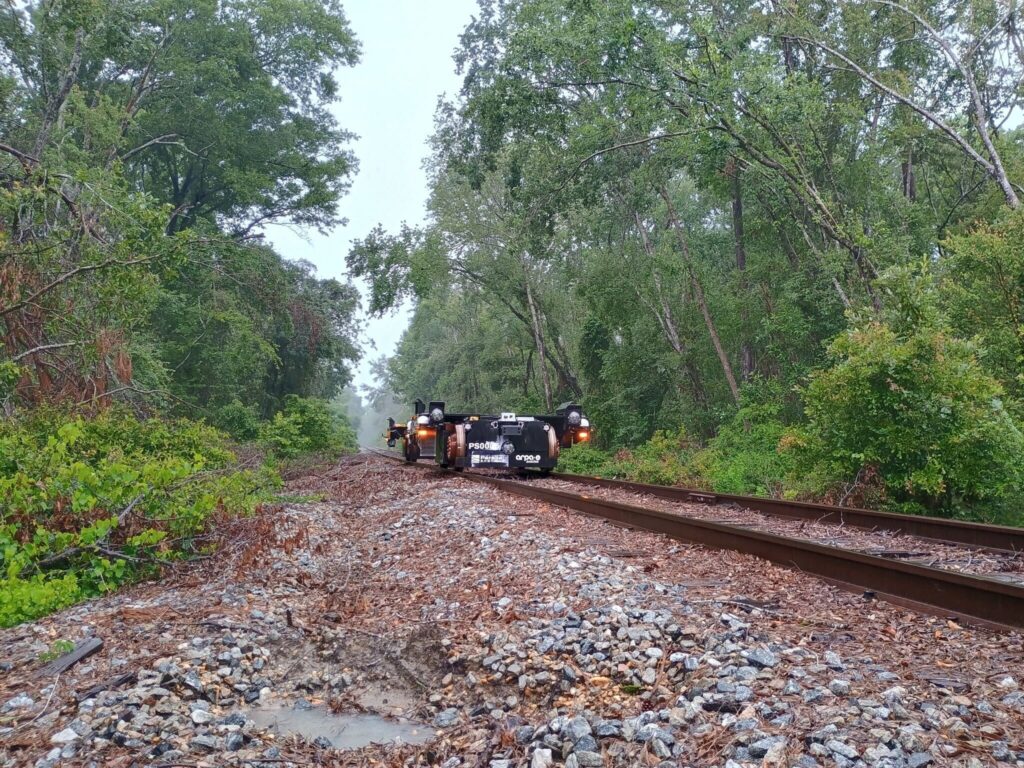
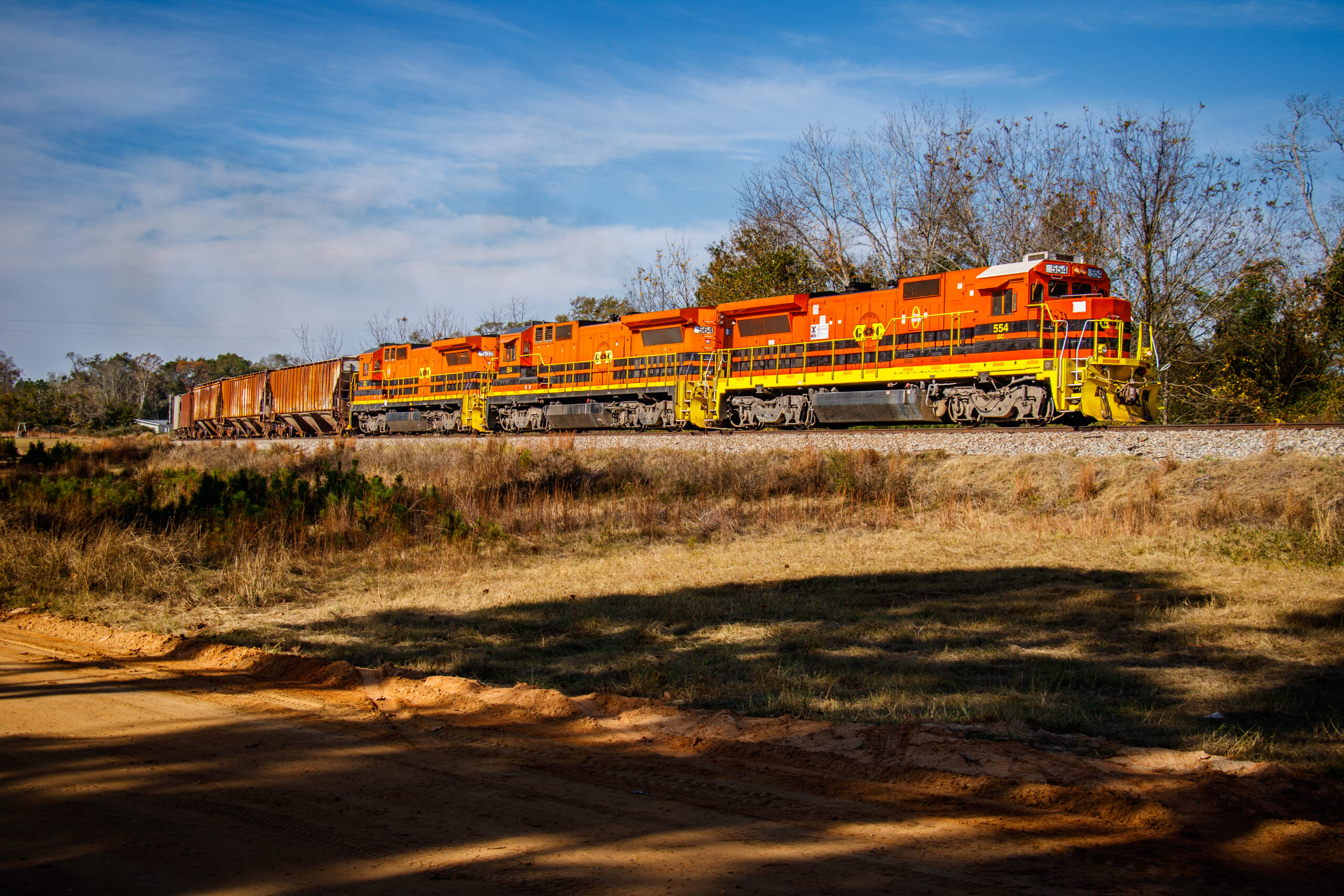
That milestone is the latest chapter in the broader transformation of the Class II. Halfway through a decade that has in large part been defined by a global pandemic and persistent market volatility, GC remains a steady bright spot in the rail industry. It has strategically invested for long-term growth, secured major industrial development wins, and delivered top safety performance and customer service in a high-growth industrial corridor that includes the booming Port of Savannah.
Recognizing the potential to grow alongside Savannah, GC carried out improvement projects over the past two decades that have enabled 286K capacity along the entire line and, through a public-private investment/FRA CRISI grant, 25 mph track speeds on more than one-third of it.
To handle present traffic demands, two new sidings totaling 20,000 feet and representing a $12 million investment were completed in summer 2025.
In addition, GC In 2022 completed a two-year initiative to overhaul its locomotive fleet by adding 14 cleaner engines that consume 23% less fuel and enhance the railroad’s overall efficiency.
Industrial Development Focus
Industrial development has been a contributor to GC’s growth. Over the past five years, customer projects totaling more than $6 billion have occurred along the line. From 2024-25 alone, a half-dozen projects came on line, adding nearly 11,000 carloads and expanding traffic across the railroad’s diverse commodity base, including new frozen potato shipments, as well as increased aggregate, pulp and paper, chemical, and fertilizer volumes. Frozen potato shipments, for example, grew more than ten-fold in those two years, while another customer’s traffic increased nearly 460%.
“Georgia Central has provided outstanding service to us and has been a strategic partner as we work to deliver refrigerated and frozen food to customers in the Southeast,” said John Ripple, Chief Development Officer at Agile Cold Storage, which ships frozen potatoes via the Class II.
These wins are on top of GC’s 2019 selection as the rail service provider for a $172 million plastic distribution facility and 2022 selection as the transportation provider for Hyundai Motor Group’s $5.5 billion electric vehicle and battery-manufacturing facility.
Meanwhile, one of the railroad’s major customers in the distillers’ dried grains sector is developing a project for 2026 that could increase GC carloads by 20% in the long term. Additionally, an aggregate customer’s expansion could generate growth, according to GC.
Prioritizing Safety, Service
GC understands that with growth comes the responsibility of community stewardship. The railroad has reduced the number of reportable injuries by 80% over two years. Amid a challenging freight environment, the railroad also scored 8.8 out of 10 in overall satisfaction on its 2025 biennial customer survey.
“GC has consistently demonstrated exceptional responsiveness and reliability,” said Jason Lovett, Chief Operations Officer for GC customer DSI. “Their team maintains clear communication, promptly addresses any operational concerns, and thoroughly reviews data to ensure the highest level of accuracy in our railcar information. That unwavering customer focus and commitment to excellence have made them an invaluable long-term partner to our organization.”
Thanks to all these initiatives that have demonstrated a commitment to southeast Georgia, GC has seen traffic grow more than 36% in five years, rising from nearly 22,000 carloads in 2020 to more than 30,000 carloads in 2025. By 2032, annual carloads are expected to surpass 50,000.
“The story of the Georgia Central clearly demonstrates how investing in a railroad, hustling for growth and providing world-class service can be a recipe for success,” G&W North America CEO Michael Miller said. “The future looks bright at GC for decades to come.”
SHORT LINE HONORABLE MENTION
The last Interstate Commerce Commission-approved short line transaction was Mike Hart’s 1995 acquisition of what is now Sierra Northern Railway (SERA) in California. Widely expected to fail, its 600 carloads were operated over 49 excepted miles of broken ties and rusty rail. Derailments were common and a lone Baldwin locomotive was firing on five cylinders.
Through an innovative “take-or-pay” agreement with Sierra Pacific Industries, freight traffic was stabilized and rebuilt by lowering rates to those charged when the railroad was constructed in 1897. Over the next 31 years, the railroad expanded, adding the Yolo Short Line Railroad (YSLR), Mendocino Railway’s “Skunk Train” (MRY), operations at the Port of West Sacramento, the Riverbank Industrial Complex, and the former Fillmore & Western trackage in Ventura County. Parent company Sierra Railroad Company also added excursion services, developed electric-assisted rail-bike operations, and maintained SERA’s reputation as the “The Movie Railroad” with more than 400 films recorded on site.
SERA, Sierra Railroad Company’s freight division, began to accelerate in 2015 under Kennan H. Beard III’s leadership. It now moves more than 15,000 carloads annually and has materially expanded system capacity through new sidings, interchanges, storage tracks and transload facilities.
Sierra Railroad Company in 2020 acquired and developed a 116-acre inland port and unit train transload facility that serves Union Pacific and BNSF and now handles more than 7,000 carloads annually, and in 2024 constructed a West Sacramento transload that exceeds 3,000 carloads per year.
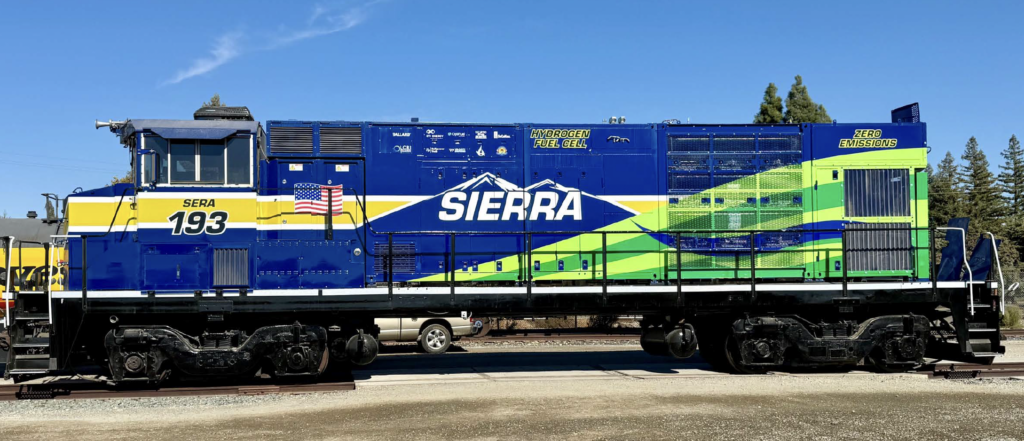
Last fall, the first of four HFC (hydrogen fuel cell)-powered, ZE (zero-emission) four-axle switchers entered service on SERA. Developed with Railpower Technologies (now a SERA subsidiary), the locomotive is described as “the first [of its type] in the United States built specifically for freight rail.” The project was made possible through a P3 (public-private partnership). The California Energy Commission awarded $4 million to design and demonstrate the prototype. In 2023, the California State Transportation Agency and the Sacramento Metropolitan Air Quality Management District provided $19.5 million for three additional locomotives. In addition to Railpower, technology partners include GTI Energy, OptiFuel Systems LLC, Ballard Power Systems, and the University of California, Riverside. Sierra Railroad Company’s energy division, founded in 2003, is producing hydrogen for the locomotives using waste feedstocks.
In December 2025, SERA completed a 5-1/2-year FRA CRISI project installing 90,000 new ties and eight miles of 115-pound rail, and upgrading ten highway-rail grade crossings. With RRIF financing, SERA built more than six miles of new main line sidings, including an 8,000-foot unit-train interchange and fully utilized storage tracks.
SERA represents a turnaround story—from near-abandonment to sustained growth, infrastructure renewal, and technical innovation. This ASLRRA Environmental Award winner is now entering into a new phase with the sale of a majority interest to Ridgewood Infrastructure.
“Thank you to Railway Age magazine for recognizing Sierra Northern Railway with an honorable mention, a testament to our team’s dedication and innovative spirit,” said Kennan H. Beard III, President and CEO of SERA. “This acknowledgment celebrates our remarkable growth in services, from expanded freight capabilities and sustainable initiatives to enhanced customer partnerships across California. We are inspired to continue our expansion, building on this momentum to deliver even greater value to our communities and the rail industry.”
REGIONAL HONORABLE MENTION
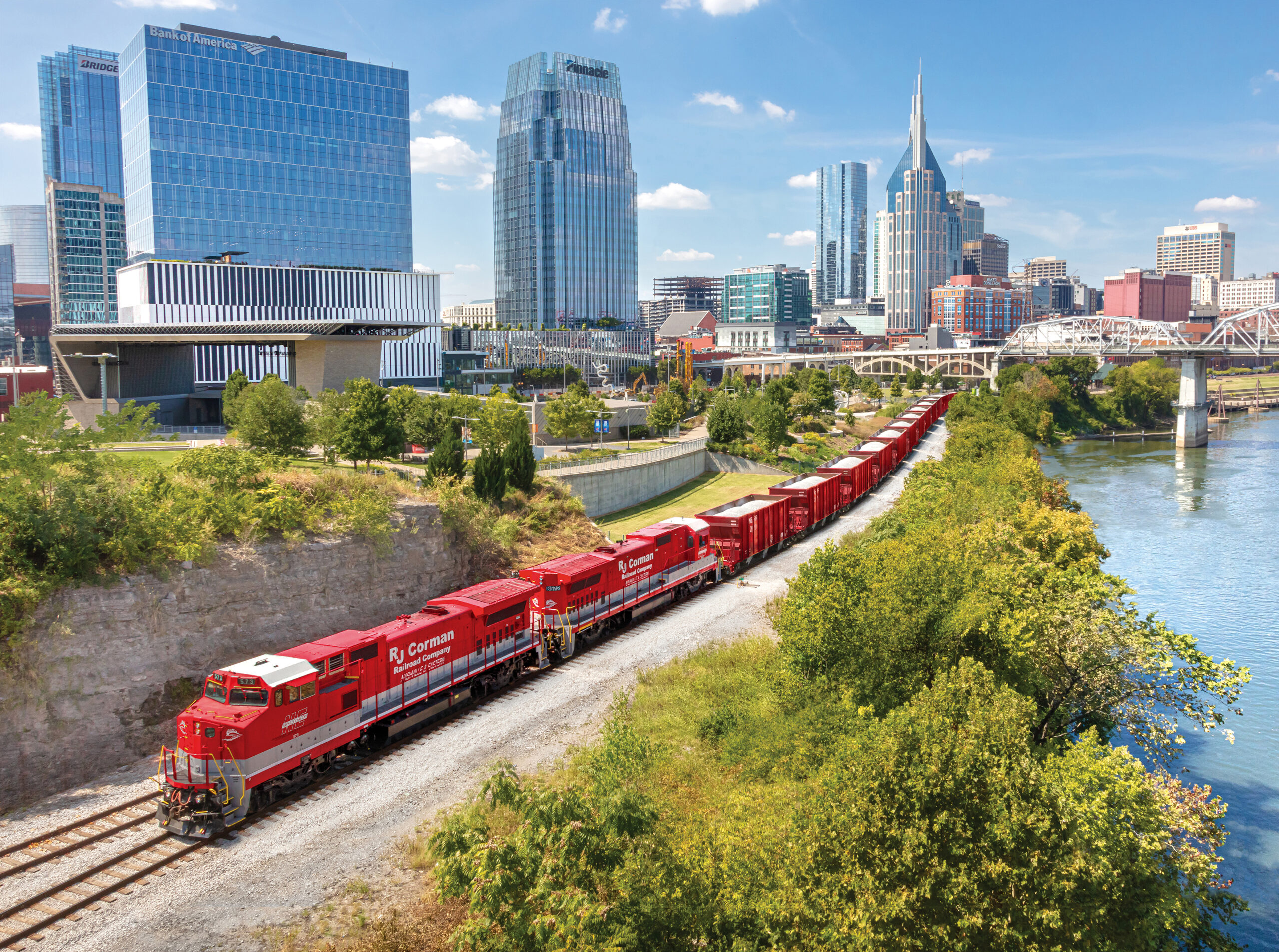
Nashville & Eastern Railroad (NERR) in Tennessee has achieved measurable, long-term economic development in the communities it serves. Leveraging an understanding of the highly competitive Nashville market, parent company R. J. Corman in 2025 worked with multiple partners to identify and develop rail-served sites along the busy I-40 corridor, providing customers with a competitive rail alternative and reducing reliance on long-haul trucking. NERR not only advanced these projects but also continued operating 12 daily roundtrips of WeGo Public Transit’s 32-mile Nashville Star commuter rail service between Nashville and Lebanon.
Annual carloads are projected to increase by approximately 2,700, a significant accomplishment for a railroad whose volumes have historically remained at 10,000 to 10,500 carloads per year.
This business expansion follows R. J. Corman’s January 2019 acquisition of NERR, which serves the counties of Davidson, Putnam, Smith, and Wilson, and interchanges with CSX at Vine Hill. With 31 customers along 145 miles of track, R. J. Corman has successfully integrated the railroad’s operations and service.
A key element of NERR’s growth strategy has been its ability to create value through the thoughtful redevelopment of existing rail-served property. The National Cement terminal in Lebanon is one example. After construction was completed on the site, which had been vacant and included an underutilized rail spur, test cars began running in fourth-quarter 2024 and full production commenced in first-quarter 2025. The terminal represents a 12% increase in NERR carloads and is forecasted to support sustained carload volumes for years to come.
“We are pleased to partner with R. J. Corman Railroad Company to transport our cement products,” said Jason K. Heathcock, Vice President-Logistics at National Cement Company of AL, Inc. “Their commitment to safety and efficiency aligns with our company values, and we are confident in their ability to meet our expanding supply chain needs.”
The development of a fly ash terminal in Lebanon reflects the same strategic approach. Eco Materials Technology, a CRH company, committed to a structured five-year volume plan, culminating in a 10% increase in annual carloads for NERR. The terminal has two tracks with capacity for 20 railcars, allowing for operational flexibility and future commodity growth.
This project required the cooperation of several partners and represented a combined $5.8 million investment. The Nashville Eastern Railroad Authority provided property and financial support, R. J. Corman/NERR facilitated facility construction, Eco Materials Technology installed equipment for unloading materials, and CSX contributed rate alignment to strengthen the competitiveness of the service offered.
“The opening of the Lebanon terminal reinforces Eco Materials’ leadership in sustainable innovation and represents another major milestone in building our national network of rail terminals dedicated to delivering low-carbon cement alternatives,” Eco Material Technologies President Grant Quasha said.
Projects like these depend on alignment across real estate owners, utilities, zoning, capital investment, customer needs, and Class I connectivity. NERR has excelled in bringing these elements together. It is committed to working with property owners and economic development partners to enhance industrial site and building inventory along its line.
“We are incredibly proud of the work taking place on the Nashville & Eastern Railroad, and we’re grateful to Railway Age for recognizing the progress being made along the line,” R. J. Corman Railroad Group Chief Commercial Officer–Railroad Shannon Drown said. “Our team’s commitment to collaboration and thoughtful development has strengthened service for our customers and reflects the robust relationships that support this growth. The ability to bring new terminals into operation, repurpose dormant industrial sites, and grow freight service on a shared commuter corridor speaks to the dedication of our employees and partners across Middle Tennessee. We appreciate Railway Age for highlighting the significance of this work and are excited for what the Nashville & Eastern Railroad will accomplish in the years ahead.”
UCIR, the Short Line Railroad of the Year; GC, the Regional Railroad of the Year; SERA, the Short Line Honorable Mention; and NERR, the Regional Honorable Mention, will be featured in Railway Age’s March 2026 issue.
ABOUT RAILWAY AGE
In business since its establishment in Chicago in 1856, Railway Age is the transportation industry’s longest-running trade publication, covering railway technology, operations, strategic planning, marketing, equipment finance, and other topics such as legislative, regulatory and labor/management developments. What began as a weekly in the mid-19th century is, in the 21st century, an information resource incorporating digital and print publishing of a monthly magazine; a website; daily and weekly e-newsletters (Rail Group News, Innovations); webinars; social media (X, Facebook and LinkedIn); Rail Group On Air podcasts; industry conferences; and custom publishing services.
PRIOR SHORT LINE, REGIONAL HONOREES
2025
• Short Line: Rochester & Erie Railway LLC
• Regional: Railroad Development Corporation’s Iowa Interstate Railroad LLC
Honorable Mentions:
• Short Line: Central Montana Rail Inc.
• Short Line: Genesee & Wyoming’s Columbus & Ohio River Rail Road
• Short Line: Regional Rail LLC’s Great Sandhills Railway
• Short Line: R.J. Corman Railroad Company West Virginia Line
2024
• Short Line: Mississippi Export Railroad
• Regional: Wheeling & Lake Erie Railway Company
Honorable Mention:
• Short Line: Eastern Idaho Railroad
2023
• Short Line: Napoleon, Defiance & Western
• Regional: ArcelorMittal Infrastructure Canada Railway
Honorable Mention:
• Short Line: Aberdeen, Carolina & Western Railway
2022
• Short Line: Vermont Railway
• Regional: South Kansas and Oklahoma Railroad
2021
• Short Line: RJ Corman Memphis Line
• Regional: Lake State Railway
Honorable Mentions:
• Short Line: Belpre Industrial Parkersburg Railroad
• Short Line: Grenada Railroad
2020
• Short Line: Terminal Railroad Association of St. Louis
• Regional: Reading & Northern Railroad
Honorable Mentions:
• Short Line: Delmarva Central Railroad Company
• Regional: Vermont Rail System
2019
• Short Line: Louisville & Indiana
• Regional: Rapid City, Pierre & Eastern
2018
• Short Line: Lake State Railway
• Regional: Indiana Rail Road
2017
• Short Line: North Shore Railroad
• Regional: Conrail Shared Assets Operations
2016
• Short Line: New Orleans & Gulf Coast
• Regional: Central Maine & Quebec
2015
• Short Line: Palmetto Railways
• Regional: Reading & Northern
2014
• Short Line: Coos Bay Rail Link
• Regional: Arkansas & Missouri
2013
• Short Line: Gardendale Railroad
• Regional: Montana Rail Link
2012
• Short Line: Vermont Railway
• Regional: Indiana Rail Road
2011
• Short Line: Blacklands Railroad
• Regional: Reading & Northern
2010
• Short Line: Greenville & Western Railway Co., LLC
• Regional: Northern Plains Railroad
2009
• Short Line: Pacific Harbor Line
• Regional: Wisconsin & Southern
2008
• Short Line: Twin Cities & Western
• Regional: South Kansas & Oklahoma
2007
• Short Line: R.J. Corman West Virginia Line
• Regional: Florida East Coast
2006
• Short Line: Georgia Midland
• Regional: Buffalo & Pittsburgh
2005
• Short Line: Cedar Rapids and Iowa City
• Regional: Red River Valley & Western
2004
• Short Line: Nittany & Bald Eagle
• Regional: Wheeling & Lake Erie
2003
• Short Line: San Joaquin Valley Railroad
• Regional: Indiana Harbor Belt
2002
• Short Line: Winchester & Western
• Regional: Reading & Northern
2001
• Short Line: South Buffalo Railway
• Regional: Wisconsin & Southern
2000
• Short Line: Arkansas Midland
• Regional: Bessemer & Lake Erie
1999
• Short Line: South Central Florida Express
• Regional: Providence & Worchester
1998
• Short Line: St. Lawrence & Atlantic
• Regional: Texas-Mexican Railway
1997
• Short Line: Livonia, Avon & Lakeville
• Regional: Red River Valley & Western
1996
• Short Line: Philadelphia, Bethlehem & New England
• Regional: Bangor & Aroostook
1995
• Short Line: Cedar Rapids & Iowa City
• Regional: New England Central