TTC OPERATED BY ENSCO, RAILWAY AGE AUGUST 2024 ISSUE: The Transportation Technology Center (TTC) is dedicated to safe and secure railway transportation. This article examines the railway industry’s blast and fire testing needs and the associated capabilities at TTC.
Industry Needs
With the introduction of alternative energy sources into rail transportation, accompanying blast and fire testing is needed to ensure safe operations and resiliency against security threats while also achieving greenhouse gas emission reduction goals. Railway vehicle alternative energy sources, such as hydrogen and lithium-ion batteries, will continue to be tested and evaluated to many real-world scenarios, such as hard coupling events, train-to-train collisions, and grade crossing collisions, both head-on and side impact.
Additionally, these vehicles’ resiliency to fire protection is critical for all operational scenarios including in tunnels and public environments. Through robust full-scale testing, these technologies will achieve the same level of blast and fire resiliency as diesel railway vehicles have demonstrated over the past decades.
Blast and Fire Test Sites at the TTC
The TTC is equipped with three dedicated locations specifically designed for blast and fire testing, including outdoor test fire pads, ad-hoc test setups, and confined space environments like the FURSST (Facility for Underground Rail Security and Safety Testing) tunnel. Each location is tailored to handle various types of explosions and fires, providing a versatile testing environment. Currently, the TTC can conduct explosions equivalent to up to 500 pounds of TNT and has plans to expand this capacity to 1,000 pounds, crucial for high-energy applications such as hydrogen fuel systems. To perform these blast and fire tests, it takes the proper permitting. Since the TTC is a secure, federal facility that is protected from the public, it has the greatest flexibility to perform these types of tests.
The outdoor test fire pads are large concrete pads that enable controlled fire tests of individual components. This infrastructure allows for quick testing with minimal preparation. Additionally, the TTC can construct ad-hoc blast and fire sites. Based on individual test needs, ad-hoc test sites can be quickly constructed at various locations on the 52-square-mile facility. This unique ability is needed to have full flexibility to test any scenarios.
One of the cornerstone facilities at TTC is the FURSST, also known as the underground tunnel. Funded by the Transportation Security Administration (TSA) for the Vehicle Blast Vulnerability research project, the tunnel was primarily built for confined space blast tests. This 300-foot-long underground tunnel is designed for confined space blast and fire testing, providing a realistic environment to assess the impact of such events on passengers and ventilation systems. A detailed article about the FURSST can be found in the April 2024 issue of Railway Age.
On-Site Fire Department
Ensuring safety during these tests is paramount, and therefore the TTC is staffed with a dedicated on-site fire department. Our team of professionals provides essential support and oversight during all blast and fire testing operations. The presence of an on-site fire department ensures that procedures are conducted safely, issues are resolved before they occur, and if an emergency occurs, they are promptly addressed. This department is not only equipped with the latest firefighting equipment but is also staffed by highly trained personnel who are prepared to handle a variety of emergency situations. Since the TTC fire department is dedicated to the site, they can ensure priority to any blast and fire tests occurring.
Collaboration with Ambipar
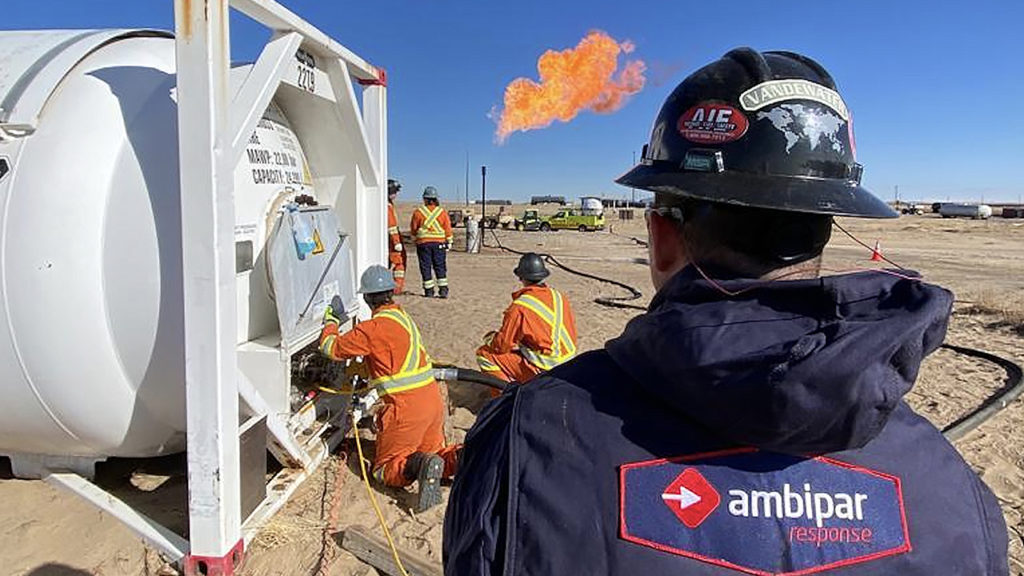
Enhancing capabilities further is the partnership with the Ambipar Response Training Center (ARTC), located at TTC. As the world’s largest hazardous materials (HAZMAT) and emergency response training center, Ambipar offers simulated emergency response conditions, including live fire scenarios, train derailment sites, and grade crossing accident simulations with highway vehicles. This collaboration ensures that personnel and responders are highly trained and prepared for any emergency situation, adding an extra layer of safety and expertise to testing operations.
The partnership with Ambipar is particularly valuable in the context of HAZMAT training. Ambipar provides specialized training programs that simulate real-world emergency scenarios, allowing first responders to practice and refine their skills in a controlled environment. This includes training with live fire conditions under the supervision of qualified instructors and safety personnel. The comprehensive training programs offered by Ambipar cover a wide range of emergency situations, from chemical spills to fire outbreaks, ensuring that responders are well-prepared to handle any incident. Ambipar has also incorporated training to deal with hydrogen as a fuel and lithium batteries accidents and incidents. As previously mentioned, the TTC’s ability to perform live-fire testing enables the required hands-on training experience needed for first responders.
Advanced Instrumentation and Data Collection
TTC employs state-of-the-art instrumentation to collect and analyze data during tests. The data acquisition equipment can capture data at up to two million samples per second, providing detailed insights into the dynamics of explosions. High-speed video capabilities allow documentation of these events in fine detail, facilitating thorough analysis and understanding of each test scenario.
The advanced data collection capabilities at TTC are critical for the accurate assessment of test results. The high-speed data acquisition systems enable researchers to capture transient phenomena associated with explosions and fires, providing a comprehensive understanding of these events.
This data is invaluable for validating computational models, designing safer transportation systems, and developing effective safety protocols and performing computer model validation.
Conclusion
As the railway industry continues to evolve with new blast and fire testing needs, the Transportation Technology Center is committed to serve in its role to ensure safe surface transportation. With its advanced facilities, dedicated on-site fire department and collaboration with Ambipar, the TTC meets the requirements to address the complex safety challenges of the rail industry.
Additionally, the TTC is focused on ensuring the same safety testing to the railway’s supporting infrastructure. This means that the TTC will continue to expand to include safety testing of storage and transportation of alternative energy. To learn more about blast and fire testing at the TTC, visit www.ttc-ensco.com.