
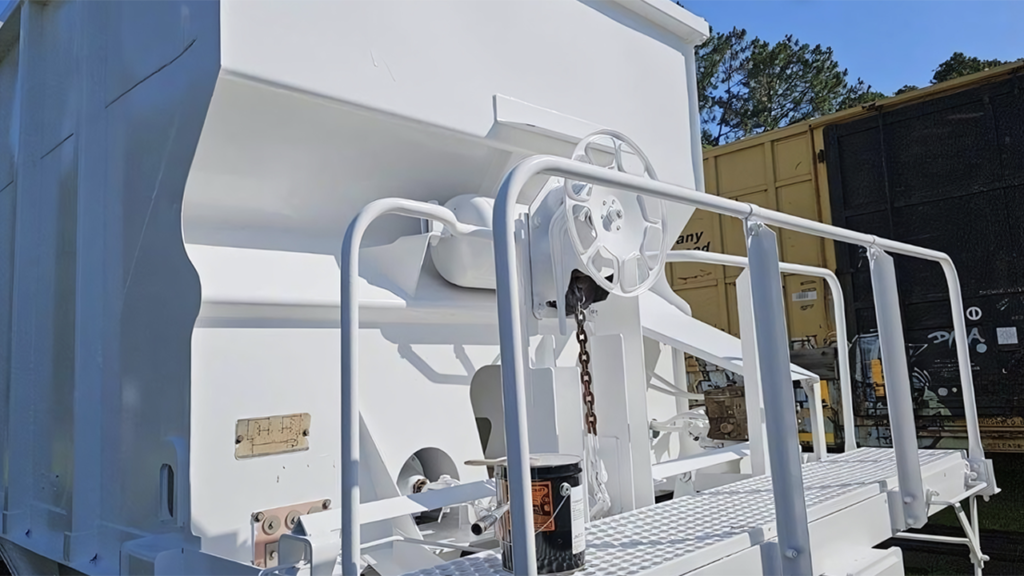
Avon, Ohio-based Advanced Polymer Coatings (APC) has released TriFLEX™ exterior coating for railcars, which is said to combine in one coat three resin systems (polyurethane, polyaspartic, and a proprietary polymer blend) to offer chemical, corrosion, and impact resistance, plus weatherability and flexibility.
The new direct-to-metal (DTM) coating “is the result of intensive lab development work, industry collaborations, and successful field trials,” APC reported June 14. Easy to apply, it is also said to be quick drying.

“We believe there’s a gap in the industry,” APC Vice President of Sales and Marketing Matt Sokol said. “You can invest in a coating with great chemical resistance, but you sacrifice performance in other categories like UV stability and impact resistance. The triple resin technology we have developed, working with global experts in their fields, sets TriFLEX™ apart and provides a complete package of unmatched protection and performance without sacrifice for rail tank cars and hopper cars.”
Field trial response has shown “considerable improvements on existing products with great feedback from rail companies,” added Jake Valadez, Global Industrial Manager at APC. “TriFLEX™ has been designed to deliver exceptional performance in the harshest of environments. It is not just durable, but also offers superior mechanical performance compared with traditional coatings. The advanced formula we have created further ensures long-lasting color and gloss retention, maintaining a vibrant appearance over time.”
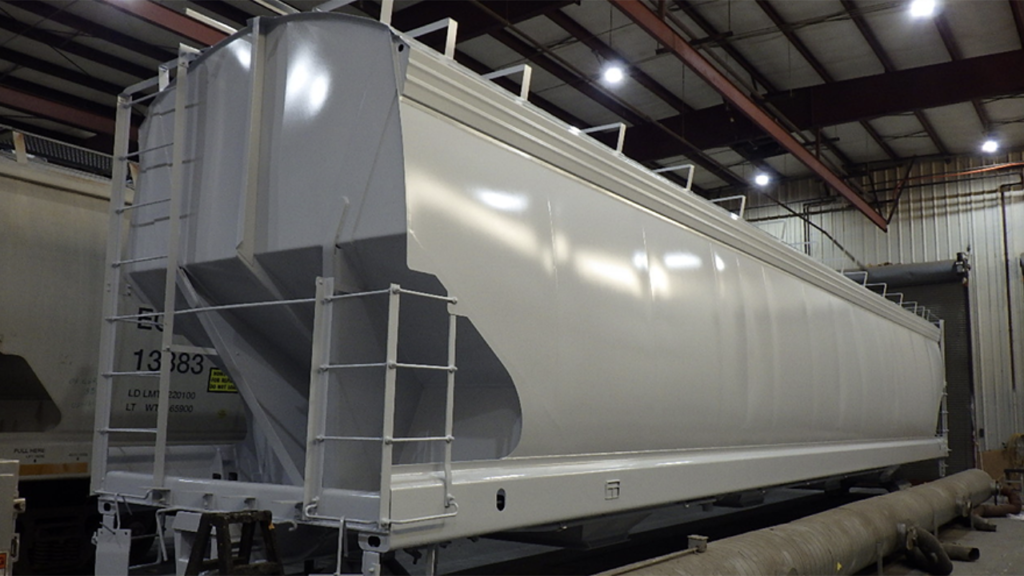
TriFLEX™ is said to have received the highest ISO 12944-6 rating among all available railcar exterior coatings. It passed the “C4 Very High Regime 1” and “C4 High” tests, corresponding to an estimated 20-25 years of service life in a C4 environment, and it exhibited no blistering, cracking, flaking, or rusting, during this testing, according to APC.
The industrial and marine coating manufacturer said TriFLEX™ is the “solution for exterior coating issues revolving around:
- “Corrosion caused by weathering, UV rays, chemicals and solvents that contribute to premature coating failure.
- “Damage caused by temperature fluctuations, from high heat and humidity to extreme cold and dry air conditions.
- “Premature coating failure due to physical damage of the external coating solution from abrasion, leading to substrate exposure and ultimately corrosion.”
APC also reported undertaking an expansion project that is slated to double the size of its factory with new automated production lines that will “quadruple its manufacturing capacity.”




