Louisiana Commits $230.5MM to Port NOLA Infrastructure Projects
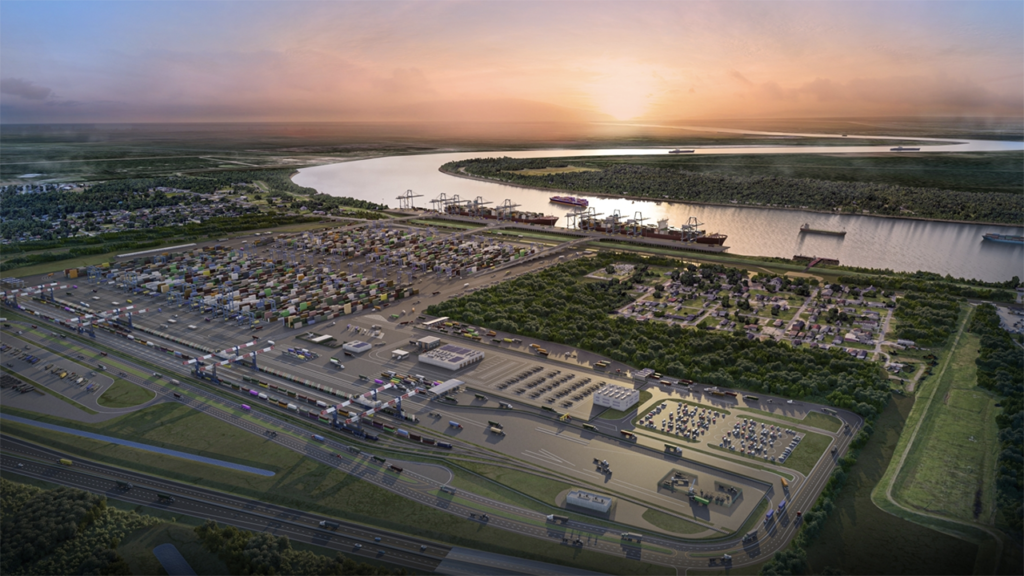
LIT, a $1.8 billion, 1,200-acre downriver container terminal project, received $10 million in direct state general funding and $140 million in Priority 5 state funding that will support design and construction activities, Port NOLA reported June 10. An additional $50 million in state funding remains secured to support construction of the St. Bernard Transportation Corridor, which is envisioned to connect LIT to the interstate system, as well as $30.5 million ($3 million of which is in the direct state general fund) for rehabilitation, planning, and construction of the St. Claude Bridge, the Port said.
The state commitment of $230.5 million supplements the $300 million in federal funding awarded in January to Port NOLA to assist with building LIT. The U.S. Department of Transportation awarded a $226.2 million INFRA (Infrastructure for Rebuilding America) grant and a $73.77 million MEGA (National Infrastructure Project Assistance) grant for LIT’s first phase of construction.
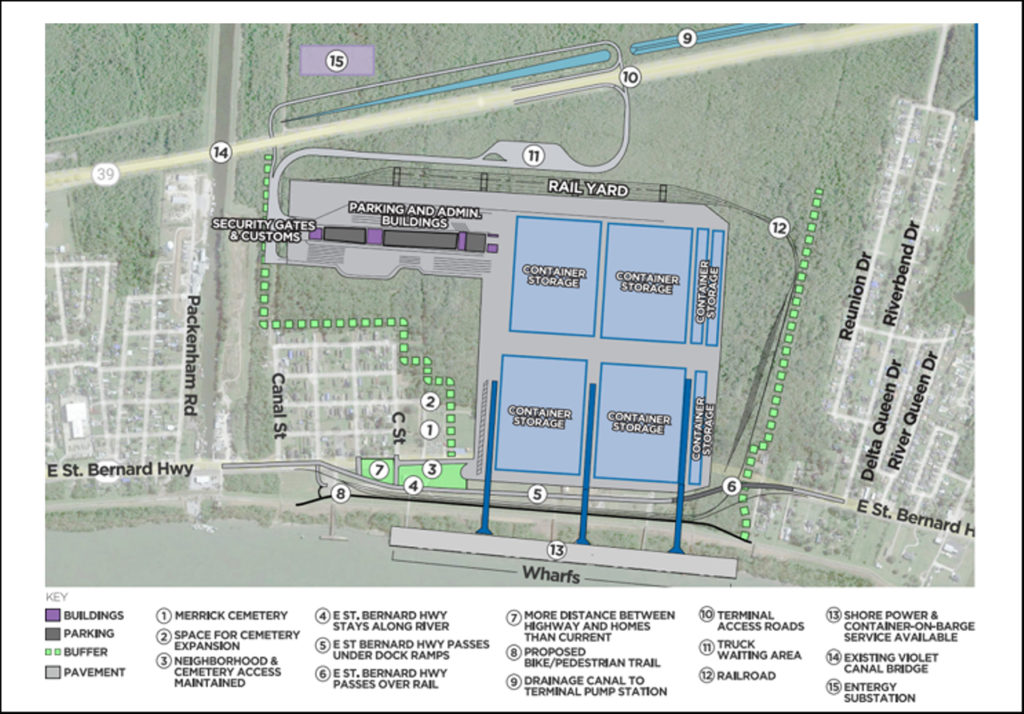
LIT, described a “state-of-the-art container terminal,” will be located in Violet, La. It will leverage Port NOLA’s connectivity with four Interstate highways, all six Class I railroads, 14,500 miles of inland waterways, and 30-plus inland hubs “to dramatically increase Louisiana’s import and export capacity and create unparalleled opportunity.” Port NOLA’s current container facility, near Napoleon Avenue in Uptown New Orleans, is upriver from the Crescent City Connection Bridge and can’t accommodate some large vessels.
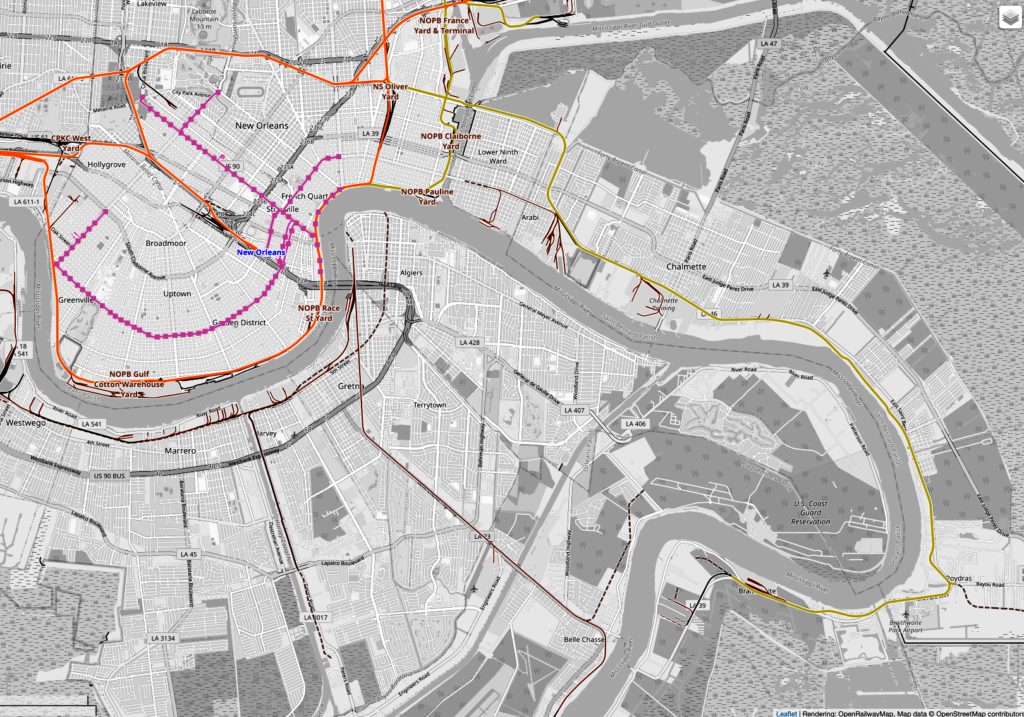
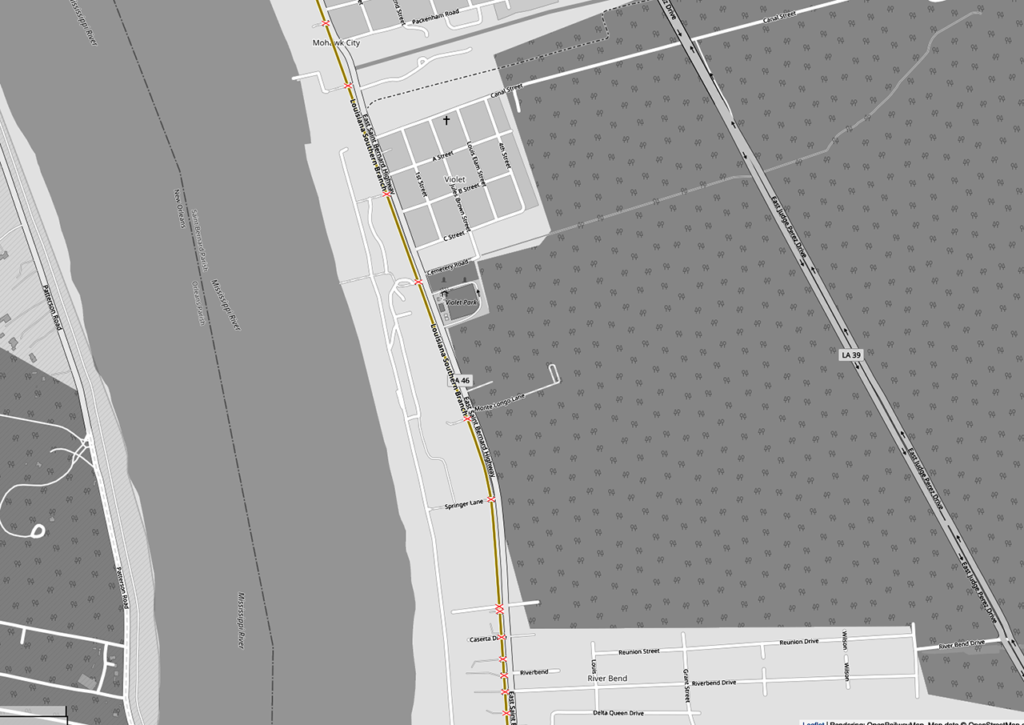
The project will include approximately 1,700 feet of wharf, two ramps connecting the wharf to the container yard, an automated container stacking crane yard, utilities, storm drainage, operations buildings, entry and exit gates, and intermodal rail yard. It involves realignment of Norfolk Southern’s Louisiana Southern Branch and parallel St. Bernard Highway.
According to Port NOLA, LIT is the largest public economic development project in the state of Louisiana. By 2050, it is expected to generate 32,000 new jobs nationwide, more than 18,000 in Louisiana, 4,300 in St. Bernard Parish, as well as more than $1 billion in new state and local tax revenue.
LIT is currently in the federal permitting process. Construction is expected to begin in 2025 with the first berth opening in 2028.
LIT will be built primarily through an $800 million dollar P3 (public-private partnership) of Port NOLA, New Jersey-based Ports America (one of North America’s largest marine terminal operators and stevedores) and Switzerland-based Mediterranean Shipping Company through its terminal development and investment arm Terminal Investment Limited. The federal INFRA and MEGA awards and state of Louisiana financial commitments add to the P3; thus the project is largely funded. LIT has also garnered support from more than a dozen ports in six states, as well as major U.S. trade and agriculture associations.
Port NOLA said it continues to prioritize development of the St. Bernard Transportation Corridor as a parallel project with LIT construction. The Regional Planning Commission awarded a contract to GIS Engineering LLC in June 2023 to study the corridor and other roadway improvements that will support LIT and St. Bernard Parish.

“We want to thank Gov. Jeff Landry and the Louisiana Legislature for this significant funding commitment,” said Ronald Wendel Jr., who recently took over as Port NOLA Acting President and CEO and Acting CEO of the New Orleans Public Belt Railroad, following Brandy D. Christian’s announcement that she would step down from the leadership roles to become CEO of Patriot Rail. “These critical infrastructure projects will solidify Louisiana’s position as the premier global gateway in the Gulf, ensure thousands of jobs as well as long-term economic growth for the region and state.”
“The Legislature’s backing of infrastructure funding to support the Louisiana International Terminal builds upon commitments of more than $1.1 billion from the federal government and private sector,” said Julia Fisher-Cormier, Commissioner of the Louisiana Office of Multimodal Commerce. “These are the type of public investments Louisiana must make to transform our trade-based economy and secure our position as a future leader of global trade.”