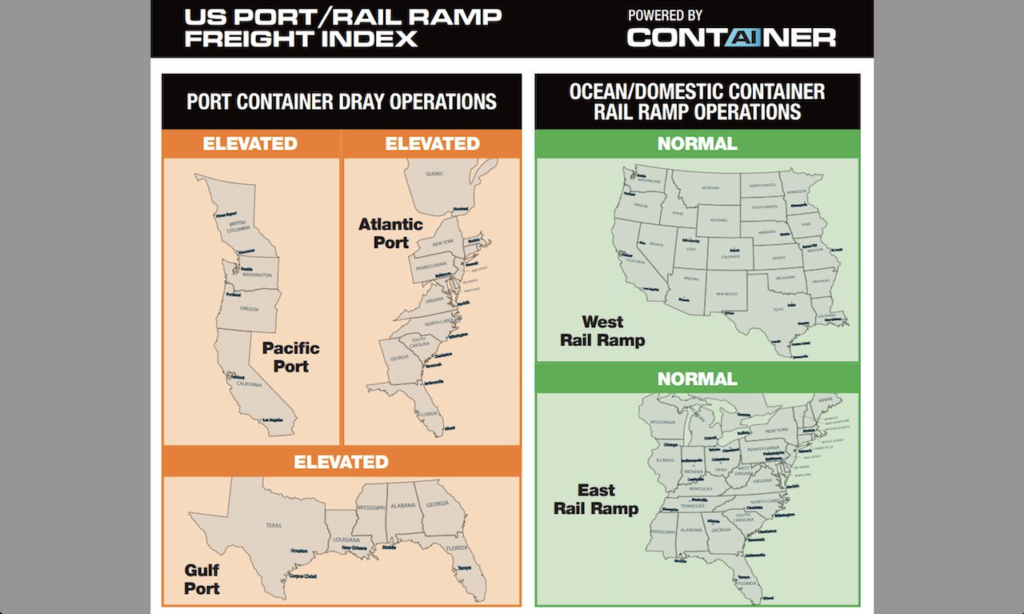
These findings are part of the Nevada-based third-party logistics (3PL) firm’s U.S. Port/Rail Ramp Freight Index for July. Each month, ITS Logistics releases an index forecasting port container and dray operations for the Pacific, Atlantic and Gulf regions. Ocean and domestic container rail ramp operations are also highlighted in the index for both the West and East inland regions.

“Despite having a lack of equipment, North American inland transportation is still not experiencing significant operational challenges as a result,” said ITS Logistics Vice President of Global Supply Chain Paul Brashier. “That said, as it relates to North American entry points, the equipment shortages are causing shippers some moderate disruption this month. This is especially true in the last 7-10 days of July. Volumes should increase as we move into August and peak volumes move from docks at import origin to the U.S.”
This month, ITS reports, Port of Los Angeles container volumes increased by 14.4% “due to strong trade activity, which was amplified by the early peak season, threats of a labor strike at both the East and Gulf Coast ports, and consistent consumer spending.” The first half of the year saw the handling of 4.7 million TEUs (twenty-foot equivalent units), which was more than the same period last year.
As for the current threat of a labor strike, with only 70 days left in the International Longshoremen’s Association (ILA) current contract, “discussions remained stalled, as the union’s strategy was to resolve all local jurisdiction contracts and then commence negotiations for the master contract,” ITS reported.
“Labor disruptions have the potential to adversely affect operations in the U.S. and Canada,” continued Brashier. “As of now, there is not a high probability of a prolonged strike on the US East/Gulf Coast and Canada, but the threat of a strike is causing shippers to move their booking pairings back to the West Coast to avoid both regions.”
Numerous vessels are blanking calls at some of the smaller to medium-volume ports in the U.S., which is “negatively impacting exports,” ITS noted. “When paired with the equipment imbalance, this will continue to create a challenge for exporters into Q4 of this year.”