
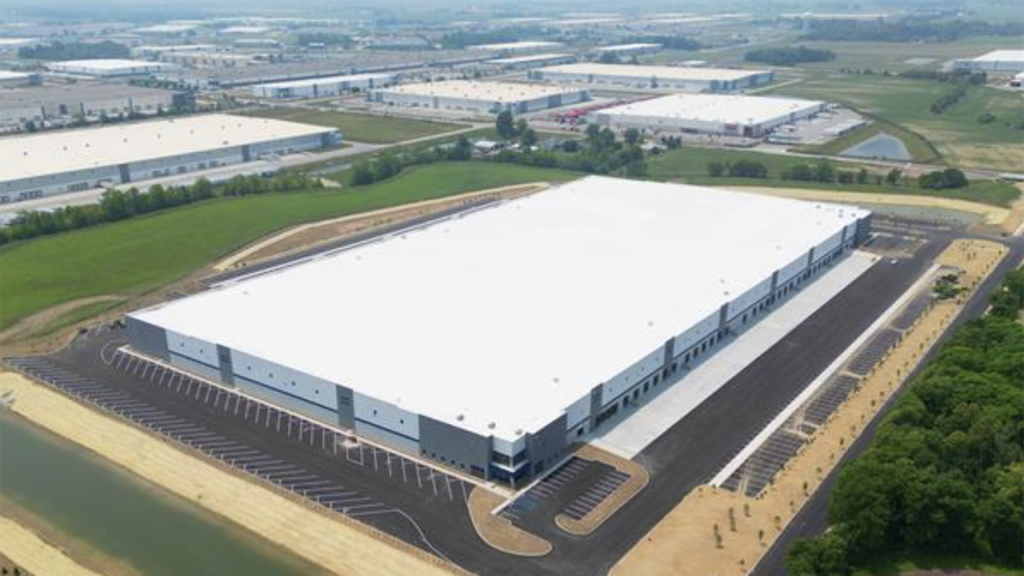
The 3PL (third-party logistics) firm describes itself as “providing handling for the entire delivery operation from drayage of containers at the port, transloading for truck delivery to the appropriate DC, omnichannel fulfillment, outbound truckload, LTL, and small parcel to client customers.” It offers drayage and intermodal in 22 coastal ports and 30 inland rail ramps. In addition to the Indianapolis facility, ITS Logistics has multiple warehouse locations in Reno and Dallas-Fort Worth, Tex.
“This new facility in Whitestown, Ind., has immediate large-scale availability to provide a strategic location for a Midwest distribution hub,” ITS Logistics President of Assets Ryan Martin said. “It will also be the terminal for a 75-tractor fleet with around 200 trailers and 100-plus chassis. This will complement our overall 3PL campus strategy and give our customers more flexibility and efficiency in their supply chain.”
According to ITS Logistics, Indiana’s central location provides access to national and international highways. The state, it reported, ranks seventh in the U.S. for waterborne shipping with three maritime ports; offers the “only statewide port system that has direct waterway access to two U.S. coasts”; is home to the second-largest FedEx hub in the world; and is less than three hours away from Chicago, the largest U.S. rail hub and third-largest intermodal container and trailer port in the world. Additionally, the UPS Worldport Air Hub is located in Indiana, which ITS Logistics said is the fourth-busiest cargo airport in the world and the second busiest in the U.S.
The state of Indiana has invested $10 billion over ten years in transportation improvement plans, according to Martin. “The efforts have resulted in 400 miles of new highways, dozens of bridge projects and other infrastructure expansions,” he reported. “These new partnerships and programs include a long-term agreement with the Indiana Rail Road Company and CN that gives Indiana companies access to a secure network of rail lines with the potential to lessen transit times by eight-to-ten days for imports from Asia-Pacific.”




