

The temporary agreement made between terminal operators and union officials to reopen port operations on the U.S. East and Gulf Coasts is currently affecting the supply chain industry, ITS Logistics reported in its US Port/Rail Ramp Freight Index for November.
Additionally, ocean container rail traffic off the U.S. West Coast “continues to be problematic” as the rail infrastructure cannot keep up with additional volumes coming into Seattle and Los Angeles, according to the Nevada-based third-party logistics (3PL) firm, which each month releases an index that forecasts port container and dray operations for the Pacific, Atlantic and Gulf regions, and highlights ocean and domestic container rail ramp operations for the West and East Inland regions (see below).
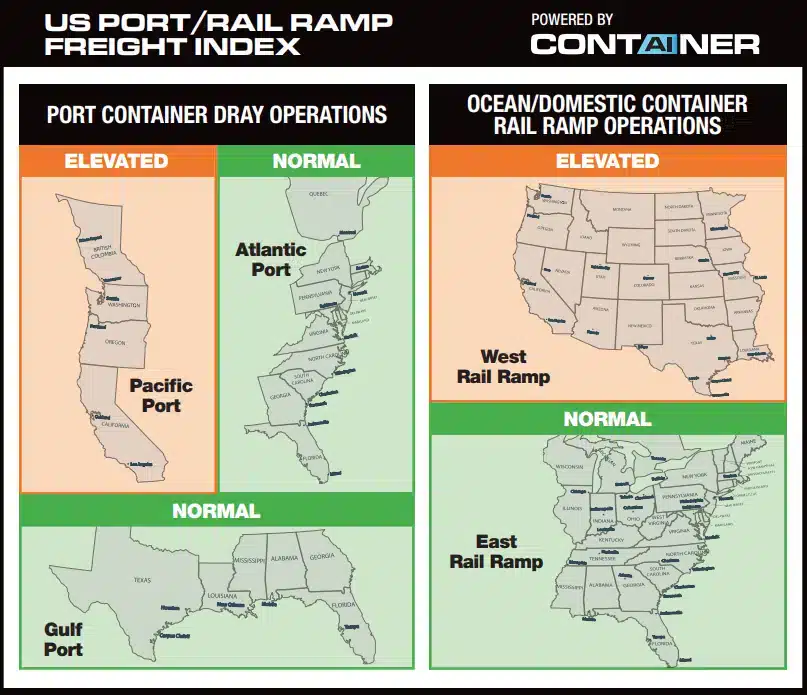
“Container traffic entering the West Coast is still challenged today and experiencing volumes booked to avoid the Red Sea issues and East/Gulf labor union activity, which continues to test capacity in those markets,” said Paul Brashier, Vice President of Global Supply Chain for ITS Logistics. “This, coupled with the recent strike in Vancouver, will challenge U.S. West Coast operations as shippers find safe harbor here. This should continue into December.”
According to the 3PL firm, as reflected in the data, U.S. East and Gulf port demand “increased drastically” as operations reopened post-strike in October and have since moderated. Last month, thousands of dockworkers returned to work after reaching a tentative wage agreement between the United States Maritime Alliance (USMX) and the International Longshoremen’s Association (ILA). This ended one of the most extensive work stoppages in decades, and the two parties agreed to extend their current labor contract through Jan. 15 to continue negotiations.
While ramp operations throughout the U.S. rail infrastructure are running smoothly, ITS Logistics says, “the additional dwell time at U.S. entry, coupled with earlier issues pertaining to getting capacity at origin in Asia, is forcing many companies to dray-off and transload.” Companies are also prioritizing sending truck goods further east one-way into their supply chains, “driving domestic truckload rates up out of the West Coast,” according to the 3PL firm. This is all occurring as the nation prepares for the recently elected Trump Administration to come into effect.
“We now must focus attention to how potential tariffs proposed by the newly elected Trump Administration could impact supply chains, shipping costs, and overall trade dynamics in the months ahead,” continued Brashier. “In late 2018, tariffs implemented by the Trump Administration caused a significant amount of vessel and container diversions, congestion, and overall supply chain headwinds that, at the time, led to the most significant challenges ever to North American supply chains. Shippers moved billions of dollars in goods to get ahead of those tariffs.”
From that event, supply chain professionals learned that the inland portions of the container lifecycle “mattered and drove the majority of costly, unplanned accessorial fees and costs,” according to ITS Logistics. As a result, shippers determined that controlling their inland transportation, onboarding capacity with operations throughout North America, and having access to container visibility platforms were “the keys to protecting their organizations from catastrophic inflated supply chain costs.”
Over the next three months, ITS says it will keep a close eye on all updates leading up to the inauguration of the Trump Administration in January. Industry professionals can also expect many companies to start to ship ahead of more-than-certain executive actions regarding tariffs.




