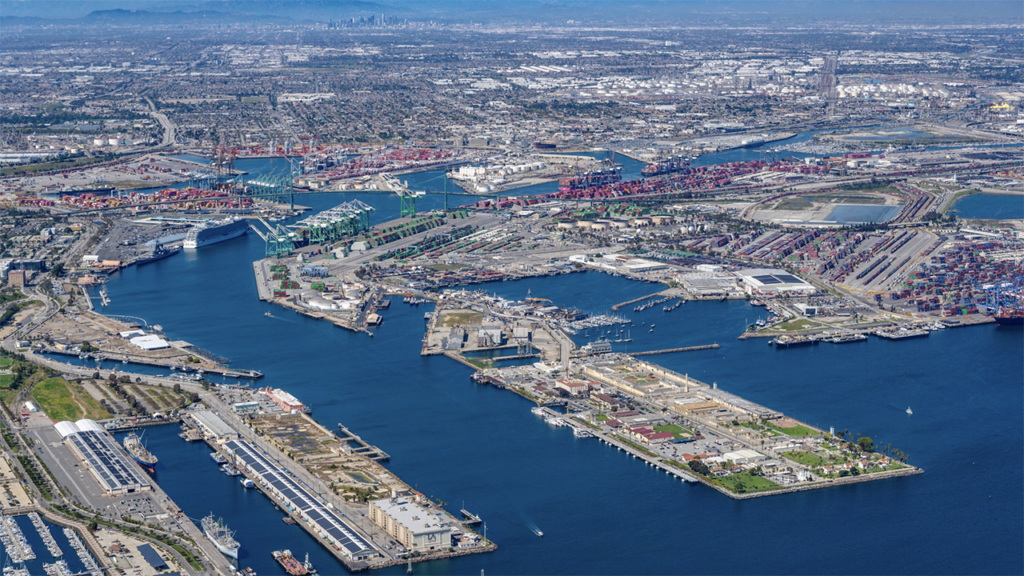
Port of Los Angeles
The Port of Los Angeles has reported that July 2024 was its busiest month in more than two years and the best July in the Port’s 116-year history. It handled 939,600 TEUs (Twenty-Foot Equivalent Units), up 37% from the prior-year period.
July 2024 loaded imports came in at 501,281 TEUs, up 38% from the previous year. The Port said it was the 14th consecutive month of year-over-year export gains with loaded exports landing at 114,889 TEUs, up 4% from the same month in 2023. Additionally, 323,431 empty containers were processed, a 54% increase over 2023.
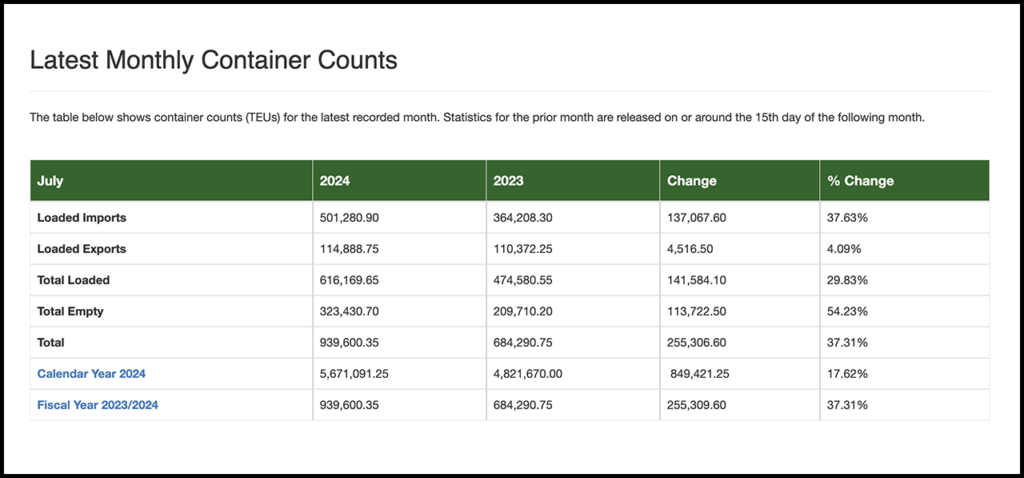
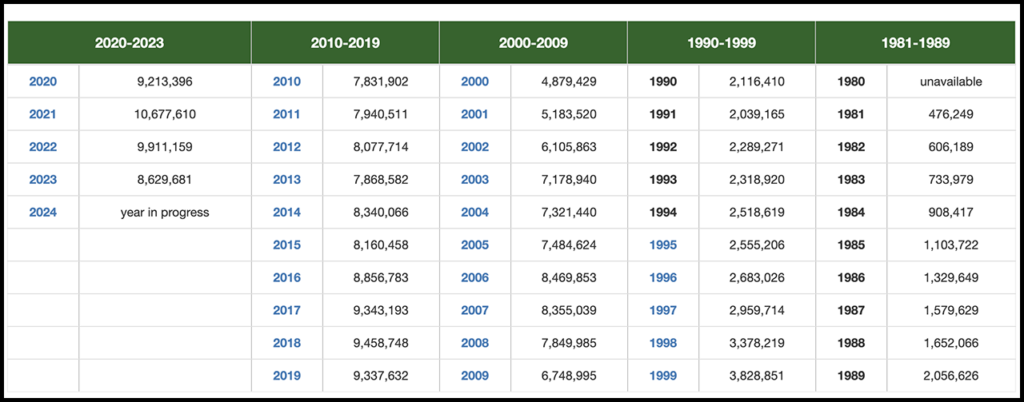
Overall, the Port said it has moved 5,671,091 TEUs during the first seven months of 2024, an 18% increase over its pace in 2023.
“We’ve seen an influx of year-end holiday goods coming across our docks a bit earlier than usual to avoid any risk of delay later in the year,” Port of Los Angeles Executive Director Gene Seroka said Aug. 13. “These goods—think toys, electronics and clothing—are arriving at the same time as more typical back-to-school, fall fashion and Halloween merchandise. An early peak season has helped to boost volumes here in Los Angeles. I’m grateful to our dedicated dockworkers, terminal operators, truck drivers, and all other stakeholders who work tirelessly every day to move all this cargo with remarkable speed and efficiency.”
Click here for the three previous months’ cargo volumes: April, May, and June.
In other Port news, the Herzog/Stacy and Witbeck Joint Venture recently wrapped up construction on a $73 million rail expansion project at Pier 400.
USDOT
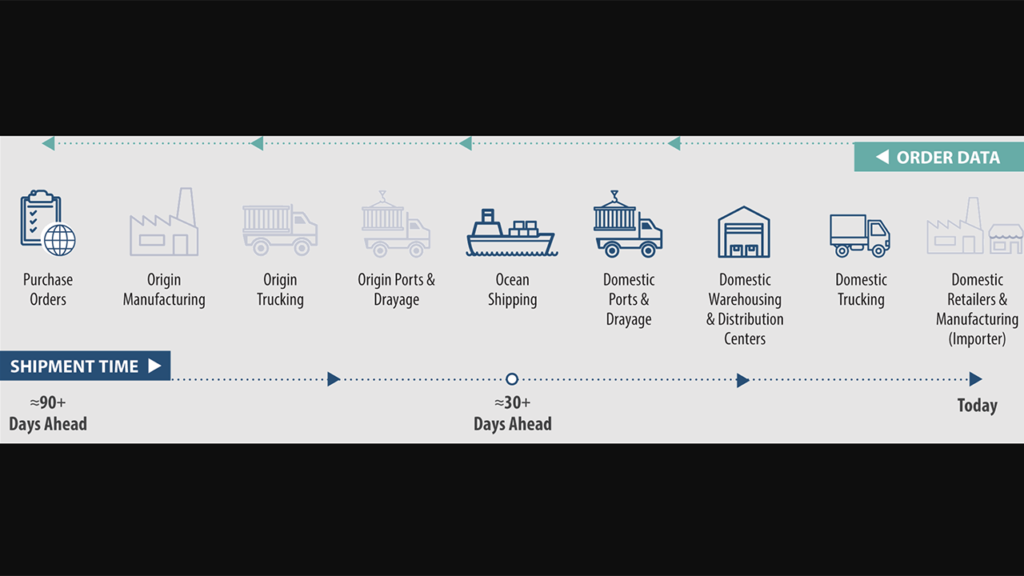
The Port of Oakland and the Northwest Seaport Alliance, which includes the Port of Seattle and Port of Tacoma, are now members of the Freight Logistics Optimization Works (FLOW) initiative, according to the USDOT, which created and leads the initiative. Collectively, the two companies comprise roughly 95% of West Coast inbound container volume. With all major West Coast ports now FLOW members, “carriers, shippers, truckers, and railroads will be able to better plan for and predict capacity needs to keep cargo moving and avoid bottlenecks,” USDOT reported Aug. 13.
USDOT describes its FLOW initiative as a public-private partnership “that helps create a shared picture of the U.S. supply chain” for its 80-plus members, which include the eight largest U.S. container ports; nine of the largest ocean carriers; and nine of the 20 largest retailers by imports, including more than 90 companies in the onboarding process.
How does FLOW work? USDOT collects, aggregates, and anonymizes key information shared by participants on inbound containerized freight, starting with importer purchase orders, and aligns future demand volumes against current regional capacity to move ocean containers. Industry members who join FLOW can access secure data through a shared online portal or API hosted by the Bureau of Transportation Statistics (see graphic, top). USDOT said it actively works with industry members to continue to improve and build use cases with FLOW data, and the partners are also working to use the data “to better estimate port and inland network congestion” and “monitor cargo shifts resulting from Houthi attacks that have disrupted vessel traffic in the Red Sea.”
“In February 2021, President Biden ordered a whole-of-government approach to tackle supply chain disruptions brought on by the COVID-19 pandemic, and later launched the Supply Chain Disruptions Task Force and the Council on Supply Chain Resilience to strengthen our supply chains,” USDOT said. “The Administration’s steady efforts to improve supply chains in the short-, medium-, and long-term have lowered costs for consumers and lowered inflation across the economy—with supply chains accounting for more than 80% of the fall in inflation seen in 2023. Recently, FLOW was used to help mitigate supply chain disruptions during the nearly three-month Port of Baltimore closure.”
“We are excited to be an official FLOW member,” said Port of Oakland Executive Director Danny Wan. “This partnership will provide us with enhanced visibility of goods movement trends across the country and the added benefit of expanding and improving data sharing efforts throughout the supply chain.”
“This public-private collaboration presents a unique opportunity to work alongside industry partners and the USDOT to address supply chain challenges proactively,” added Port of Seattle Commissioner Toshiko Hasegawa and Co-Chair of The Northwest Seaport Alliance. “By sharing data and insights, we can collectively optimize freight movement, reduce congestion, and strengthen the resilience of our region’s logistics network.”
“By collaborating across the supply chain and leveraging data-driven insights, the Northwest Seaport Alliance hopes to drive increased efficiency and reliability of port operations,” said Port of Tacoma Commission President Kristin Ang and Co-Chair of The Northwest Seaport Alliance. “This partnership aligns with our mission to deliver best-in-class service for our customers and contribute to the overall strength of the U.S. supply chain and national economy.”