
Intermodal Briefs: CN/Port of Vancouver; UP/Port Houston
CN / Port of Vancouver
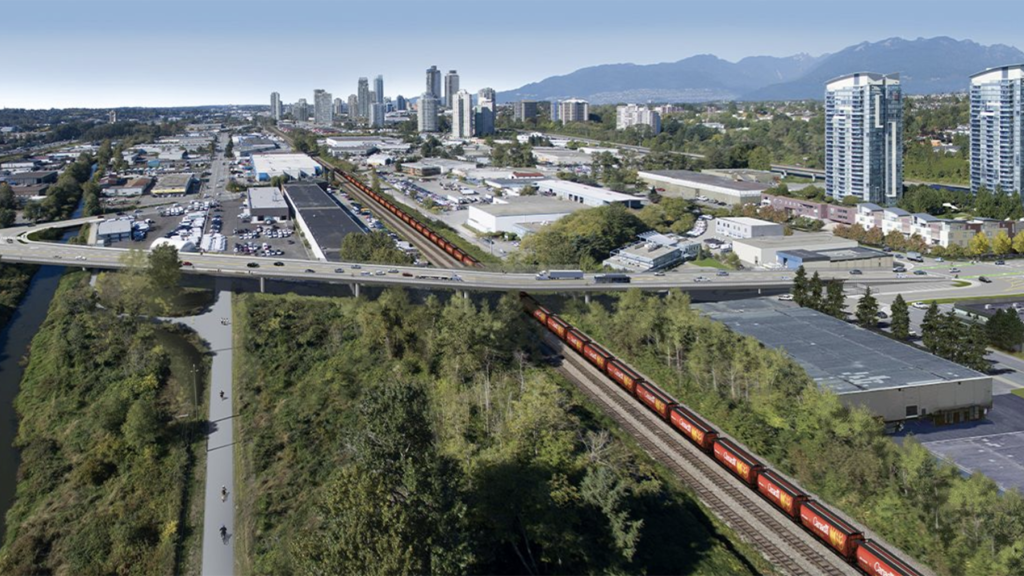
Construction of a new four-lane overpass crossing the CN rail lines at Holdom Avenue in Burnaby, British Columbia, will begin in late 2024, the Vancouver Fraser Port Authority, City of Burnaby, CN, and the government of Canada reported July 9. Among its goals: boosting rail capacity to and from Port terminals in North Vancouver, and mitigating the impacts of trade on those who live, work and commute in Burnaby.
The overpass will extend Holdom Avenue south over the rail corridor and Still Creek, connecting it with Douglas Road; it will replace the Douglas Road rail crossing in an effort to improve safety and connections for the Burnaby community, improve emergency response, and reduce greenhouse gas emissions. The Port Authority selected Aecon-Gateway Infrastructure Group as the design-build proponent.
“Once complete, there will be an increase of rail capacity for Port of Vancouver terminals,” the project partners said. “The rail corridor through Burnaby is the only rail connection to transport goods and commodities to and from port terminals located in North Vancouver, a vital link in the national supply chain that connects Canadian products like grain and fertilizer to global markets. The rail corridor moves more than 40 million metric tons of export cargo, accounting for more than 40% of the port’s total international exports in 2023.”
The City of Burnaby identified the Holdom Overpass as a solution to provide better access and improve safety for cyclists, pedestrians, commuters, and first responders as part of its transportation plans. According to the project partners, the Holdom Overpass active transportation facilities will improve connections to the Holdom Skytrain station, which is a main hub for cyclists and pedestrians, making travel from the Skytrain station to areas south of the rail tracks—such as the Central Valley Greenway—”safer, faster and more reliable.”
The project partners reported that the overpass project will add to the rail improvements completed by CN in 2022, which included updates to the Thornton Tunnel to reduce the time between trains traveling through the tunnel and a new rail siding running from Willingdon Avenue to Piper Avenue.
The Vancouver Port Authority has completed two phases of public engagement and continuous First Nations consultation; input from these efforts helped shape the overpass design. Public space surrounding the overpass will include First Nations cultural recognition, public art, and improved landscaping in the Still Creek and Beecher Creek areas.
According to the project partners, the road enhancements are part of the Burnaby Rail Corridor Improvements Project, “a series of road and rail improvements to increase transportation efficiency and trade capacity through Port of Vancouver terminals on the North Shore.” The Burnaby Rail Corridor Improvements Project is funded by the government of Canada through its National Trade Corridors Fund; the Port Authority; and CN.
“CN is proud to be a partner on the Holdom Overpass project,” CN President and CEO Tracy Robinson said. “This vital piece of infrastructure will improve safety and accessibility to the citizens of Burnaby, as well as increase efficiency for the Port’s operations including greater rail capacity to and from Port terminals in North Vancouver. This project demonstrates our commitment to moving the economy with safer, more efficient transportation solutions benefiting both our customers and the communities we serve. Together with our partners, we are committed to strengthening global supply chains, supporting growth and a sustainable future for Canada’s economy.”
“By investing in projects like the Holdom Overpass, we’re addressing current transportation needs, supporting our supply chains to make life cost less for Canadians, and also building the infrastructure to support vibrant, growing communities that are great places to work, live, and raise a family,” said Canadian Minister of Transport Pablo Rodriguez.
UP
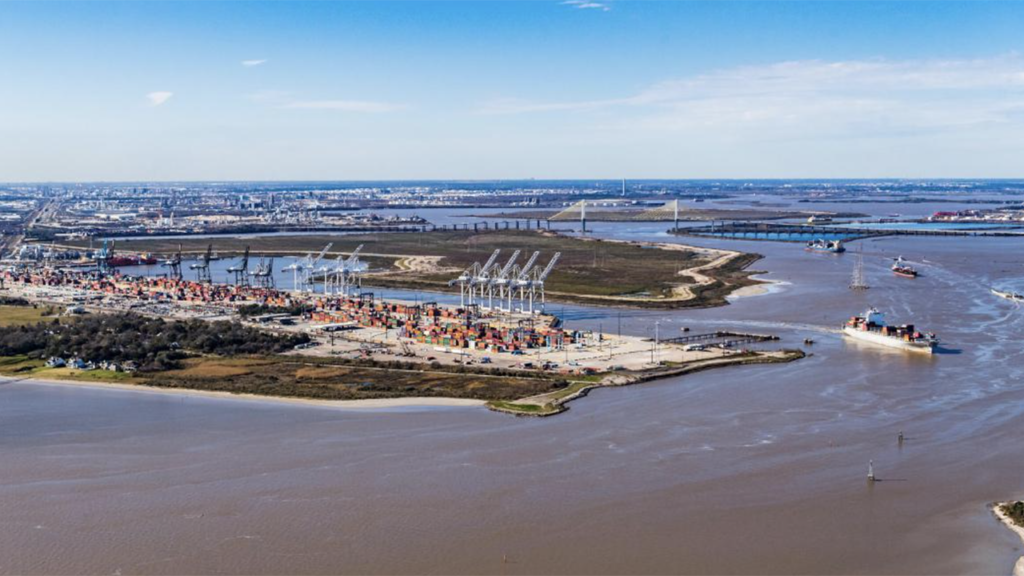
“The positive momentum continues to roll a year into UP’s Port Houston on-dock rail service, helping customers’ goods move more efficiently to their destination,” the Class I reported July 9 in the Inside Track section of its website.
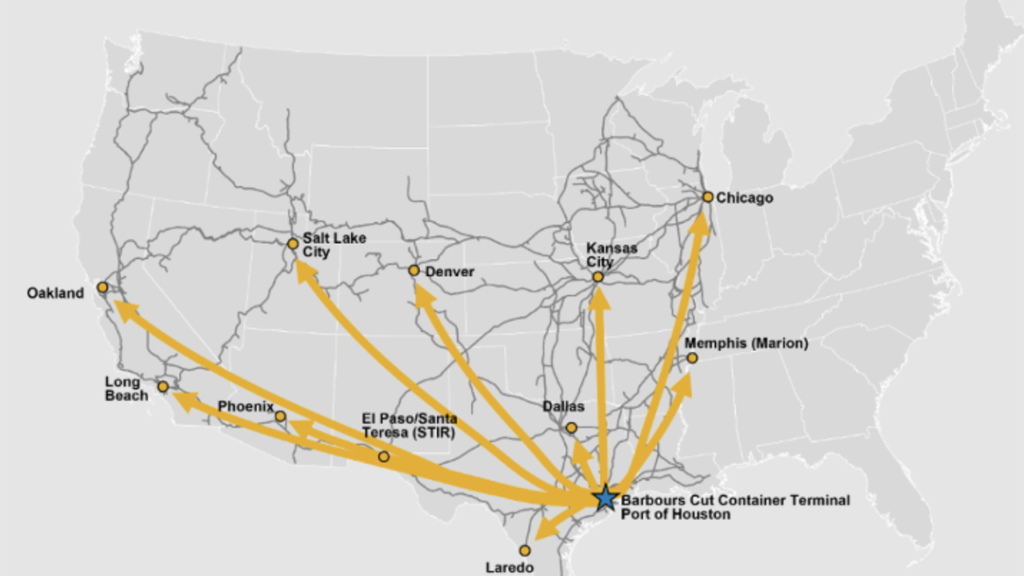
UP launched the new on-dock service in June 2023, providing international shippers of consumer goods with direct rail access to Denver, Salt Lake City, Oakland, Long Beach, and El Paso. In December 2023, the Class I expanded the service to its intermodal facilities at Chicago Global 4, Kansas City, Memphis (Marion, AR) and Port Laredo; and in March 2024, expanded it to two additional inland markets: Dallas and Phoenix.
In cooperation with Port Houston, ocean carriers and Beneficial Cargo Owners have access to rail service between Barbours Cut Container Terminal at Port Houston and 11 key UP-served markets (see map below).
Port Houston is a 25-mile-long complex of nearly 200 private and public industrial terminals along the 52-mile-long Houston Ship Channel. The eight public terminals are owned, operated, managed or leased by the Port of Houston Authority and include the general cargo terminals at the Turning Basin, Care, Jacintoport, Woodhouse, and the Barbours Cut and Bayport container terminals. Port Houston is said to be the largest Gulf Coast intermodal container port, handling 73% of U.S. Gulf Coast container traffic.
According to UP, its on-dock solution saves customers’ time, reduces greenhouse gas emissions by taking trucks off the highways, and simplifies the end-to-end supply chain for customers. Additionally, it eliminates the need for containers to be trucked approximately 30 miles from the port to the nearest rail facility in Houston for loading onto railcars, reducing highway congestion in the Houston area.
“It’s a win-win any time we can increase speed to market for our customers and grow with them,” said Kenny Rocker, UP’s Executive Vice President-Marketing and Sales. “We are excited about growing our presence in the Houston market and the service’s continued potential.”
“The addition of on-dock intermodal services has opened up new markets for Port Houston’s customers and enhanced efficient cargo movement through our terminals,” added John Moseley, Chief Commercial Officer at Port Houston. “We appreciate UP’s commitment to Houston and look forward to continuing to work together to provide the important services our customers need.”
BNSF in May 2023 reported ramping up its own network of intermodal lane offerings with new service options from the Barbours Cut Container Terminal. The move, it said, was part of a “continued commitment to adjusting to our customers’ and the marketplace’s needs to enable growth and the efficient movement of shipments.”




