
Railroad volume growth has been scarce over the past two years, but it has shown up—primarily in the form of international intermodal—so far in 2024.
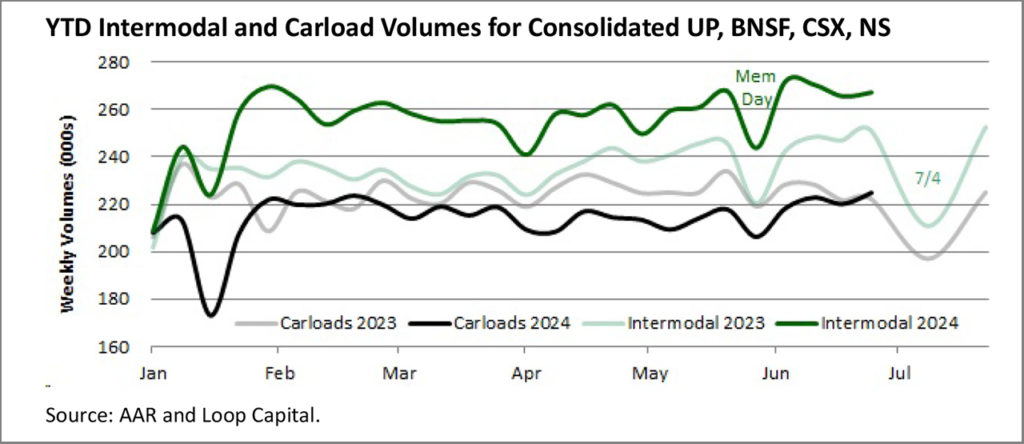
The chart below consolidates loads for the four major U.S. railroads and the gap between the dark green line (this year) and light green line (last year) shows the extent of the growth. On average, weekly intermodal loads are up 20,400 (+8.7%) compared to this point in 2023. CN shows the same trend, with intermodal loads up 9.1% YTD. We’ll leave CPKC out for now because the combination with KCS in April 2023 distorts the picture somewhat.
There are a couple of consequences of this good container growth. The first is that, in conjunction with another step down in coal volumes, it’s going to drive negative mix, pressuring operating ratios. That’s a high-class problem and, at this point, we’ll take profitable growth wherever we can find it. It’s also a timely partial offset to plummeting coal.
The second consequence is regarding operations. The message from the STB and railroad customers in reaction to the 2022 Service Crisis is that the railroads need to become more resilient. This has two basic parts, in our view:
1. Prevent the catastrophic service meltdowns we’ve witnessed over the past 10 years, due primarily to crew shortages/mismanagement.
2. Get better at handling unanticipated volume growth. Bend-don’t-break, and try to bend less. Try to raise the troughs on the service roller-coaster.
How are they doing? Not encouraging. Below you can see the changes in intermodal average train speed in reaction to the volume growth they’ve been forced to absorb in Q2.
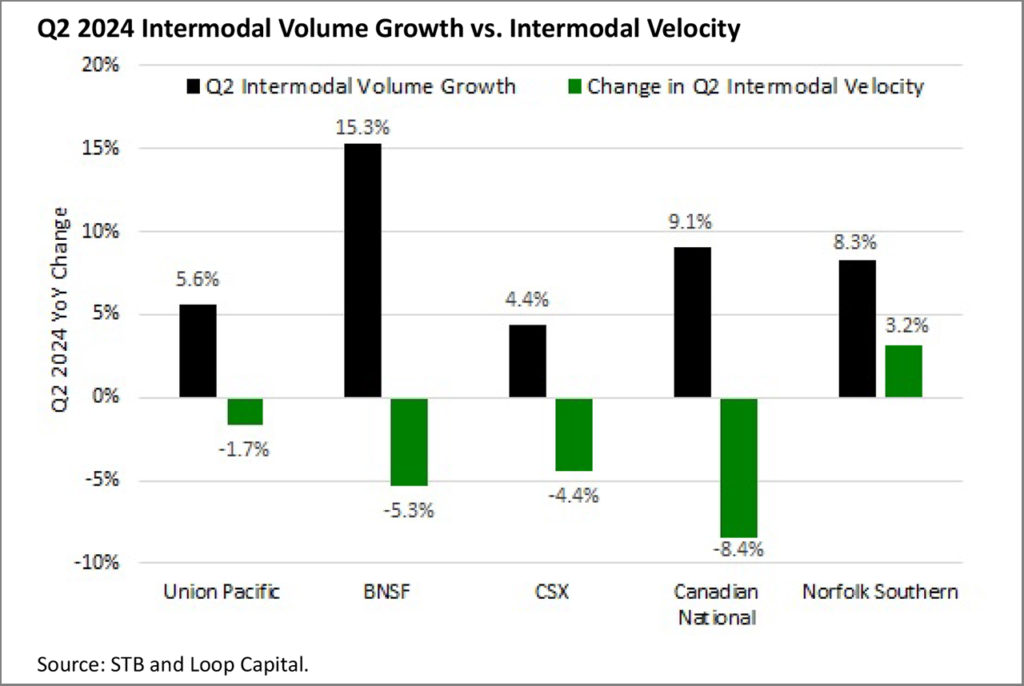
We’ll give BNSF half a pass because 15% load growth is extreme. Union Pacific looks solid compared to most of its peers, but intermodal train speed took a material step down in the week ending June 28 and is only 0.1 mph above its 5-year low.
Norfolk Southern is an interesting case. It’s lapping the damage from East Palestine last year, which suppressed capacity and intermodal train speed between February and early July, but in addition to that easy comp it’s handled the surge in international intermodal better than its peers. NS intermodal train speed is stable and, recently, rising in the face of 8% volume pressure while its three U.S. peers are going in the opposite direction.
This international intermodal volume pressure of course hasn’t come in a vacuum. Winter was kind with only one cold snap in the third week of January, but mother nature has been landing heavy blows ever since, including the big Texas Panhandle wildfires and more recent flooding in Texas, Arkansas, Louisiana and then the Upper Midwest. Some significant main line derailments and problems forecasting crew availability following new sick leave agreements complete a challenging picture, primarily in the West. What else could go wrong?
Tropical Storm Beryl Incoming
At the time of writing on July 7, Beryl was a tropical storm, but as expected it strengthened to a Category 1 hurricane before it made landfall on the Texas coast on July 8, causing severe flooding and a power outage affecting three million people. As you can see in the two charts below it was heading for somewhere we really, really, didn’t want it to go, and that’s the key rail node of Houston with all its complex local operations.
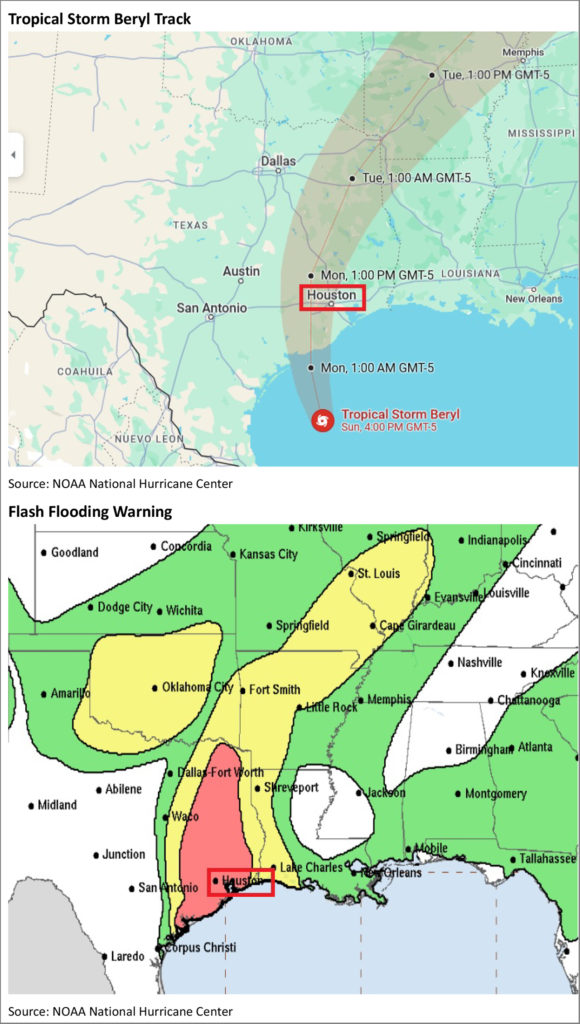
Remember it was flooding in Houston in the first week of May that sent Union Pacific’s network velocity to a five-year low, from which it hasn’t yet recovered. It looked like Round 2 was about to begin. Also, don’t discount Beryl because it was “only” likely a Category 1. That just refers to wind speed, and it’s not wind we were worried about, it’s flooding. A slow-moving tropical storm that soaks a key rail location can be just as bad as a major hurricane, as we saw when Tropical Storm Hilary washed out a Union Pacific bridge in California last August.




