
BNSF intermodal operating metrics for the week ending Dec. 31. 3, 2025 declined, but the railroad said they “are showing signs of recovery, returning to pre-holiday levels with significant improvements in velocity and dwell over the past few days. Our local service compliance measure improved vs. the previous week but is down from the previous month.”

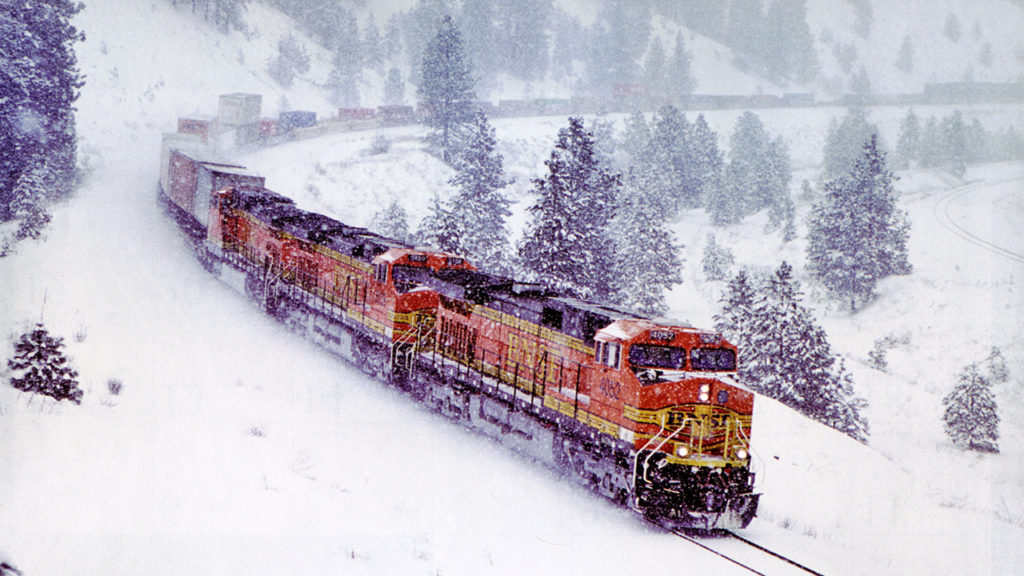
“Our operating teams are focused on maintaining positive service performance momentum as we move into the new year,” BNSF said Jan. 3. But, severe winter weather across portions of BNSF’s network won’t help. Winter storms impacted parts of the Pacific Northwest and Northern Plains, including eastern Washington, Montana and North Dakota on Jan. 4. Heavy snowfall, expected to exceed six inches, affected south-central Montana. A second winter storm that developed in the Rockies late on Jan. 4 moved across the Central Plains toward the mid-Atlantic over the weekend. This storm brought frigid Arctic air, along with snow and ice, as it traveled eastward through Nebraska and Kansas on Jan. 5 and further east into Illinois early Jan. 6. Kansas City, a major BNSF hub, was hit hard.
“In preparation for these challenging conditions, each of our affected operating divisions has activated its Winter Action Plan,” BNSF said Jan. 3. “This plan is designed to ensure that our workforce can operate safely during this weather and that we can keep trains running as efficiently as possible. Train length restrictions have also been implemented in the impacted areas. These measures, along with the use of distributed locomotive power, significantly enhance train braking performance in cold weather. These restrictions will stay in place until midweek next week when conditions are expected to improve. BNSF teams are monitoring conditions and are ready to respond quickly to any service disruptions.”
BNSF noted that it completed a lead track extension project at its San Bernardino Intermodal Facility: “This multi-year project has expanded our lead track by approximately 11,000 feet, enhancing our operational efficiency by allowing the seamless movement and switching of trains in and out of the facility while maintaining the flow of main line traffic in the region. This will improve consistency and efficiency in freight transit to/from Los Angeles.”




