

The President-elect has created a non-government Department of Government Efficiency (DOGE) led by Elon Musk and Vivek Ramaswamy. Their goal is to make a comprehensive review of the government and target wasteful spending for elimination. DOGE’s goal is to eliminate $1 trillion of government spending. This is not an official government agency or department; it is a special task force.
In the vast federal bureaucracy, there should plenty of opportunities to cut spending—but not nearly to the level Musk prefers, as agreed by most federal budget experts. Elon Musk has pondered if the Pentagon needs an F-35 fighter in the era of drones. DOGE might review the Agriculture Department looking for programs that restrict supply and raise consumer prices. Many federal spending programs have strong political support and are likely congressional third-rails few lawmakers dare to touch.
But what if DOGE reviewed the Surface Transportation Board? Granted, STB is a minuscule target for trimming—that’s what makes it an attractive target—and it’s happened before. Bill Clinton used a State of the Union address to target the Interstate Commerce Commission (ICC), which became a considerably slimmed down STB. Perhaps now it is time to finish the job and sunset the STB.
In 1980, the Carter Administration started trimming the ICC because the Administration worried that excessive economic regulation—a key factor in the financial failure of Northeast railroads and looming insolvency of many in the Midwest—would unleash the threat of nationalization and an intolerable drain on the federal treasury.
To try to stave off this outcome, the Administration pushed partial railroad economic deregulation, which resulted in the Staggers Rail Act of 1980. Retained was protection for captive shippers. But all is no longer well with the industry—but the fault lies not with too little economic regulation.
Scott Group of Wolfe Research has written that in 2024, railroad equity shares were down 7% and underperformed the S&P 500, which was up 23%. In fact, Group notes, railroads “have now underperformed for three of the past four years after previously outperforming for 20 of 21 years. For the first time since 2015, every rail stock declined in 2024.” Is this the start of a downtrend?
Railroads have ongoing challenges that suggest it could presage a trend: the decline of coal and rise of autonomous trucks. Twenty years ago, coal was the railroads’ largest commodity. It was a good service that railroads could handle in unit trains in a loop service. It was so efficient that railroads carried it at less than a penny/ton-mile.
With climate concerns, electric utilities are closing coal plants. The question is whether railroads can replace coal with new services, maybe take some truck business? That will be challenging, especially if railroads cannot adjust crew sizes.
In April 2024, the Federal Railroad Administration issued a rule that, if it survives a federal court challenge, will make it nearly impossible to utilize the benefits of Positive Train Control to reduce crew size and reposition the conductor to a more productive role outside the locomotive cab.
In the meantime, highway carriers continue to experiment with autonomous trucks. That would give them a significant cost advantage vs. rail operators, and railroads already struggle to match trucker service quality.
When Marty Oberman was STB Chair, he repeatedly harped about poor railroad service quality. But if railroads are going to poach truck business, they have every incentive to improve service quality without STB hectoring.
STB has the power to issue service orders to redress service problems, but does STB have the expertise to prioritize railroad operations? Presumably, the most highly rated traffic should get priority. How often has STB admitted that good service comes with a price? To improve service, railroads will need to add personnel and equipment.
With STB’s recent focus on service, shippers have brought service cases. However, when I wrote about Sanimax and the tank car cases, I speculated that they could have been turned into rate cases, but that begs the question of STB’s rate case methodology.
STB’s Standalone Cost (SAC) methodology worked reasonably well for coal cases, but not much else. Having litigants spend multiple millions for cases worth hundreds of millions was justifiable. That is not the case for smaller cases.
Whether simplified SAC or 3-Benchmark, STB’s attempts at a rate case methodology for smaller cases have resulted in a largely empty docket. STB’s most recent attempt, Final Offer Rate Review, has been rejected by an appellate court. But I must ask: Is there need for a rate case forum if railroads are losing market power and not making exorbitant profits? Maybe DOGE should just terminate STB.
There are certain ministerial functions, such as abandonment approval and new construction applications, that could easily be turned over to the Department of Transportation. However, if there is no need to have a rate case forum nor monitor railroad revenue adequacy, then there is no need for R-1 reporting, the Waybill Sample nor the URCS (Uniform Railroad Costing System).
If there is ever another rail merger, the Antitrust Division of the Justice Department could review it. No need to keep STB around for a once-in-a-generation litigation.
STB’s economic mission was to balance railroads’ need for adequate revenues with shippers getting reasonable rates. STB was in place to limit railroads’ monopoly pricing power on captive shippers, e.g., coal. But coal is going away.
How much need is there for captive shipper protection now? How will railroads find the revenues they need to get to revenue adequacy? These are questions that are beyond the STB’s scope.
I just do not see that America’s freight railroads have any special need any longer for an economic regulator. They are not the economic goliaths they were in 1887 when the ICC was created.
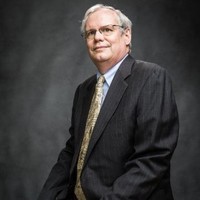
Dr. William Huneke is the former Director and Chief Economist at the Surface Transportation Board. He has more than 40 years’ experience in economics, transportation, railroad regulatory policy, management consulting, business analysis and teaching in the commercial and government sectors. He provides economic consulting on regulatory and arbitration matters. At the STB, Dr. Huneke led the Board’s analytical work and oversaw the collection of economic and financial data. Since leaving the STB, he has provided economic and litigation support to Class I railroads and other private-sector clients. He worked with the OECD (Organisation for Economic Co-operation and Development) to advise the Mexican government on its future rail regulatory policy. He represented the United States at an OECD conference on railroad industry structure. His private-sector experience included executive and management positions at UUNET, Freddie Mac and the Association of American Railroads. Dr. Huneke has taught graduate business courses at the University of Maryland, Robert H. Smith School of Business. He holds a doctorate from the University of Virginia and a B.A. from Swarthmore College.




