
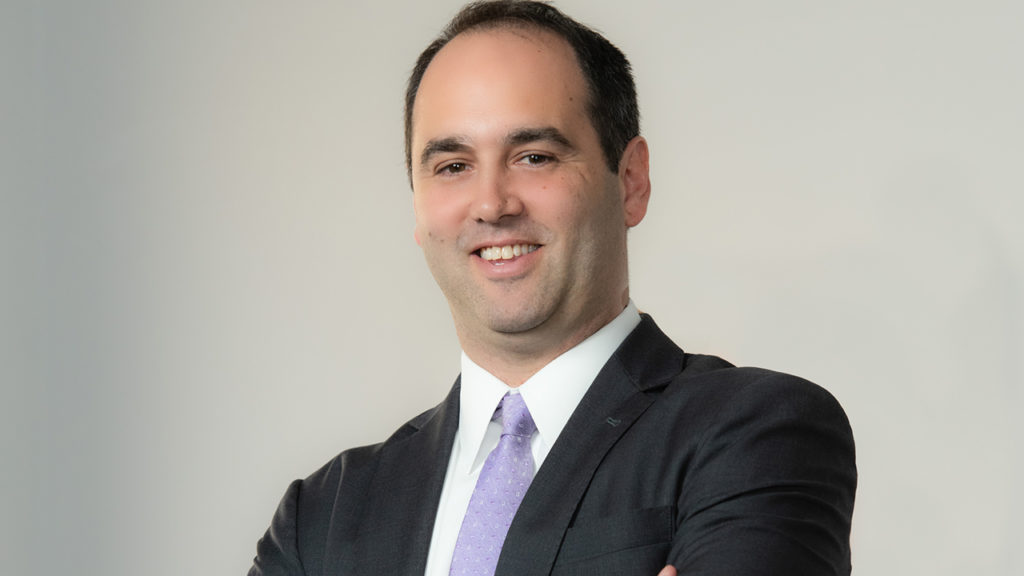
ASLRRA PERSPECTIVE, RAILWAY AGE AGE AUGUST 2025 ISSUE: Every new Administration begins its tenure with a wave of activity. This time around, POTUS 47’s “unique” style combined with a change of party control in Congress has turned that expected wave into a tsunami. I am pleased to say that short line railroads have met the moment in an admirable fashion and on many fronts.
Since January, short lines have presented oral testimony at three Congressional Hearings—Pinsly Railroad General Counsel and ASLRRA Executive Committee member Kristin Bevil before the House T&I Committee on ways to improve the CRISI grant process, Anacostia Rail CEO Peter Gilbertson before the Senate Commerce Committee on modernizing the rail network, and yours truly before the House T&I on the need for continuing federal infrastructure investment and short line priorities in surface transportation reauthorization.
Immediately after the new Session of Congress began, short lines started soliciting Congressional signatures on letters to the House and Senate Appropriations Committees urging full funding for the CRISI grant program. In short order they secured signatures from 62 House Members and 31 Senators. Although the FY2026 appropriations process is yet to be finished, the House Appropriations Committee has advanced its version of the bill that includes $538.4 million for CRISI, up significantly from the $100 million enacted in FY2025. This funding is in addition to the $1 billion in advance CRISI appropriations approved by the previous Congress.
In May, ASLRRA hosted one of the best attended Railroad Day on Capitol Hill events ever, with 305 Congressional meetings held by 327 well-prepared and engaged attendees from across the country. One of the primary missions was to secure co-sponsors for the short line 45G rail rehabilitation tax credit modernization bills.
In addition, short lines have participated in a half dozen state specific fly-ins to build our 45G co-sponsor list. These combined efforts have resulted in more than 400 short line representatives holding more than 500 Congressional meetings in the first six months of the year. This work has now yielded 96 co-sponsors for the House bill (H.R.516) and 13 co-sponsors for the Senate bill (S.1532).
While this is more co-sponsors than the vast majority of bills introduced in the new Congress (we’re in the 97th percentile already), we know from past experience that our success in enacting 45G legislation depends on our ability to secure a majority of the 435 House and 100 Senate Members. There is a long road ahead on that front, and 99th percentile is more fun than 97th percentile anyway.
With the able assistance of an active ASLRRA Surface Transportation Board (STB) Working Group, ASLRRA General Counsel Sarah Yurasko has spearheaded an effort to secure STB process and policy changes that will benefit the short line industry. The effort piggybacks on STB Chairman Fuchs’s policy review initiative, which is seeking to streamline agency procedures, improve collaboration and transparency, and ensure a more efficient and effective regulatory environment. We are seeking three changes that will save short lines time and money and level the playing field with our modal competitors.
First, short line railroads spend valuable time and resources asserting federal preemption in state and federal courts in matters where there is clearly preemption. We are asking the STB to provide more aggressive and anticipatory leadership in helping educate states, localities, federal entities, and courts about the extent of ICC Termination Act (ICCTA) preemption.
The STB took on the task effectively in commenting on CARB’s Section 209(E) Authorization Request for its In-Use Locomotive Regulation. This type of proactive work is crucial in protecting short lines’ ability to compete with trucks for business.
Second, short lines need an accelerated process for the formal recognition of common carrier status. Because there is no established process, other than through a lengthy STB declaratory order proceeding, for new carriers to provide local government agencies or the courts proof of that status, short lines are often forced to spend significant amounts of time and money on legal proceedings predicated on third parties and/or local government challenging the carrier’s STB-regulated common carrier status.
Third, in 2006 the STB made a regulatory change that unnecessarily lengthened the period for class exemption procedures from seven days to 30 days. Delays cost money and kill deals and are a regulatory invitation for competitive modes of transportation not so regulated to fill the transportation void and grab competitive business.
A real tsunami will change the landscape it hits in an instant and there is little anyone can do about that. Today’s political tsunami has indeed changed the landscape in an instant, but short lines have proven there is much we can do to respond.
I am deeply appreciative of the thousands of hours that short line representatives have spent meeting with and educating Members of Congress and transportation agency decision-makers on the issues that are so important to short line success. What progress we have made in the past six months is a direct result of that time and effort. I cannot stress enough how important it is that short lines continue that work.




