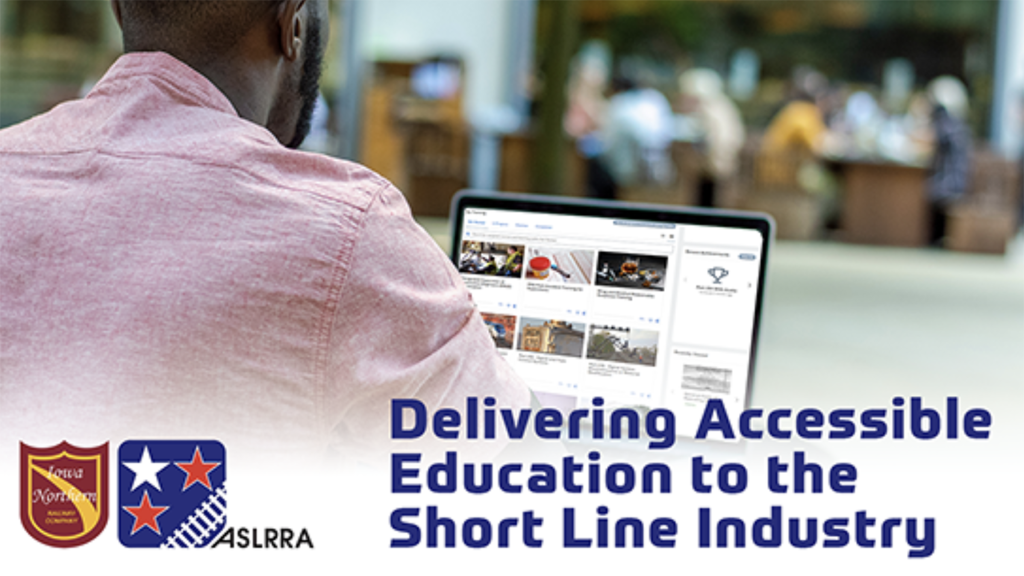
The Short Line Training Center’s online Learning Management System (LMS) now includes three virtual reality (VR) training modules, according to the American Short Line and Regional Railroad Association (ASLRRA), which in partnership with Iowa Northern Railway Company (IANR) and funding from a Federal Railroad Administration (FRA) grant offers the training center for small-railroad use.
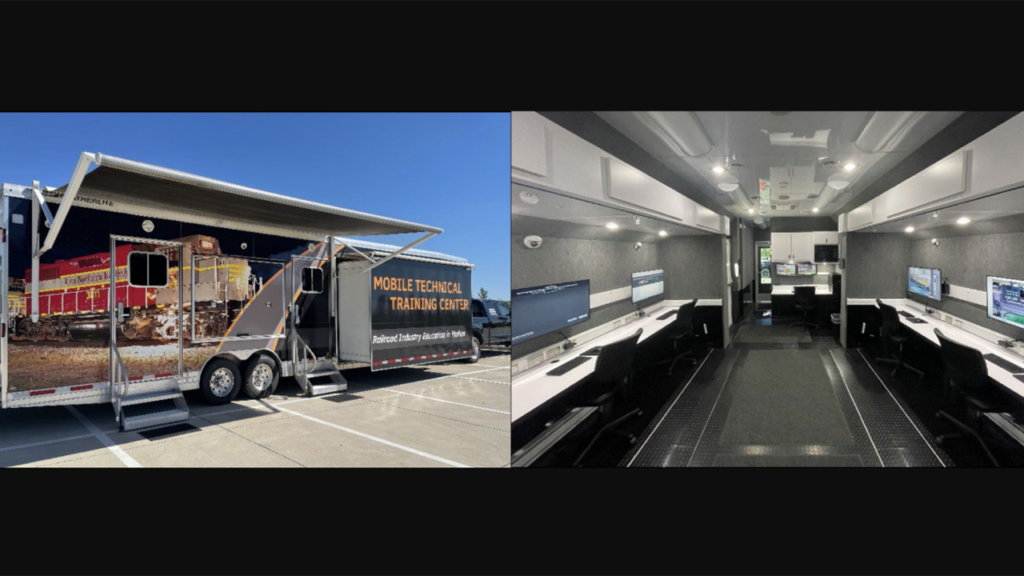
The Short Line Training Center, launched in 2022, includes the LMS and Regulatory Training Courses plus a Mobile Technical Training Center equipped with two Type II Locomotive Simulators and two additional simulators permanently located at the IANR training center in Waterloo, Iowa—all of which deliver regulatory, compliance, and safety training and materials to railroad employees.
The three new VR modules for the LMS are Freight Car Familiarization, Locomotive Daily Inspection, and Class I Airbrake Test & Inspection. “These training modules are the first use of VR for the LMS, offering enhanced engagement and motivation for trainees, improved safety and efficiency versus live training, and increased accessibility and scalability for railroads,” ASLRRA reported July 22.
According to the association, using VR technology in technical training can offer several benefits for both trainers and trainees, such as:
- “Enhanced engagement and motivation. VR can create a realistic and engaging scenario for trainees, where they can interact with the virtual environment and objects, and receive feedback and guidance. This can increase their interest and motivation to learn, as well as their retention and recall of the information.
- “Improved safety and efficiency. VR can allow trainees to practice and master complex and risky tasks in a safe and controlled environment, without the fear of making mistakes, causing harm or risking potential injury. This can reduce the need for physical equipment, materials, and facilities, and lower the costs and risks associated with technical training.
- “Increased accessibility and scalability. VR can enable trainees to access the training content anytime and anywhere, as long as they have a device and an internet connection. This can eliminate the barriers of time, distance, and availability, and allow more trainees to participate in the training. VR can also be easily adapted and customized to different levels, needs, and preferences of the trainees, and provide personalized and differentiated learning experiences. VR courses also provide classroom instructors with a valuable tool to effectively present technical subject matter in an engaging format.”
The three new training modules join the Part 214 Railroad Workplace Safety training program launched earlier this year, and ASLRRA’s Part 243 model programs, plus FRA Drug and Alcohol Reasonable Suspicion and Post-Accident Toxicological Testing training courses, according to ASLRRA. At least 30 technical training courses are planned, with five courses expected to be released in 2024 and several others currently in development, the association added.
“The release of these three courses represents a significant achievement for the program, and the industry,” said Mark Vaughn, Vice President and Chief Operating Officer–Transportation, Training and Safety at IANR. “The ability for short line railroads to economically access this cutting-edge training is in my opinion, a game changer for trainees and the railroads.”
“The Short Line Training Center is a significant addition to our industry’s arsenal of products to help short line railroads level up on safety,” ASLRRA President Chuck Baker said. “The Learning Management System allows for railroad employees to be trained or certified at any time, in any location. This flexibility allows even the smallest of railroads to train employees without time away from the railroad, and the added cost of travel. The use of VR technology is a new level of interactivity for the participant, and will increase the effectiveness of the training.”