Three iconic railroaders who spent much of their careers at Norfolk Southern or one of its predecessor companies—David Goode, the late Jim McClellan and the late Bill Brosnan—have been inducted into the National Railroad Hall of Fame.
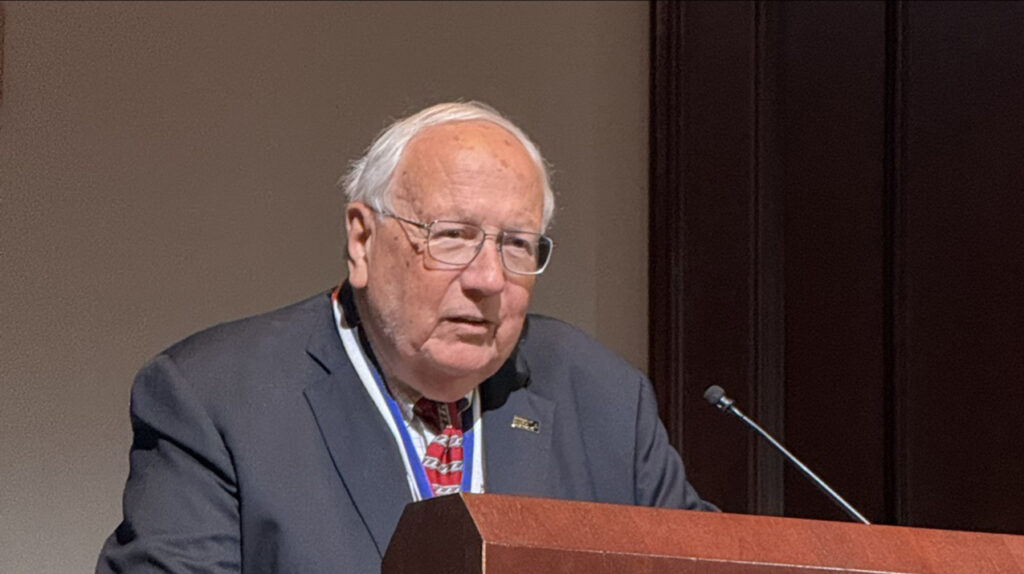
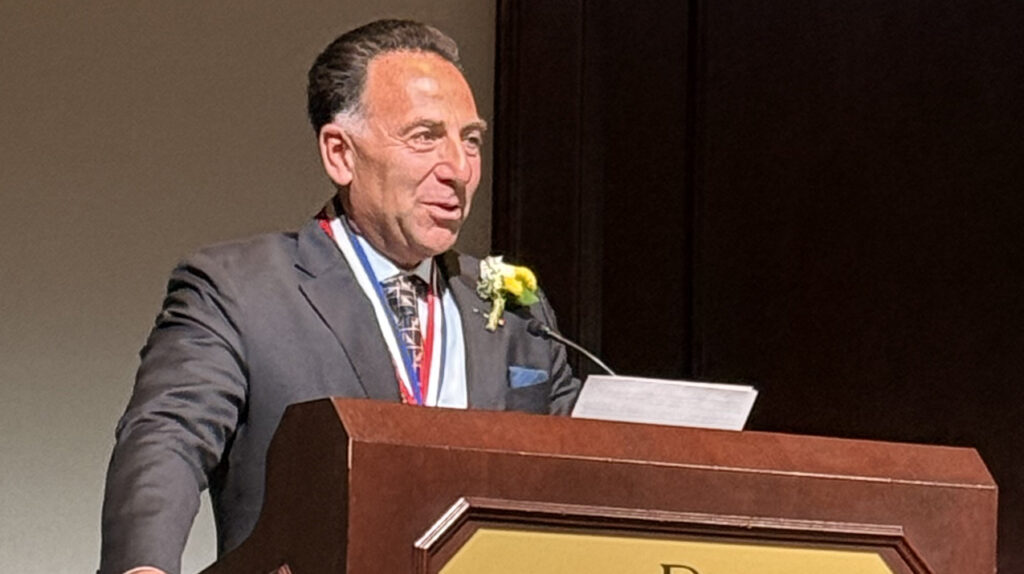
David R. Goode, Railway Age’s 1998 and 2005 Railroader of the Year, is best known for his role as Chairman, President and CEO of Norfolk Southern during the late 1990s split of Class I Conrail with CSX. The eastern giant, established via the 1974 Regional Rail Reorganization Act (3R Act) from the bankrupt Penn Central and five other failing railroads, was the subject of a protracted battle between NS and CSX following CSX’s attempt to acquire 100% of it. Goode led NS to an outcome resulting in a 58% NS/42% CSX division. For that, he was selected as 1998 Railroader of the Year.
“David Goode, though he does not offer many direct comparisons with other railroads, is eager to point out what he feels sets NS apart,” Railway Age noted in its January 1998 issue “‘I would say that we have a tradition of pride and trying hard to excel,’ he says. ‘I think you’ll see it throughout the organization. It has to do mostly with our tradition of believing we have to work harder than the other guy. It’s also a tradition of really being focused on safety, almost as a tenet of our company. It affects everything we do, and it’s something on which everyone here has worked together.’
“Are these characteristics unique to NS? Not really, says Goode: ‘I think these are the elements I see among railroaders in general. It‘s a tradition in this industry.’ But one thing is certain, he says: ‘The people that succeed in our company are the ones who make a commitment to put themselves on the line for our goals.’ And that’s where the difference may lie.
“It may also stem from being, in a sense, the underdog. ‘We have a history of success,’ says Goode, ‘but we’ve always been the smallest guy around—the little kid on the block with something to prove. We’ve proved it by trying to push hard and run a good organization. We’re geographically limited, so we’ve worked hard to find ways to build out of that, to develop partnerships … We’ve always thought we had to work a little harder, to execute a little better. We’ve competed head-to-head with CSX for many years, and we don’t begin to have the revenue base CSX has, so we’ve had to work harder with what we’ve got.’
“The Conrail acquisition is without a doubt Norfolk Southern’s biggest, most important growth opportunity. NS has pursued Conrail several times in the past, without success. This time, however, the situation was almost tailor-made. Here was NS, cast in the role in which it feels most comfortable: the underdog, battling with its much larger eastern competitor, fighting the good fight for better service and enhanced competition. NS, and David Goode, played that role to the hilt.
“‘From our own standpoint,’ says Goode, ‘we believed that we needed to be a complete eastern rail provider in order to provide the right basis, the right critical mass, to serve our shippers effectively. We wanted to be in a position to develop innovations in logistics and distribution. That’s why Conrail was so important to us. The acquisition was the next step we needed to take. That’s why 1998 will be a pivotal year for us—completing this transaction and forming a competitive balance in the East.”
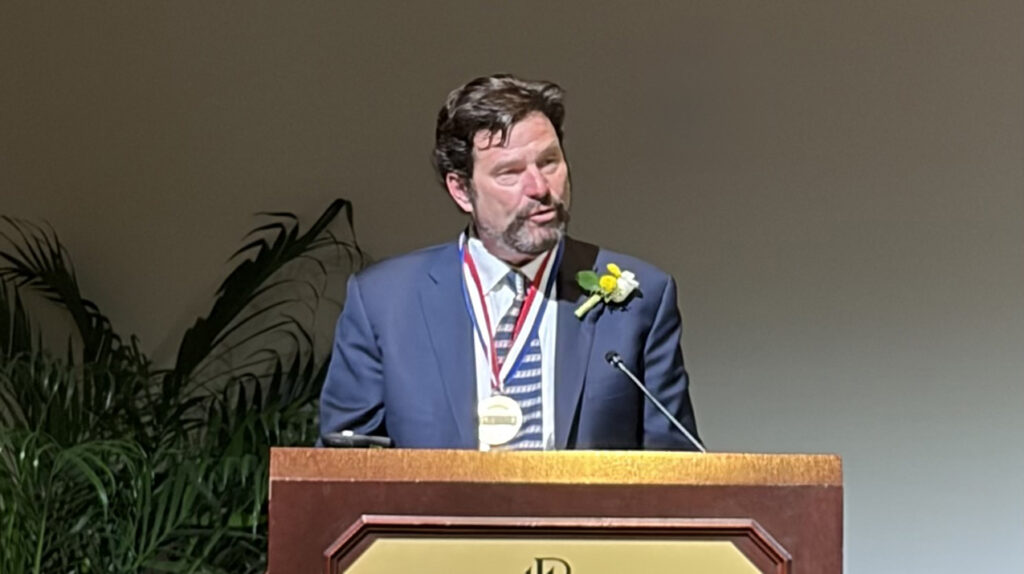
Jim McClellan (1939-2016) was represented by his son, Norfolk Southern Senior Vice President and Chief Strategy Officer Mike McClellan. “Throughout a career in the railroad industry that spanned almost a half-century, McClellan worked at Southern Railway, New York Central, Penn Central, the Federal Railroad Administration, Amtrak, the U.S. Railway Administration, the Association of American Railroads and Norfolk Southern in marketing, planning and policy roles,” Railway Age Editor-in-Chief William C. Vantuono wrote in a 2016 obituary. “He retired from NS in 2003 as Senior Vice President Planning.
“McClellan is best known for his strategic behind-the scenes work in the mid-1990s during the split of Conrail between NS and CSX. He is credited with NS’s so-called ‘go crazy’ strategy that ultimately prevented CSX, whose Chairman at the time was John Snow, from acquiring 100% of Conrail.
“McClellan was among the core group of people in the U.S. Railway Administration who created Amtrak and laid the groundwork for Conrail, and later was a part of the teams that created Norfolk Southern from a merger of the Norfolk & Western and the Southern, in addition to his later involvement in the split of Conrail between NS (58%) and CSX (42%). Executives and planners relied on his railroading knowledge and interpretations of railroad system maps and rail traffic flows.
“McClellan is the focal point of several chapters in Rush Loving Jr.’s 2006 book The Men Who Loved Trains: The Story of Men Who Battled Greed to Save an Ailing Industry. Loving, a long-time friend of McClellan, referred to him as ‘The Forrest Gump of Railroading.’ He was honored with Railway Age’s W. Graham Claytor Jr. Award for Distinguished Service to Passenger Transportation and was named one of 75 People You Should Know in the November 2015 issue of Trains magazine. McClellan’s own book, My Life with Trains: Memoir of a Railroader, [was published in 2017].
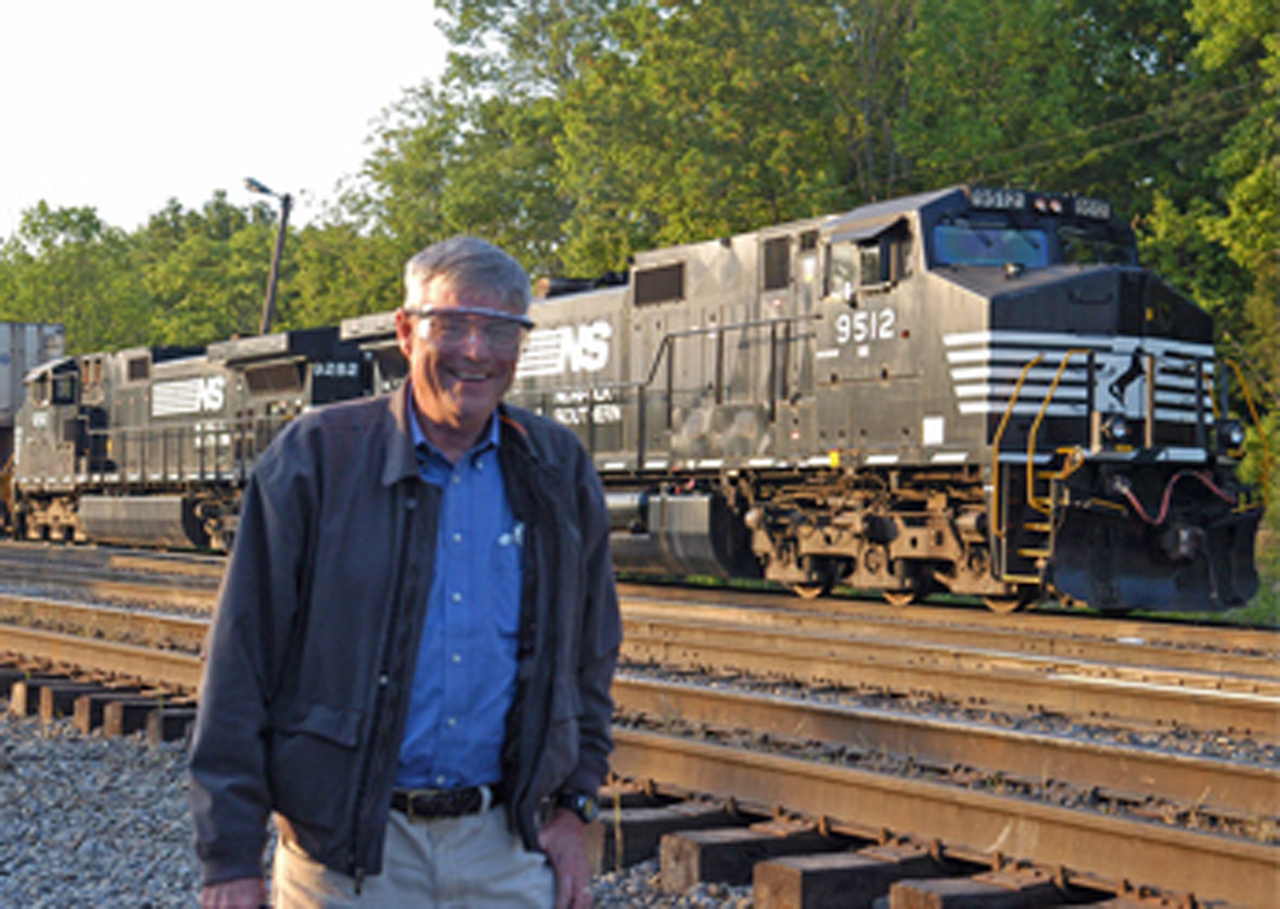
“A self-professed life-long rail enthusiast, something that began at age five (the Atlantic Coast Line ran next to his backyard), McClellan was a rail photographer for almost 60 years. Post-retirement from NS, he joined Woodside Consulting as a Vice President. He gave numerous speeches dealing with railroading’s past and future. He was also a painter, a model railroader and a passionate boater (both sail and power). He spent much of his time traveling the world, ‘photographing people, places and animals, and trains,/ in his own words.
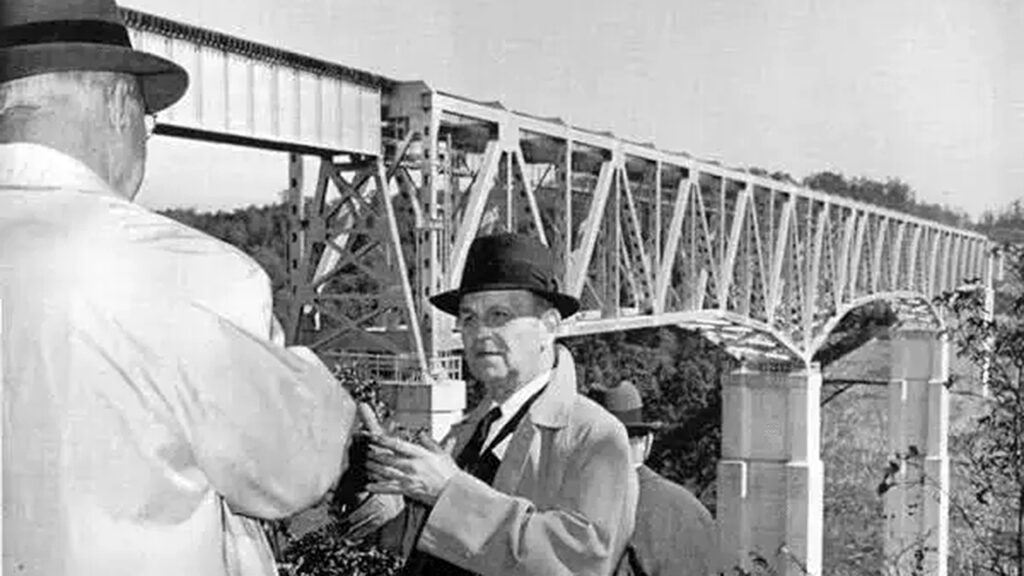
Dennis William “Bill” Brosnan (1903-1985), Railway Age’s first Railroader of the Year honoree in 1964, was “a railroader whose impact is still felt every single day across Norfolk Southern and across our industry,” NS President and CEO Mark George, who accepted on Brosnan’s behalf at the induction ceremony. “Bill began his career where railroading is most fundamental. As a young apprentice track engineer, he learned the railroad by tamping ties, working alongside section crews and understanding that nothing moves without a strong foundation beneath it. That ‘learn it from the ground up’ mindset never left him. It shaped a leadership philosophy rooted in fundamentals but driven relentlessly toward progress.
“Brosnan brought urgency, imagination and execution to an industry that desperately needed all three. He rose through the ranks of Southern Railway, ultimately becoming its President and CEO during a period of existential pressure for railroads. Regulation constrained innovation. Costs rose faster than rates. Competition intensified. Southern itself stood on the brink of financial crisis. Bill Brosnan did not manage around those challenges. He attacked them. He believed survival required fundamental change, and he acted accordingly, modernizing operations, mechanizing maintenance, centralizing functions, and demanding faster, better, more disciplined execution. And while his leadership style was famously demanding, the results were undeniable: a solvent, competitive, forward-looking railroad that helped power the post-war growth of the American South.
“Bill helped build one of the most advanced engineering organizations in the industry. He understood that innovation didn’t always come from vendors or regulators. Sometimes it had to be invented in your own shops. When the machines he needed didn’t exist, he built them. That spirit lives on today in Norfolk Southern’s engineering and infrastructure teams.
“Bill reimagined how railroads go to market. From unit trains to 100-ton cars to the revolutionary Big John hopper, he understood that growth came from deeply understanding customers and designing solutions around their needs. He was willing to challenge regulators, competitors and even his own organization to unlock new value. That customer-first mindset remains—core to Norfolk Southern today as we develop new service offerings and work to make rail a more intuitive, responsive partner for American industry.
“Few legacies are as enduring as Brosnan’s role in creating what has become Norfolk Southern’s industrial development organization, helping communities attract jobs, investment and economic prosperity across our network. Norfolk Southern remains a leader in rail-served industrial development today, connecting businesses to markets and opportunity.
“If Bill Brosnan were with us tonight, he would likely have strong opinions about the modern railroad, some approving, some impatient. But I believe he would recognize something familiar: an industry once again being asked to evolve and deliver more for the customers and American economy we serve. And he might remind us, as he did throughout his career, that progress does not come from comfort. It comes from discipline, imagination, and the courage to act.”