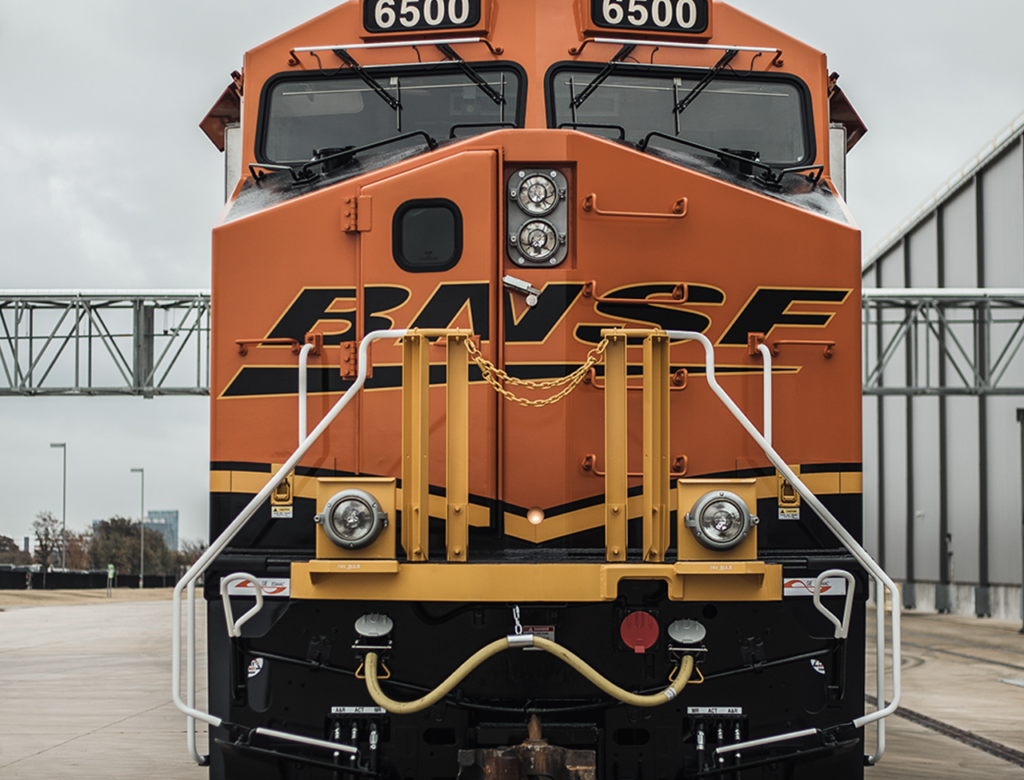
Berkshire Hathaway-owned BNSF posted total revenue and volume that for 2025 were relatively unchanged from 2024 and that for fourth-quarter 2025 saw declines. In a letter to shareholders, Berkshire CEO Greg Abel, who succeeded Warren Buffett at the end of last year, noted “more progress is needed to translate operational improvements into stronger financial results”; he also addressed the potential Union Pacific-Norfolk Southern merger.
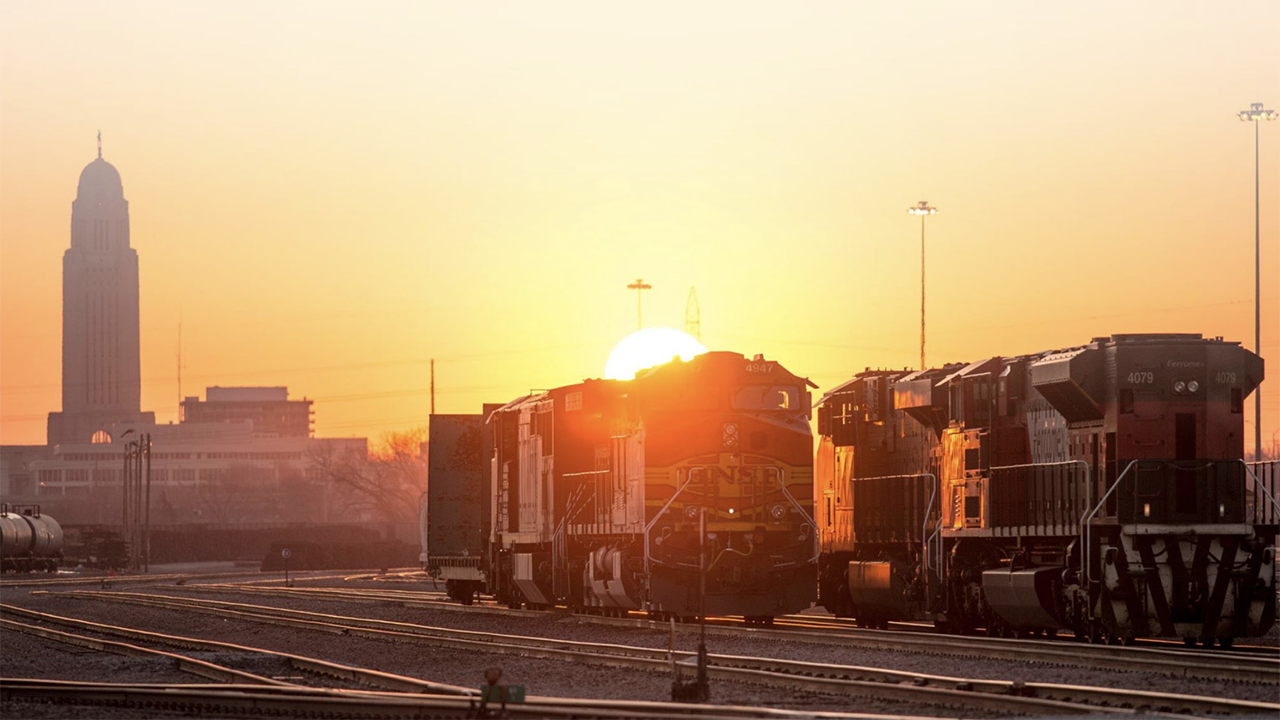
Volumes and Revenues
Total revenues for the fourth quarter decreased 3% and were relatively flat for full-year 2025 compared with the same periods in 2024, according to BNSF. The fourth quarter decrease, it said, “was primarily due to a 4% decline in unit volumes, partially offset by a 2% increase in average revenue per car/unit resulting from higher yield.” The railroad reported that revenues for the full year reflected a 1% decline in average revenue per car/unit “resulting from lower fuel surcharge and unfavorable business mix, partially offset by higher yield.”
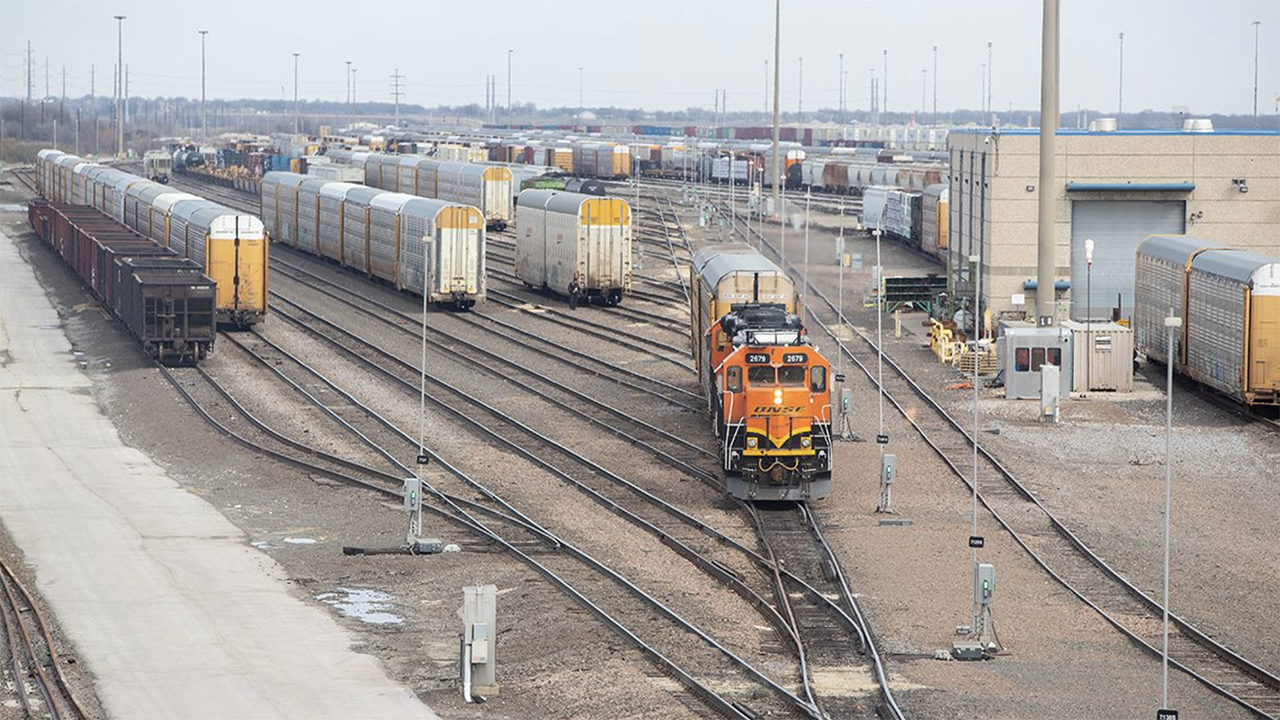
BNSF said that revenue changes also resulted from the following:
- Consumer Products volumes fell 6% and rose 1%, respectively, for fourth-quarter and full-year 2025 vs. the same periods in 2024. The fourth-quarter volume decrease was “primarily due to lower intermodal shipments impacted by the global market environment and excess capacity in the trucking market,” according to the railroad. The full-year increase, it said, “was primarily due to higher intermodal shipments resulting from higher west coast imports and a new intermodal customer, and an increase in automotive volume from higher vehicle production.”
- Agricultural and Energy Products volumes were up 5% and 2%, respectively, for fourth-quarter and full-year 2025 compared with the same periods in 2024. The fourth-quarter volume increase was attributed primarily “to higher grain exports and domestic shipments and petroleum fuels, partially offset by lower volumes of soybean shipments.” The full-year increase, BNSF said, was “primarily due to higher grain exports and petroleum fuel shipments, partially offset by lower domestic grain and feed shipments.”
- Industrial Products volumes dipped 7% and 5%, respectively, for fourth-quarter and full-year 2025 vs. the same periods in 2024. BNSF said the volume decreases were “primarily due to lower demand for construction products and lower shipments in plastics and petroleum products.”
- Coal volumes fell 6% and rose 1%, respectively, for fourth-quarter and full-year 2025 vs. the same periods in 2024. The fourth-quarter volume decrease was “primarily due to plant retirements and mine production challenges,” and the full-year increase was “primarily due to the competitive effects of higher natural gas prices.”
Expenses

BNSF reported that operating expenses fell 8% and 4%, respectively, for fourth-quarter and full-year 2025 vs. the year-earlier periods, predominantly due to the following factors:
- Compensation and benefits expense decreased 21% and 6% in fourth-quarter and full-year 2025, respectively, compared with the same periods in 2024, “due primarily to a one-time payment of approximately $290 million included in the agreement with the SMART-TD labor union in December 2024 that allowed BNSF the ability to redeploy brakepersons to conductors and engineers, as well as increased employee productivity, partially offset by wage inflation.”
- Fuel expense decreased 3% and 8% in fourth-quarter and full-year 2025, respectively, vs. the same periods in 2024. BNSF said the decrease during the fourth quarter was “primarily due to improved fuel efficiency, partially offset by higher average fuel prices.” The full-year decline, it noted, was “primarily due to lower average fuel prices and improved fuel efficiency.” Locomotive fuel price per gallon increased 5% and decreased 6% in fourth-quarter and full-year 2025, respectively, compared with the same periods in 2024.
- Depreciation and amortization expense increased 5% and 4% in fourth-quarter and full-year 2025, respectively, compared with the same periods in 2024. “The increase was primarily due to a larger asset base,” BNSF said.
- Materials and other expense decreased 2% and 13% in fourth-quarter and full-year 2025, respectively, compared with the same 2024 periods. The decrease was attributed primarily to “ongoing cost management efforts, as well as lower litigation accruals for the full year.”
- Income tax expense increased 32% and 5% in fourth-quarter and full-year 2025, respectively, compared with the year-ago periods. “The increases were primarily due to higher pre-tax income and an unfavorable state return to provision adjustment as a result of apportionment rates after return time, partially offset by the favorable law change in Kansas,” BNSF reported. The effective tax rate, it said, was 23.7% and 24.3% for the years ended Dec. 31, 2025, and 2024, respectively. “The effective tax rate decreased due to lower deferred state tax expense arising from changes in enacted rates during the second quarter of 2025,” the railroad noted.
- There were no significant changes in purchased services, equipment rents, interest expense or other (income) expense, net, according to BNSF.
Capex
BNSF’s 2025 capital program was $3.8 billion. The 2026 planned capital program, announced earlier this year, is $3.6 billion and “continues to demonstrate our dedication to handle the anticipated needs of our customers while operating a safe and reliable network,” the railroad reported. The largest component of the 2026 program, $2.83 billion, is devoted to maintenance. “Investing in BNSF’s existing infrastructure results in fewer unscheduled service outages that can slow down the rail network and reduce capacity,” the railroad noted. The maintenance projects will consist of 13,100 miles of track surfacing and/or undercutting work and the replacement of approximately 2.5 million rail ties and 409 miles of rail.
Letter to Shareholders
“Warren is obviously a very hard act to follow,” Greg Abel said in his first annual letter to shareholders (download below). “Stepping into any leadership role begins with understanding the organization—why it exists, how its culture shapes its people, and what values guide its decisions. While you will see similarities and differences between Warren, Charlie [Munger], and me, we share the view that Berkshire is shareholder-oriented to an unusual degree.”
Abel noted that during each shareholder meeting, for more than 25 years, the company has “played a clip from Warren’s 1991 Salomon Brothers Congressional testimony: ‘Lose money for the firm, and I will be understanding; lose a shred of reputation for the firm, and I will be ruthless.’” He noted that the company has a “steadfast and uncompromising” commitment to integrity. “We will encounter business successes and setbacks,” he wrote. “When we fail, we will say so. Doing the right thing also means rectifying our errors. A great example of both is BNSF’s resolution in 2025 of a longstanding dispute with the Swinomish Indian Tribal Community over crude oil shipments across Tribal lands. The BNSF decisions that sparked the dispute were made long ago, but the current BNSF leadership built a partnership rooted in communication, understanding, and respect. BNSF acknowledged its past mistakes and apologized, paving the way for mutually beneficial agreements that allow it to meet customer needs while operating safely on Tribal lands.”
Abel discussed Berkshire’s businesses, and for BNSF he addressed financials, as well as the potential Union Pacific-Norfolk Southern merger.
“As one of the six major freight railroads in North America, BNSF is a key part of the transportation backbone of the U.S. economy,” Abel wrote. “Berkshire acquired this iconic business in 2010 with an equity value of $34.5 billion. In 2025, BNSF produced $8.1 billion in net operating cash flows and returned $4.4 billion of that cash to Berkshire through dividends. For context, its average annual dividend over the past five years was $4.1 billion.
“Safe operations, reliable service, and a competitive cost structure ultimately determine a railroad’s success—and accordingly how we assess management’s performance. BNSF has focused on improving each of these. Safety remains the top priority, and BNSF has been the industry leader for the past decade. In 2025, shipments spent less time idling at terminals and moved through the network faster than in nearly any year in the company’s history.
“These gains matter, but they are not enough; more progress is needed to translate operational improvements into stronger financial results. We view operating margin (the inverse of the industry’s operating ratio) as the best measure of performance. In 2025, BNSF’s operating margin improved to 34.5% from 32.0% in 2024. It remained only modestly above its five-year average.
“The gap to the industry’s best remains too wide and closing it will require continued improvements in efficiency and service. Each one-percentage-point improvement in operating margin generates approximately $230 million of incremental operating cash flow for our owners. The team recognizes the significance of this opportunity, and we will be disappointed if we do not deliver a substantial improvement over the next few years.

“Alongside BNSF’s own improvements, there is also potential consolidation in the rail industry with the proposed Union Pacific–Norfolk Southern merger. Berkshire has been clear that it is not interested in acquiring one of the other Class I railroads, since the current economics would not work in our shareholders’ favor. BNSF’s focus on the proposed merger has been to ensure BNSF can continue to offer customers a compelling value proposition, including full and competitive access to Eastern rail markets.”
Further Reading:
- One Merger at a Time, Please
- BNSF, CSX Teaming on Intermodal Services
- Report: Buffett Busts BNSF/Goldman Sachs Confab Rumors