In recent weeks, we’ve been highlighting positive trends in some of the operating metrics, and this augurs well for 2025, particularly on a year-over-year basis in the first half. Some specifics:

Yards and Terminals at UP, BNSF
While the western intermodal networks have been under intense volume pressure at times, including multi-year volume highs in early October (UP) and early November (BNSF), which in turn suppressed intermodal and full system velocity prior to the Thanksgiving slingshot effect, there’s been some good work done to improve yard efficiency. Terminal dwell at Union Pacific was 3.5% lower in 2024 than 2023 and the best year on record, beating 2020 by 0.3%. Additionally, UP really hit its stride on yards after Labor Day, with weekly average dwell 6% better post-Labor Day compared to pre-Labor Day, so there’s an opportunity between the end of winter and Labor Day 2025 to improve its metrics further. BNSF has also had a great story on yards, with a targeted hump yard improvement program kicking off last March, followed by expansion into its flat switching yards in July. A 4.6% improvement in 2024 full system dwell and 8.9% improvement in hump yard dwell vs. 2023 was the result. Also significant is the fact that dwell at BNSF dramatically fell in the back half of the year vs. the first half (post-winter), by 14%. Again, the point here is that recent success creates an easy dwell comp in the first half of 2025.
Norfolk Southern
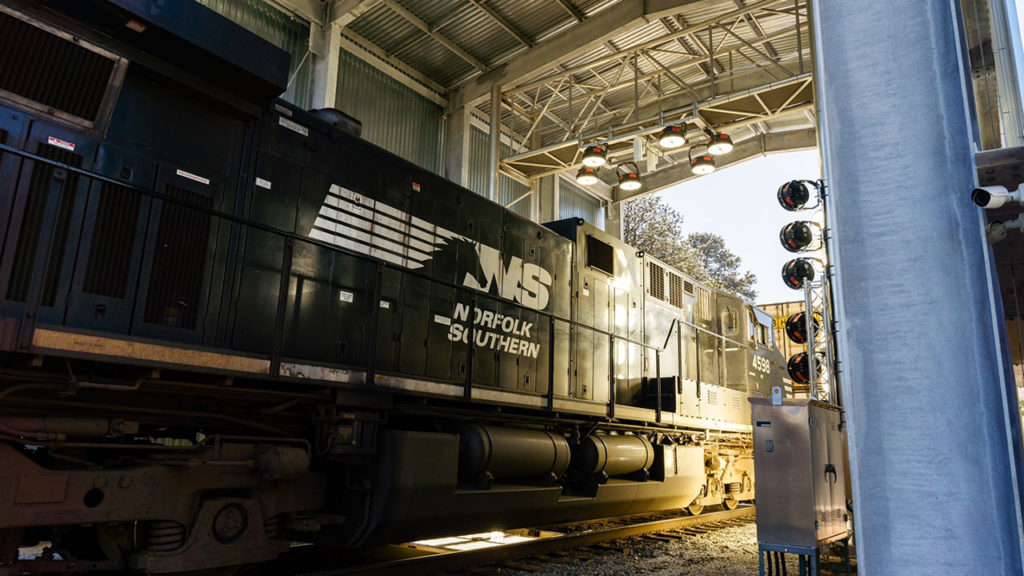
We don’t give out an award for most improved, but NS would win it. Virtually every operating metric improved in 2024 over 2023, even considering the easy 2023 comps between February and July due to the East Palestine bottleneck. If we compare the back half of 2024 to the same period in 2023 (post-East Palestine effect), for example, we saw a 9% improvement in velocity, 7% better dwell, 8% better hump yard dwell, 4% fewer cars on line, with 35% fewer of them sitting idle for 48 hours or more in any given week, all the while moving 4% more loads. So, NS is certainly back in the game, although in the interests of keeping it real there’s still more work to do to solidify these gains and match CSX on service. On almost all measures, the back half of 2024 was materially better than the first half, which again sets up better YoY efficiency and cost opportunities in 1H2025.
CN
CN is the other network that has an easy operational comp in the first half of 2025. CN’s operating data was weak between late November and year-end, which may give the impression CN is starting 2025 in a compromised state, but that’s not the case, with a couple of explanations. First, CN was lapping a very easy weather comp from December 2023, with December 2024 more brutal, forcing CN to activate its winter operating plan early. The plan has three tiers, depending on how cold it is, and virtually no tiers were active in December 2023. In contrast, December 2024 was consistently at Tier I with a smattering of Tier II.
The second headwind was a horrendous run of luck with multiple significant network disruptions in the second half of December. All of them were in the critical West, including one on the Directional Running Zone (co-production) CN shares with CPKC in British Columbia (to access the Port of Vancouver, most significantly). Remember that CN is a single-track railroad, so a derailment, for example, will shut down a route, and re-routing options are more limited than what the more spider-web-like U.S. Class I’s have available. The good news is that these disruptions are now all resolved and shouldn’t have any material domino effects into January.
As we now look forward, CN has an easy first half 2025 comp. Between March and June 2024 the network struggled between Edmonton and Vancouver as unexpected strength in late Q1 grain collided with pre-planned track maintenance blocks, causing a capacity crunch. As we lap this, it should translate into better YoY cost efficiency and margins in the first two quarters of 2025.
Winter Always the Wildcard
We all know volumes tend to be seasonal, but so are operations, with winter the biggest annual headwind to fluidity and efficiency, with CN’s December challenge above a good example. What happens over the next 8 weeks could therefore upend the first half opportunities we laid out above. All the networks are in good enough shape to handle a normal winter, so it’s just the intense cold snaps that are the risk. There was one of these “arctic blasts” last winter, in the third week of January, vs. two the prior winter. We’ve also been lucky with the most extreme variety of cold snaps: polar vortexes, which haven’t been seen since 2021. Will our good luck hold this time around? We’ll see …
Big Holiday Effect
This report includes the most recent weekly data, which runs through Jan. 3 for operating metrics (weeks end on Fridays) and Jan. 4 for volumes (weeks end on Saturdays). The latest numbers provide limited insight due to the big Holiday effect—typically volumes way down and train speeds way up. Big perceived gains in fluidity then run into the brick wall called January winter weather and are very short-lived, which is why we focus more on the slingshot opportunities from Memorial Day, Fourth of July, Labor Day and Thanksgiving.