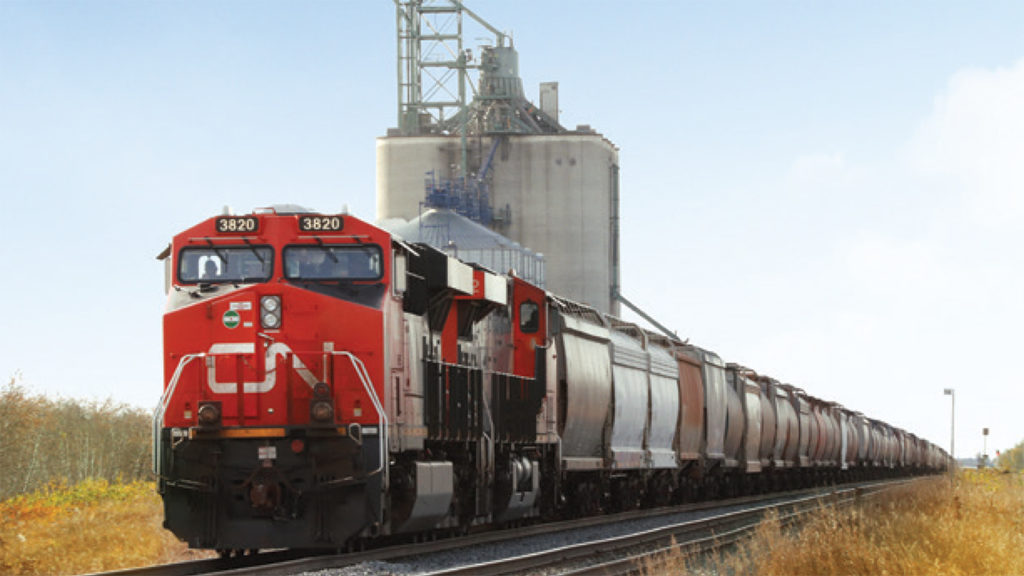
CN Rebounding Quickly from Winter
Over the past couple of weeks, we’ve discussed CN’s network fluidity “mini-crash” that occurred in the week ending Feb. 21, due primarily to the compounding effect of 63 days of winter Tier restrictions (shorter trains, compressed capacity). On the back of these events, one of two things usually happens: The railroad runs out of crews at a critical location and things get worse, or we see an inflection and rebound. Thankfully it’s been the latter, and quite robust over the two subsequent weeks. Here’s the velocity chart as a quick snapshot, and you can see the mini-crash pushing average train speed to a record low 14.2 mph. As winter weather dissipated, and backlogs have started to be worked down, we’ve seen nice sequential recoveries to 17.0 mph and 18.6 mph through March 7.

You can now see the dark green line (this year) finally above last year (light green line), although that’s not quite as good as it looks given heavy western congestion at this time in 2024 as unanticipated grain strength collided with pre-planned track maintenance blocks. Average train speed above 19.5 mph is probably a better benchmark for efficiency; let’s see if they can get there. There’s also more work to do on operating inventory and backlogs, with cars-on-line still 14% above the trailing 12-month weekly average. Regardless, CN is certainly out of the woods operationally, and that’s good news.
CSX Howard Street Tunnel Impact Starting to Emerge

In our self-appointed role as the industry’s Chief Paranoia Officer (always thinking what could go wrong; every Class I needs one), we’ll shift our worries from CN back to CSX. Here’s the CSX version of the CN chart above, with a marker at the start of February representing the closure of Baltimore’s Howard Street Tunnel for double-stack clearance work, which will take most of the year. We’ve been trying to read the operating tea leaves to determine to what extent the reroutes around Howard Street are going to hamstring full system fluidity and push up costs, but that was difficult last month because it overlapped with winter weather.
As the weather clears, we’re hoping for a partial rebound in velocity, but the network is clearly struggling, including a velocity backslide in the week ending March 7. The dwell picture is even worse, up 9% YTD, and within that, CSX’s five hump yards are currently averaging 32 hours of dwell when the mid-20s is normal. At the recent JP Morgan conference, CSX stated reroutes around Howard Street represent 10% of the trains on the network and, despite this handicap, the railroad is doing a good job protecting customer service and the customer experience. That’s nice, but we still don’t like the operating numbers we’re seeing and reduced our estimates and price target on CSX on Wednesday evening to reflect this (plus the trade war and increasingly likely US recession). It’s going to be a tough 2025 for CSX.
Union Pacific Also Has a Speed Wobble
Union Pacific seems to have experienced a smaller version of what CN just went through, with velocity dropping 4% sequentially in the first week of March to a low we haven’t seen since last June when the network slowed on the back of Houston flooding. The company attributed the deceleration to “variability incidents” and weather (snow and ice in the Northern Region.) OMG we’ve experienced a variability incident! What do we do? Nothing because we don’t know what you’re talking about. Part of the point of this report is to translate rail jargon into plain English that normal people can understand. This isn’t helping, UP.
Looking forward, Union Pacific has demonstrated improved resiliency and recoverability over the past five quarters, so we’re at least confident this is just a blip and of no significant concern.