

CSX
CSX and the CREATE program on Oct. 15 reached a major milestone as the first train crossed the new Forest Hill Flyover, “a transformative project aimed at alleviating decades of rail congestion in Chicago.” The flyover, the Class I says, “elevates CSX tracks above a critical intersection, enhancing efficiency, safety, and reliability for both freight and passenger rail operations.”
Part of the 75th Street Corridor Improvement Project, the Forest Hill Flyover is the result of a collaborative effort between public and private partners. By separating CSX tracks from those of BRC, Metra, and NS, the project, the Class I says, “eliminates a long-standing bottleneck” where 30 SouthWest Service Metra trains and 35 freight trains intersect daily along the Western Avenue Corridor. This separation, CSX adds, “reduces congestion, minimizes delays, and improves service across the region.”
The placement of the final girder in July 2025 and the first train movement in October mark a new era for Chicago’s rail infrastructure. The project highlights how innovation and collaboration can drive meaningful progress in one of the nation’s busiest rail hubs, CSX noted.
As trains now roll smoothly over the new structure, CSX and CREATE say they remain committed to shaping the future of transportation, “ensuring a more efficient and reliable rail network for years to come.”
In the coming weeks, CSX and the CREATE program will host a formal ribbon-cutting ceremony to celebrate the years of collaboration and significant efforts of their employees and partners in completing the Forest Hill Flyover.
CN
Located within CN’s Chicago Intermodal Terminal in the Chicagoland area, the Harvey Grain Facility is one of the largest agricultural transload operations in CN’s network.

Its prime location inside the intermodal yard, CN says, “enables the movement of products directly from railcar to export container without the need for trucking.” As a result, CN says it can load containers to their maximum weight without the constraints of the weight restrictions for over-the-road transport. “By eliminating trucking requirements, we can also maximize efficiency, reduce handling steps, and lower per-metric-ton costs for customers,” the Class I noted.
With on-site certified scales and a USDA inspector, Harvey is “equipped to meet the strictest export requirements and fast track the movement of American agricultural products to the markets of the world,” CN said.
In 2023, CN completed a significant expansion at Harvey, adding more storage, loading positions, and handling capacity. These investments, CN says, strengthened the Class I’s ability to “serve growing global demand, particularly for high-value agricultural commodities, and positioned Harvey for record-breaking volumes.”

At the start of this year, Harvey took another leap forward with the installation of a state-of-the-art fixed auger track system that allows CN to double throughput on the auger track and handle commodities such as corn gluten meal and high protein distillers dried grains with solubles more efficiently.
The auger track expansion, CN says, not only boosts capacity and operational efficiency—it also opens new opportunities for the Class I’s customers in a competitive, fast-changing grain market. “By making Harvey safer, more dependable, and more versatile, we’ve enhanced our ability to meet specialized commodity needs while keeping pace with evolving industry demands,” CN said.
Last year, Harvey achieved its highest throughput since 2018, “a milestone made possible by CN’s ongoing investment and the expertise of our dedicated team,” the Class I said. “With expanded infrastructure and upgraded systems, Harvey is ready to help customers grow their businesses, feed global markets, and set new performance records in the years ahead.”
Harvey Grain, CN says, continues to raise the bar for agricultural transloading in the Chicagoland area. “We are committed to exploring new technologies, equipment, and processes to stay ahead of the curve—ensuring customers can compete and win in their markets,” the Class I said.
UP
At three events across all commodity groups, UP senior leadership emphasized how the UP-NS combination “will give customers faster, more reliable service options, transform America’s supply chain and take trucks off taxpayer-funded highways.”
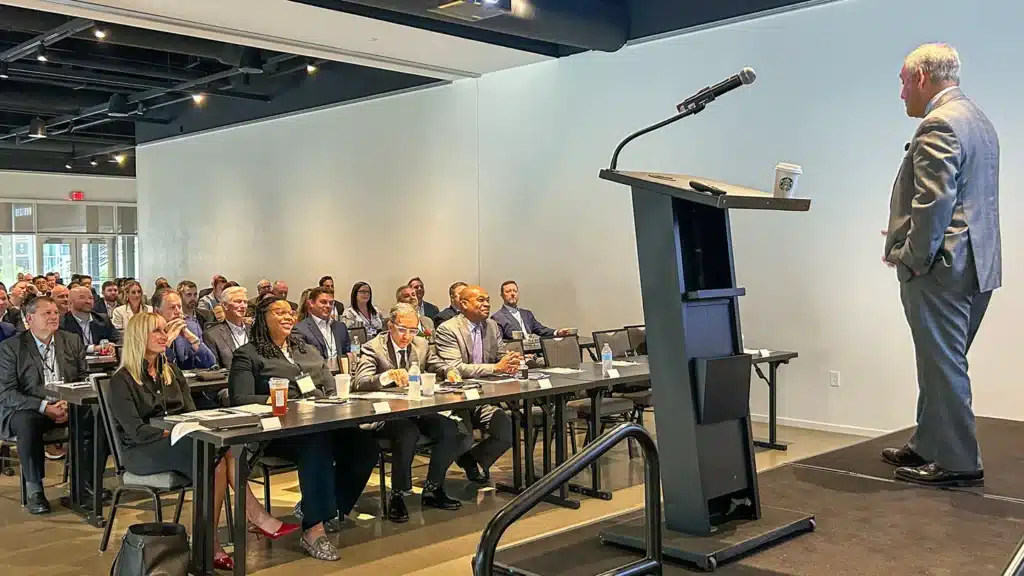
“Ultimately, it’s about delivering the service we sold. America and our customers deserve a coast-to-coast railroad,” said CEO Jim Vena.
Along with discussing the merger’s winning combination for customers, Vena “committed to continued transparency with customers throughout the application and approval process.”
Executive Vice President-Marketing and Sales Kenny Rocker spoke about “elevating the customer journey with digital tools and technology, service reliability and consistency.” This year, UP redesigned its website into a customer-centric showroom and delivered a new customer portal. In 2026, customers can expect an improved shopping experience and transformed customer support, the Class I noted.
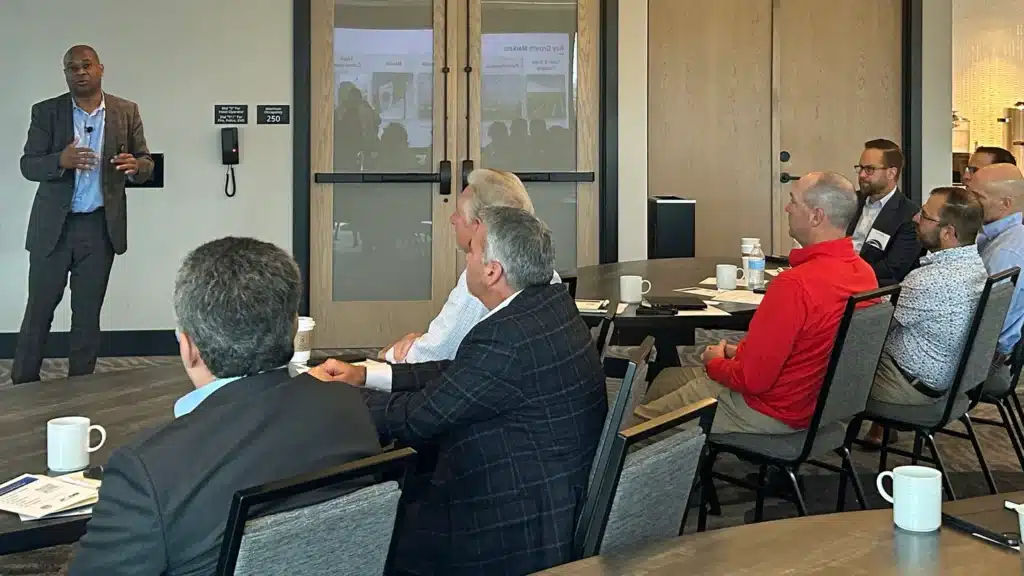
Attendees engaged in conversations about adapting to external factors—from weather to tariffs and shifting market conditions—and how UP is working side-by-side with customers to “pivot quickly as needed.”
Safety was highlighted throughout each event, “reinforcing the railroad’s dedication to maintaining safe, efficient operations while growing with customers.” UP invests about $10 million every day in infrastructure, technology and network expansion, according to the Class I.
NS
NS is installing new Gen-3 modems in locomotives to improve how the railroad stays connected throughout the network. These devices, NS says, help transmit data more reliably even in tough weather or remote areas so crews and systems can work together more efficiently.
This upgrade, NS says, is part of a larger effort to enhance service and productivity in the field. “With better connectivity, we can track locomotive performance in real time, support safety systems, and reduce delays caused by communication gaps,” the Class I said.
The Gen 3 modem uses wireless technology to keep trains connected. This device is the main system that supports Positive Train Control (PTC), helping trains send and receive messages with the control center using the best available cellular or Wi-Fi signal.
This, NS says, helps reduce network traffic and improves how trains are routed and managed.
Installations will continue through the end of the year. Once complete, Gen-3 will help NS “keep trains moving, make faster decisions in real time, and support safer, more efficient operations.”
CPKC
CPKC’s Wylie Mechanical Car team recently achieved 31 years injury-free, according to a LinkedIn post.
The five-person mechanical car team in Wylie, Texas, which handles a significant workload with “precision, accountability and a deep commitment to safety,” celebrate more than three decades due to their “dedication, discipline and care for one another,” the Class I wrote.
“It’s a small workforce and they’ve got a really strong Home Safe culture there. The entire team has adopted a brother’s keeper mentality, and they all look out for one another,” said Senior Manager Mechanical Weston Mangum.




