BNSF
“The BNSF network remains in solid condition as we head into the Thanksgiving holiday week and peak intermodal shipping season with positive momentum,” the Class I railroad told customers in a Nov. 21 online message. “Overall car velocity increased from the prior week and saw a 6% increase compared to October. Average terminal dwell was lower than the previous week, reaching the lowest level year-to-date and reflecting a 4% reduction from last month. Our local service compliance measure remains steady at 92%.”

The number of trains operating on BNSF track is typically lower over the holiday due to reduced freight volume, the Class I noted. BNSF’s Intermodal holiday operating plan will adjust operations to account for this potential reduction in traffic. As a result, shipments from Tuesday, Nov. 25, through noon on Wednesday, Dec. 3, may experience delays of approximately 48 hours. Connecting carriers who have reduced operations for the holiday may cause delays on interline traffic.
Heavy rains and storms continue to impact multiple states along the Southern Transcon, including Southern California, Arizona, much of Texas, and parts of the Central Plains, BNSF said. These conditions are expected to bring elevated flash-flooding risks over the next 24-48 hours. “BNSF operating teams are monitoring conditions and are prepared to quickly respond. For Thanksgiving week, we expect overall seasonable operating conditions across much of our network.”
CSX
CSX’s TRANSFLO Petersburg Terminal is coming to Virginia in early 2026, the Class I announced via an X post.

The facility, which TRANSFLO says, “will help companies boost supply chain efficiency, expand market reach, and embrace sustainable transportation,” includes:
- 40 car spots.
- LPG capability.
- Conveyor capacity.
- Convenient access to major highways I-95, I-85, and US-460.
- Up to 75% reduction in greenhouse gas emissions with rail transportation.
“The facility reflects our commitment to delivering the benefits of rail transport with efficient transloading and maximized throughput,” TRANSFLO said.
UP
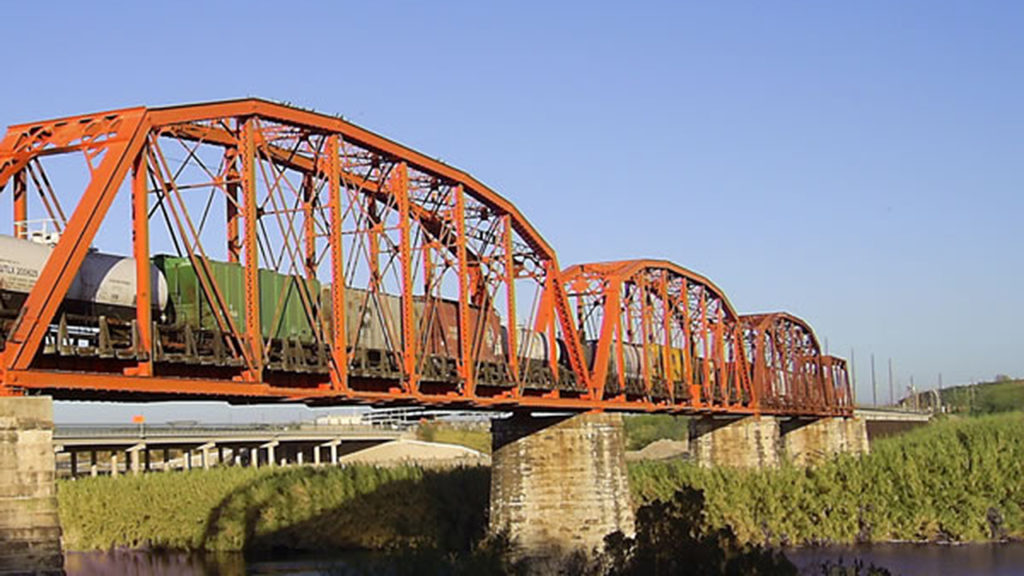
UP recently announced that it has updated its procedure for the transfer of trains between a rail yard in Mexico and the nearest rail yard in Eagle Pass, Texas.
This change, which kicked off Nov. 20, “enhances safety, strengthens border security and aligns with competitor practices at the northern and southern border,” UP said. “It reduces by 50% the time it takes to move trains across the international bridge compared to the previous method of changing crews on the rail bridge.”
Mexican partner crews from Ferromex will travel seven miles from the border to the nearby Eagle Pass yard, where the change to a U.S. crew will occur. The Mexican crews have been trained and qualified by UP, including certification under Federal Railroad Administration (FRA) rules for the territory. UP employees will continue to handle all U.S.-based operations, including taking control of inbound trains, switching cars, building outbound trains and serving local customers.
Before this updated process, crew changes at Eagle Pass would occur on the single-track international bridge, requiring trains to stop while crews disembark and walk back across the structure. This process can take 30-40 minutes and increases the amount of time a train sits idle on the bridge, heightening exposure for crews and increasing the risk of blocked crossings, vandalism, theft or other security concerns, BNSF noted. “Moving the interchange to a controlled rail yard reduces these risks and allows trains to transition more safely and efficiently. Additionally, seamless transfers at the border enhance the rail industry’s ability to compete and remove trucks from the road.”
“This change enhances safety for crews, strengthens border security and creates a more fluid process at this key rail gateway,” said UP Executive Vice President-Operations Eric Gehringer. “Interchanging trains inside a secure rail yard is a proven approach used at other border crossings, and it allows us to manage train movements more safely and efficiently.”