
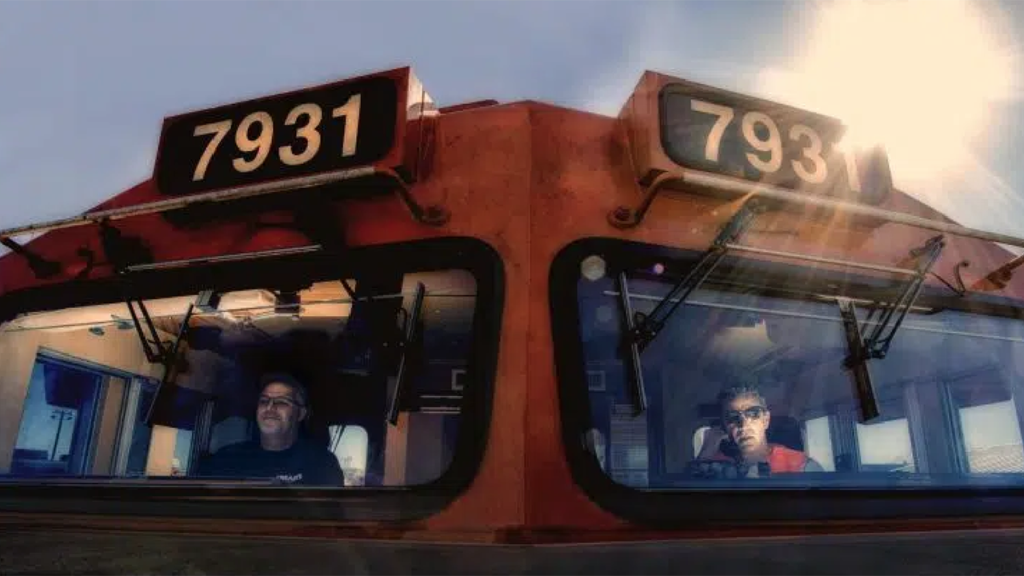
This has been quite a week for railroad labor relations. Failed contract talks between CN, CPKC and Teamsters Rail Canada deteriorated into a management lockout of employees—ended by a government back-to-work order and mandate that the dispute be settled through binding arbitration regardless of whether labor or management wish a third party to write terms of a new labor contract.
On CSX, CEO Joe Hinrichs—a relative newcomer to the rail industry—unilaterally upset six decades of national handling by which Class I railroads negotiate as a coalition to standardize rates of pay, benefits and work rules. CSX is independently pursuing amended agreements that will introduce labor competition among railroads. But unlike at Ford, from which Hinrichs arrived and where he dealt with only the United Auto Workers, CSX negotiates with a dozen unions, each aggressively jealous of each other’s advantages.
Events of the past week serve up two pregnant questions:
One, should the Canadian government’s mandate of compulsory binding arbitration to end a nationwide rail shutdown be adopted in the U.S. to end future threatened and actual rail strikes and lockouts?
Two, will CSX wage and work rules agreements bargained outside of national handling induce a me-too approach industry-wide, creating multiple and differently timed threats of work stoppages—a chaos previously cured by adoption of national handling in 1963? Shortly after CSX announced its initiative, BNSF and Norfolk Southern followed suit.
Let’s take each question individually, with an invitation to the parties to respond. (Hinrichs responded, below.)
Is What’s Good for Canada …?
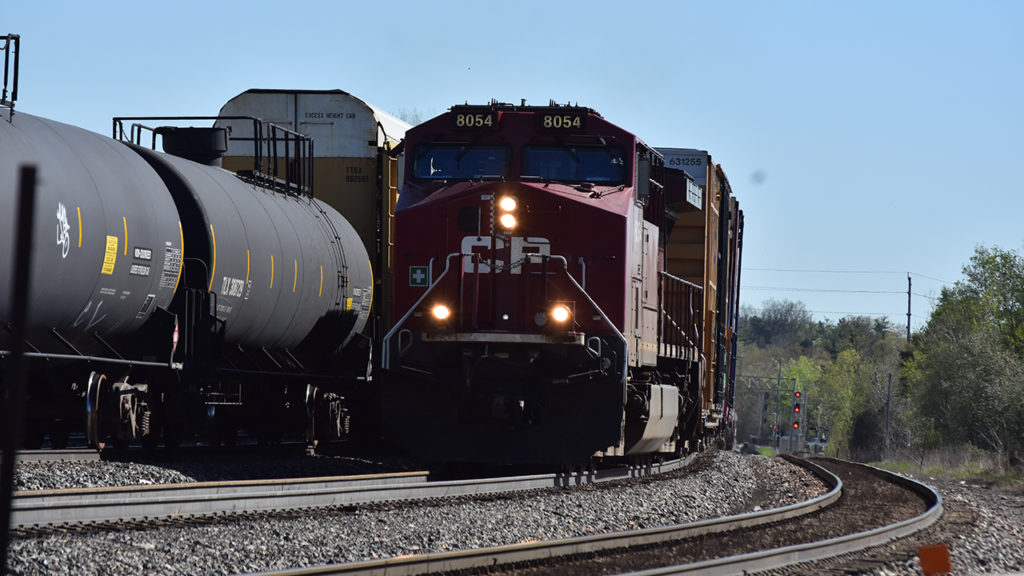
Although the 1926 Railway Labor Act (RLA) applying to U.S. railroads and their workers was crafted as a manual of peace rather than war, not always does the RLA work as designed.
In those rare instances of failure, the RLA’s labor and management drafters (yes, labor and management collaborated and compromised to write the law) jointly intended that when collective bargaining efforts collapse, disputants be allowed to exercise their most potent economic weapon of a strike or employee lockout to facilitate an otherwise elusive voluntary settlement.
The Supreme Court observed that the RLA’s labor and management drafters “chose to leave the settlement of major disputes entirely to the processes of non-compulsory adjustment.”
Yet railroads are deemed so vital to national defense, economic stability and public health that Congress is resolved to confiscate the weapon of self-help whenever deeming a rail work stoppage threatens substantially to deprive the nation or a region of essential transportation service.
Typically, Congress orders the disputants back to the bargaining table—multiple times, on occasion—to try again. Only once in peacetime has Congress ordered compulsory binding arbitration to end a rail work stoppage. More commonly, Congress writes the terms of settlement, but the abridgement of the right to strike or lockout remains.
The most draconian of capitalist society indignities is government seizure of railroads to ensure labor-management peace. But that has been a wartime experience not attempted since the Korean conflict in 1952.
Given the blood and lives lost by workers during the late 19th and early 20th centuries to secure a lawful right to organize and bargain collectively through representatives of their own choosing, losing the freedom to strike is a slippery slope backward.
Not that long ago, labor unions were prosecuted as criminal conspiracies. In 1921, as a Supreme Court Justice following his Presidency, William Howard Taft defined the simple act of peaceful picketing as “sinister,” “unlawful” and properly halted by jailing picketers. Strikes were ended by federal and National Guard troops, U.S. Marshals, local law enforcement and even railroad-employed private police using bayonets, bullets and rifle butts.
Actions to end work stoppages today are more civilized, but equally intrusive. After President John F. Kennedy signed into law in 1963 the first and only peacetime legislation ordering compulsory binding arbitration to settle a long-simmering rail labor dispute, The New York Times asked in an editorial, “At what cost to collective bargaining?”
After President Richard M. Nixon unsuccessfully proposed amending the RLA to require compulsory binding arbitration of “major” disputes, AFL-CIO President George Meany said, “The government must not ever be permitted to set the terms of a collective bargaining agreement on private industry.”
In 1947, Sen. Wayne Morse (D-Ore.) termed congressional action to end rail strikes or lockouts “an enforced termination of warfare and it settles nothing.”
There are alternatives that will allow labor and management to inflict pain on each other in the quest for compromise essential to voluntary dispute resolution without inviting government intrusion to limit collateral damage to the public.
A proposal offered in 1949 was to create the equivalent of a strike or lockout without it spiraling into a national emergency. The railroad would pay for all work performed at a rate so high it would stand in the same loss position as if a strike occurred, while employees would be paid so little that they also would suffer. The difference would be paid to the U.S. Treasury. The increasing economic pressure of the pseudo strike would create the same economic pressure to settle voluntarily as a real strike, while keeping government at bay and trains and essential cargo moving.
A second option is to allow disputants to engage in economic warfare while allowing commuters and essential cargo (defense materials, fuel for power plants and chlorine for water treatment plants) to move in special trains operated by volunteer union-member crews, with their pay donated to charity.
The Hinrichs Maneuver
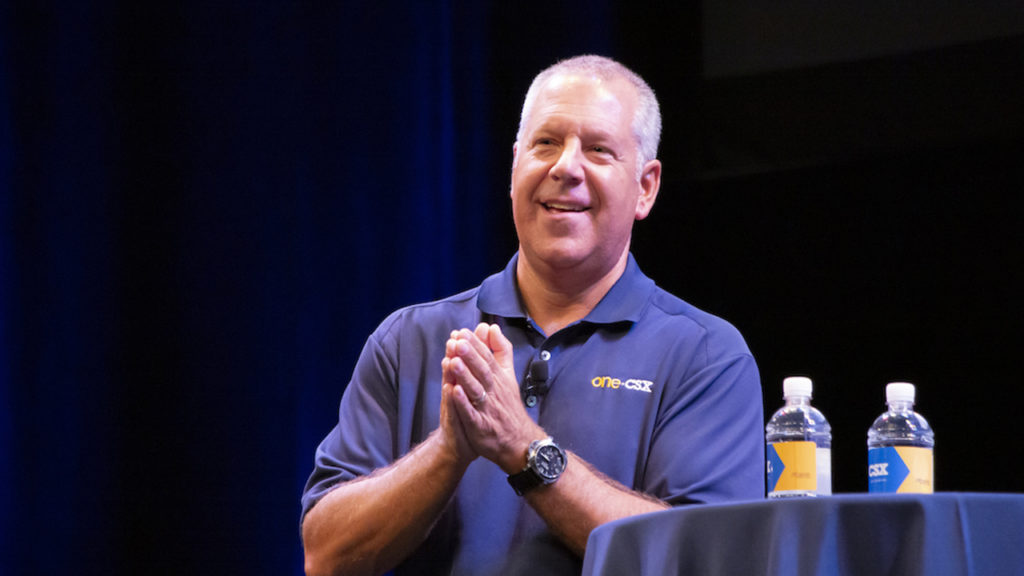
Since his 2022 arrival at CSX from Ford, Joe Hinrichs has been a change agent in a hidebound rail industry often accused of treating its employees as disposable assets. “Focus on employees and customers. The rest will take care of itself,” Hinrichs told Railway Age Editor-in-Chief William C. Vantuono. “Everyone is valuable, contributing, appreciated and respected.”
Observing that the most recent round of national handling was contentious, prolonged and a failure, leading to congressional intervention and significant frustration among union members, Hinrichs chose to bypass national handling this round—scheduled to begin formally in January—and engage CSX unions directly.
How this strategy plays out, and how it affects six decades of labor-management national handling, is yet to be seen.
If Hinrichs succeeds, national handling will commence in January with CSX not at the table, but its agreements—if ratified by CSX union members—a pattern to be bested by labor negotiators and as welcome as hemorrhoids by the seated management negotiators.
Even on his own railroad, Hinrichs faces leapfrogging attempts by unions with which he has yet to reach even a tentative deal. His agreement with SMART-TD (now extended to 12 unions) covers only conductors on CSX’s Northern Mid-Atlantic District, creating uncertainly as how to proceed in reaching a deal with conductors on other portions of CSX.
Also to be contended with are CSX locomotive engineers represented by the Brotherhood of Locomotive Engineers and Trainmen (BLET), long in conflict with SMART-TD and its predecessor United Transportation Union. “I’ll have the same as SMART-TD” is an unlikely response by BLET.
Hinrichs must soon decide whether to risk work stoppages on his own railroad or take a seat in national handling and allow those more experienced with rail unions and the RLA to pick up the pieces and finish the job.
Class I railroads have not had many change agents at the helm. Joe Hinrichs may be just the CEO that former UTU President Charlie Luna was searching for in 1971: “A man that is big enough and smart enough to run a railroad ought to be smart enough to sit down and talk to an old country boy like me.”
Then, again, “country boy” Luna successfully reduced the treasury of more than one railroad while creating chaos through selective strikes and then counting on friends in Congress to craft labor-friendly back-to-work orders.
This has been an exciting week on the labor front—but nothing like the weeks and months ahead promise to be.
Joe Hinrichs Responds
“Let me start by saying this is a team effort by everyone at CSX,” Hinrichs responded almost immediately. “I am just one of 23,000 teammates on the ONE CSX team.
“The TCU put out a press release after our first tentative agreement this week and acknowledged that there was an attempt to reach an early, voluntary deal with the NCCC, which we supported. When that didn’t materialize, we moved forward with TCU, BRC, SMART-TD and many other rail unions. NS and BNSF just announced deals with the TCU and BRC as well, so the agreements we negotiated are fair and accepted by others.
“There is value and a role for national, coalition bargaining and I expect we will likely be engaged with that in this round of discussions with one or more unions. We welcome the support of the entire NCCC. However, our ONE CSX team believes that where we can we should control our own destiny and live up to our commitments to prioritize our employees and our customers first.
“Our CSX employees told us loud and clear they do not want a repeat of what happened last time where they had to wait three years for wage increases and had to go through the anxiety and uncertainty of a drawn-out, antagonistic process. If we do the same things we always have done, we will get the same results. This is ONE CSX in action: creating a supportive environment and culture for our employees leading to better safety and improved customer service and efficiency.”
Frank N. Wilner was formerly Assistant Vice President for Policy at the Association of American Railroads and Director of Public Relations for SMART-TD and its UTU predecessor. He is author of “Railroads & Economic Regulation, An Insider’s Account,” and “Understanding the Railway Labor Act,” both available from Simmons-Boardman Books at https://www.railwayeducationalbureau.com, 800-228-9670.




