STB’s two-day hearing on Sept. 16 and 17 provided a good moment to reflect on the freight railroad industry’s prospects. The hearing entitled “Growth in the Freight Rail Industry” (Ex Parte 775) had an optimistic framing: “growth” rather a more neutral “status.”
Chairman Robert Primus repeatedly stated that the industry could grow if it only put aside failed cost-cutting strategies like Precision Scheduled Railroading and the cult of Operating Ratio. He observed, with some justification, that these strategies had been forced on the industry by Wall Street investors.
Primus wants railroads to focus on growth opportunities by improving service, really become more truck-like instead of being bureaucratic and unresponsive. He also wants Wall Street investors to change focus. They should care more for the longer-term growth prospects and less on short term profits.
In his view, if railroads and Wall Street would adopt this new focus, it would fuel industry growth, which would be good for the economy in multiple ways: lower transportation costs and less environmental degradation from fewer trucks on the highway. Vice Chair Karen Hedlund often echoed these sentiments.
Before I turn to an assessment of Wall Street’s changing to a more long-term focus, I should note an earlier time with a similar theme. This sentiment was pervasive in the 1980s: Japan was taking a longer-term focus and was eating our lunch because U.S. investors were too short-term focused. Somehow, I think Wall Street and the U.S. economy survived that era rather well, but Japan, not so much.
Freight railroads were the first nationwide industry and facilitated U.S. industrialization. They created the national U.S. marketplace. They consumed large quantities of iron, steel and coal. They moved those commodities and other industrial commodities. Railroads served the industrial economy, but the U.S. economy is now post-industrial in the Information Age.
To grow in a manner prescribed by Primus and Hedlund, railroads will need to change. Much of their network is optimized for heavy and slow commodity traffic, like coal. They will need to become lighter and faster, more truck-like. Many of the hearing participants believed railroads had growth opportunities if they could do so, especially by providing better and more reliable service.
On the other hand, Scott Group of Wolfe Research had some interesting observations on the state of freight railroading. He said that, along with the long-term decline of coal, railroads have been in a freight recession. However, now he thought railroads were leading the way out of this freight recession and were well-positioned for growth. His firm’s shipper surveys had found that shippers were shifting from truck to rail as rail service metrics had improved.
He also noted that despite all the complaints heard about rail pricing, rail prices had actually lagged truck price increases. In fact, he cautioned that regulatory restrictions on rail pricing would have a detrimental effect on rail profits and traffic growth.
Rick Paterson of Loop Capital had a more downbeat assessment. He sees railroads in decline. Although Wall Street has stressed pricing and lower operating ratios, Paterson thinks investors will transition to seeking volume growth. He suggests that railroads require superstar managers, like NFL teams need superstar quarterbacks to contend. I am not sure that depending on superstars is a recipe for long-term corporate success, e.g., see Patriots after Tom Brady.
There is also the question of various government transportation policies. As stated above, Scott Group cautioned about less-favorable STB pricing regulations, but there are others, in particular, autonomous vehicles. Waymo has deployed autonomous cabs in San Francisco and is extending the service to Austin and Atlanta. How long will it before autonomous vehicles begin to move freight? There are already news stories about them coming to states like Texas.
Autonomous freight vehicles would be much cheaper than trucks with drivers and trains with crews, but the current Administration seeks to mandate two-person train crews. That will certainly slant the competitive landscape more sharply toward driverless trucks and would not entice investors toward railroads.
Autonomous vehicles will be the next great transportation technology disrupter with the magnitude of steam engines and internal combustion. NS’s Ed Elkins summed up the threat of autonomous trucks to rail: “Technology is undefeated.” If rail is inhibited from adopting autonomous technology, its future is bleak. He called for government and labor to join a drive for an “evolution” in rail technology.
CSX’s Joe Hinrichs tried to paint an optimistic view of rail’s future. He said he was trying to move the focus away from operating ratio and lower costs because they were short-term. He wants a longer-term focus. In his view, intermodal is the best growth opportunity, but that would require good, reliable service and a resilient network.
Achieving high, reliable service levels could achieve volume growth, but it would be a delicate balance, according to Hinrichs. If service reliability and resilience were not maintained, volumes would fall as would profits. Investors would flee. That is the challenge.
So, will Wall Street change its focus from profits to growth? That is not the right question. Can railroads and their management implement strategies that provide the kind of service that increases volumes, takes trucks off the highways and increases profits? If the answer is “yes,” then Wall Street will follow.
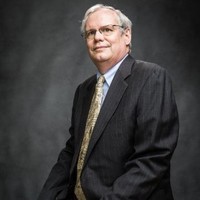
Dr. William Huneke is the former Director and Chief Economist at the Surface Transportation Board. He has more than 40 years’ experience in economics, transportation, railroad regulatory policy, management consulting, business analysis and teaching in the commercial and government sectors. He provides economic consulting on regulatory and arbitration matters. At the STB, Dr. Huneke led the Board’s analytical work and oversaw the collection of economic and financial data. Since leaving the STB, he has provided economic and litigation support to Class I railroads and other private-sector clients. He worked with the OECD (Organisation for Economic Co-operation and Development) to advise the Mexican government on its future rail regulatory policy. He represented the United States at an OECD conference on railroad industry structure. His private-sector experience included executive and management positions at UUNET, Freddie Mac and the Association of American Railroads. Dr. Huneke has taught graduate business courses at the University of Maryland, Robert H. Smith School of Business. He holds a doctorate from the University of Virginia and a B.A. from Swarthmore College.