Business Development News: ALCIVIA; Ara Partners/USDCF
ALCIVIA, a member-owned agricultural and energy cooperative serving farm, business and retail customers in Wisconsin, Minnesota, Illinois and Iowa through financing and products and services in agronomy, animal nutrition, energy, and grain, has purchased 40 acres and more than 21,000 linear feet of BNSF track in Hager City, Wisc., to build a new rail loading grain terminal. The facility, the company said, will bring grain terminal assets to producers in west central Wisconsin and southeast Minnesota.
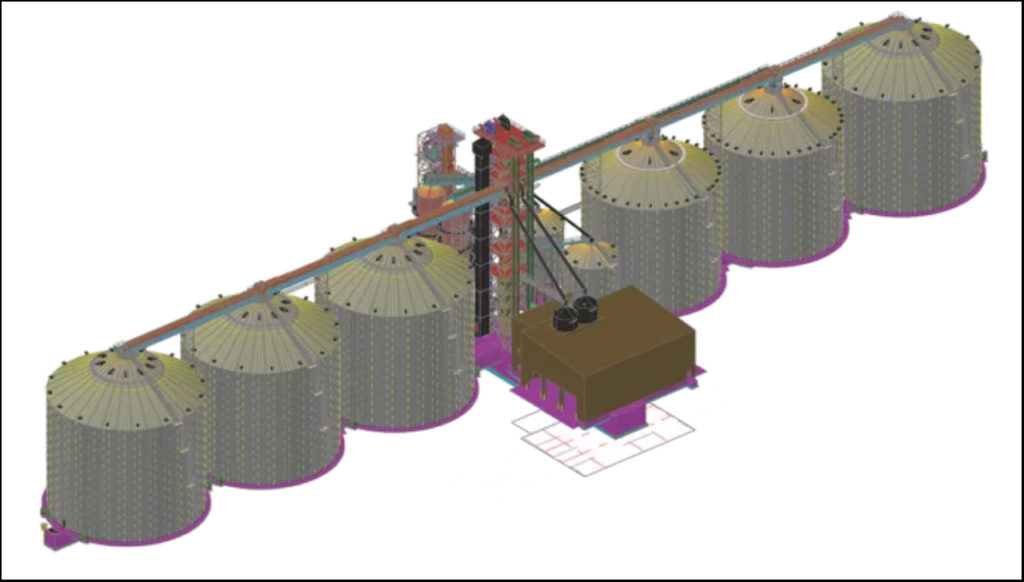
The new grain facility will include upright grain storage space for 3.9 million bushels serviced by two 4,700-bushel-per-hour grain dryers and three 1,500-bushel-capacity dump pits that will move grain at a combined handling speed of 60,000 bushels per hour. When complete, ALCIVIA will have three shuttle loading facilities on three different Class I railroads—BNSF, Union Pacific, CPKC—with access to the Mississippi and Illinois Rivers, and logistics to domestic corn ethanol plants and soybean crush plants, “positioning ALCIVIA with highly desirable domestic and export market access and arbitrage.”
Demolition is set to begin this month with groundbreaking scheduled for later this winter. The estimated project completion date is March 2025.
In addition, ALCIVIA has plans to build a 24-hour unattended two-bay loading terminal for liquid fertilizer, a dry fertilizer transload, rail liquid propane unload, and storage at this site.
Over the past three years, including the new investment in Hager City, ALCIVIA noted it “will have invested $86 million in capital, and an additional $9.5 million for five strategic acquisitions to strengthen core offerings and service the needs of current and future patrons. During that same period, ALCIVIA has returned more than $13 million in cash to their members.”
“It is our mission to advance our customers through innovative and responsible solutions,” said ALCIVIA CEO and President Jim Dell. “This new site will provide tremendous value to our members by offering state-of-the-art speed, space, and market access and utility.”
Ara Partners, a private equity and infrastructure firm specializing in industrial decarbonization investments, has acquired a majority interest in USD Clean Fuels LLC, a developer of renewable-fuels logistics infrastructure in North America. As part of the transaction, USDCF has also acquired the West Colton Rail Terminal, a fully operational biofuels terminal in California. Ara said it “has committed additional capital to support significant expansion of USDCF’s infrastructure footprint.”
Houston, Tex.-based USDCF “develops, owns and operates strategic infrastructure to facilitate safe, reliable and economic delivery of renewable fuel feedstocks and biofuels to production facilities and end-market demand centers,” Ara noted. “The USDCF team, led by CEO Dan Borgen and President Bob Copher, has a longstanding track record of developing, commercializing and operating midstream infrastructure across North America.”
“We have high conviction that the green molecules economy—whether it’s renewable fuel feedstocks or biofuels—offers disproportionate opportunity for returns and impact,” said George Yong, Partner and Co-Head of Infrastructure at Ara Partners. “The USDCF platform is particularly compelling because it combines a best-in-class management team with a portfolio of premiere terminal logistics projects that provide the ideal foundation for a durable and scalable infrastructure business.”
“We are excited to join forces with Ara Partners to bring critical infrastructure solutions to the rapidly growing North American renewable fuel market, beginning with the West Colton Rail Terminal,” said Borgen. “We are proud to be backed by an investor focused on enabling an accelerated and economical path to a low-carbon economy.”