RAILWAY AGE, MARCH 2026 ISSUE: Norfolk Southern and Watco provide prime examples of how railroads can attract manufacturing plants to their systems and grow business.
Manufacturing has always driven the North American economy—from motor vehicles to heavy machinery to home appliances and many other products. Rail-served manufacturing is on the rise, with business development efforts at Class I’s, regionals and short lines.
Railroad business development departments specialize in identifying potential new customers and working with them on establishing a plant location, which can potentially be an expensive proposition. Often, state or local economic development agencies are involved.
Railway Age contacted Norfolk Southern (NS) and Watco to find out how they are attracting manufacturing plants to their systems and the factors that come into play.
“Watco has several examples of success in the Industrial Development space,” Senior Vice President Sales and Marketing Zachary G. Boehme tells Railway Age. “This is an area of our business that we’re extremely proud of and see as a key component to growth.”
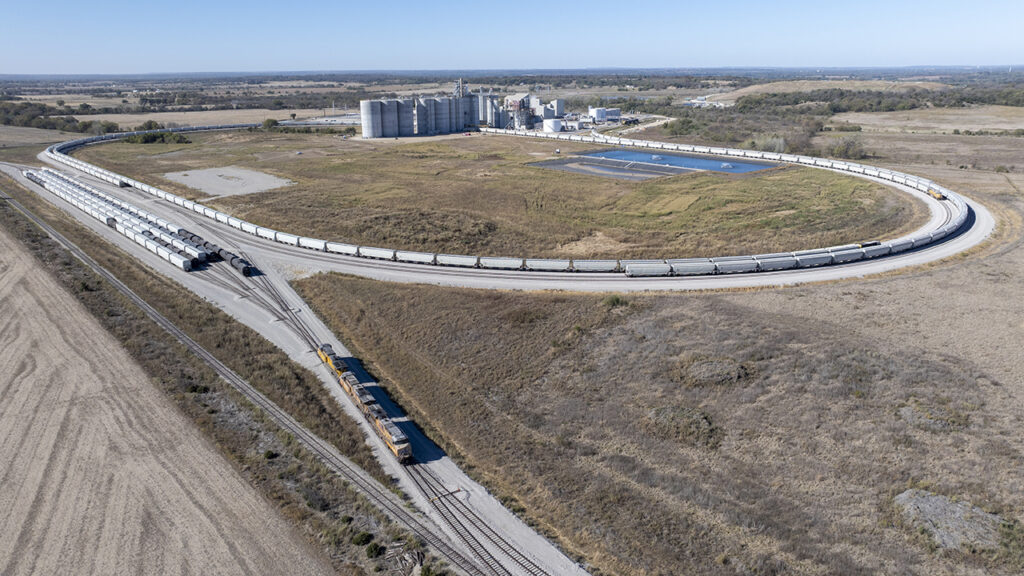
Bartlett, a Savage Company, in 2024, opened its newest soybean processing plant in Cherryvale, Kans. Served by Watco’s South Kansas & Oklahoma (SKOL), this facility, which is one of Watco’s largest Industrial Projects to date, is expected to handle up to 49 million bushels of soybeans annually.
Additionally, the Watco team worked alongside Charlotte Pipe and Foundry from site selection to design, build and rail service startup at its new facility in Maize, Kans. The new $80 million facility, served by Watco’s Kansas & Oklahoma Railroad (KORR), celebrated its grand opening in August 2025. The 175,000-square-foot plant houses several plastic extrusion lines to produce PVC pipe for plumbing and irrigation applications, with room for future expansion.
When advancing businesses development efforts, main line sidings, short spurs and in-plant industrial trackage can cost upwards of $1 million/mile, and the question of who pays for it often arises. Watco says it has approached this aspect from all angles and has “found success in each of them.”
“We do utilize all grant funding that is available/applicable to us and the customer. However, I think it’s important to highlight that Watco has invested more than $600 million in customer growth and expansion projects over the past 10 years,” Boehme notes.
Depending on the scope, long-term traffic potential and public benefit, rail infrastructure investments may be shared among the customer, NS and public‑sector partners, GVP Industrial Development Craig Hudson tells Railway Age. “Norfolk Southern’s Industrial Development team works with customers early in the site‑planning process to evaluate rail design, operating requirements and commercial arrangements tied to new or expanding rail‑served facilities,” he says. “Our team also coordinates with state, local and economic development partners to help identify potential funding or incentive opportunities where available, working with communities, economic development agencies and customers to support projects that qualify for public funding or incentives tied to job creation, private investment and infrastructure development.
“While funding availability and eligibility vary by project, location and program, rail‑served industrial development has supported billions of dollars in private investment across multiple states, demonstrating how public‑private collaboration can accelerate economic growth. In 2025 alone, NS customers advanced more than 60 rail‑served projects representing $7.7 billion in industry investment, often in partnership with local and regional stakeholders.”
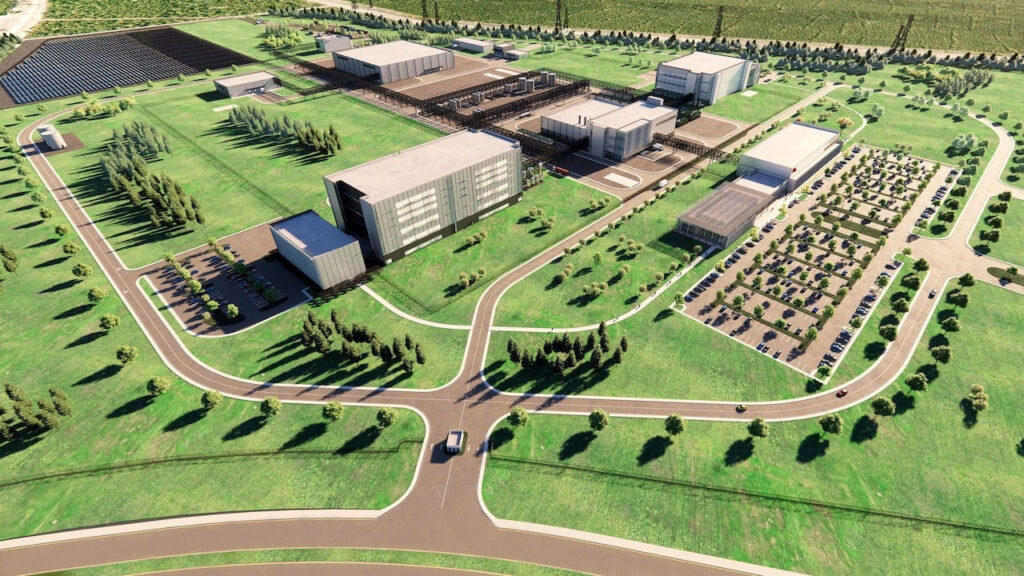
Some of NS’s successful industrial development partnerships include an NS-served site in Huntsville, Ala., which will be home to Eli Lilly’s $6 billion advanced manufacturing campus, “a landmark investment for the state’s bioscience sector and a major win for the region’s economy,” Hudson notes. Additionally, an NS-served REDI site in Orangeburg, S.C., will be home to SODECIA AAPICO JV’s new $120 million manufacturing facility serving joint customer Scout Motors.
When asked what the railroad’s expected ROI (return on investment) is with some of these partnerships, Boehme says Watco doesn’t utilize a one-size-fits-all approach for these types of projects: “Each project is nuanced and all vary widely in size and scale. Our focus is to ensure that we reach an agreement with our customers mutually beneficial to both parties, and that promotes a long-term relationship centered on mutual growth and value.”
According to Hudson, NS evaluates ROI through “long‑term, sustainable freight growth, network utilization and customer retention rather than short‑term gains.” Rail‑served industrial projects are designed to generate recurring rail traffic over decades. NS currently has a pipeline of more than 500 manufacturing projects in the site‑selection phase, positioning us for future growth with customers both current and prospective.
When it comes to how a railroad makes using its services attractive to the customer, Boehme says he believes that Watco “offers a superior value to its customers.”
“Speed to market, flexibility, multiple connectivity options to the larger North American rail network, and tailormade services for the customer are a few of the selling points that set us apart from other organizations in the space,” Boehme said. “Watco is unique in that in addition to our 48 railroads, we are one of the largest private terminal and port operators in North America and also have an expansive logistics business segment that allows us to build a complete supply chain solution for our customers.”
Watco notes it has served customers “safely and efficiently” since 1983. “We believe that walking alongside our customers in every aspect of their business will allow us to continue to grow well into the future,” says Boehme. “Having said that, we take the approach that we adapt our operating plans around our customers’ needs, not the other way around. We pride ourselves on listening to what our customers’ needs and pain points are and then developing solutions to exceed those needs.”
“Shipping with NS offers customers a strategic supply‑chain advantage, enabling shippers to move high‑volume or heavy commodities in a safe, sustainable and cost-effective way,” Hudson says. “Through our NSites platform, customers can access information on hundreds of development‑ready properties, customized track planning and end‑to‑end industrial development support. By shipping on rail, customers can improve efficiency and reach new markets with a transportation solution that supports long‑term growth.” In 2025, NS brought on projects that support industries ranging from automotive and metals to paper, aggregates and emerging biotech, “demonstrating rail’s flexibility across sectors.”
According to Hudson, NS integrates new customers through a structured industrial development and operations planning process that begins “well before the first railcar moves.” The railroad’s Industrial Development team, he adds, collaborates with customers on site design, rail access and operations needs “to ensure new facilities can be efficiently served within the existing network.”