
RAILWAY AGE JULY 2024 ISSUE: Visibility into North American rail shipments has improved significantly. Advanced technologies powered by Artificial Intelligence (AI, also called “Automated Intelligence”) and Machine Learning (ML) are being applied to the location, condition and status data generated by some 1.6 million railcars moving across the rail network every day.
A broad spectrum of rail shipments—from fast-moving intermodal to bulk commodities to individual carloads—all can be handled with greater safety, managed more efficiently and tracked with improved reliability. As a result, historical perceptions about rail shipping are no longer valid. Given the new realities, it’s time for shippers to determine if they are making the best use of rail to keep their supply chains competitive.
Perception #1: Rail shipment arrival times are unpredictable.
Reality: Real-time, single-source customizable dashboards and/or alerting systems are now supported by technology that processes data from thousands of wayside detectors and onboard GPS sensors. This technology intelligently analyzes the massive flow of railcar data combined with information about current network conditions and historical performance data. Supply chain performance is optimized with critical shipment status information as soon as it’s available, and ETAs are continuously updated if conditions change. As platforms powered by this technology develop additional data from real-world conditions and performance, they apply what is learned and continuously improve the accuracy and reliability of forecasts and real-time ETAs.
The railroad industry is also developing Advanced Visibility Solutions (AVS) that will provide even more granular rail shipment visibility data. AVS is envisioned as a platform that would consist of features including data ingestion from varied formats and multiple hardware vendors; data storage and normalization; data quality assurance; advanced analytics; and distribution of data via APIs, EDI, GPS data married with CLMs, or interactive dashboards.
Because many of these capabilities are already available from single-source platforms, it is possible to realize significant shipment visibility improvements today.
Perception #2: There are so many sources of rail shipment data that the information can’t be managed efficiently.
Reality: With 600-plus railroads, thousands of terminals and tens of thousands of truckers connecting globally dispersed shippers and receivers, it simply isn’t possible for your in-house system to collect and manage the data you need. And it isn’t necessary.
Now, broad-reaching technology platforms are available to analyze and present data and recommendations for rail shippers including:
- Real-time location visibility and alerting.
- Shipment billing.
- Demurrage management
and auditing. - Rates and routes.
- Custom dashboards and reports.
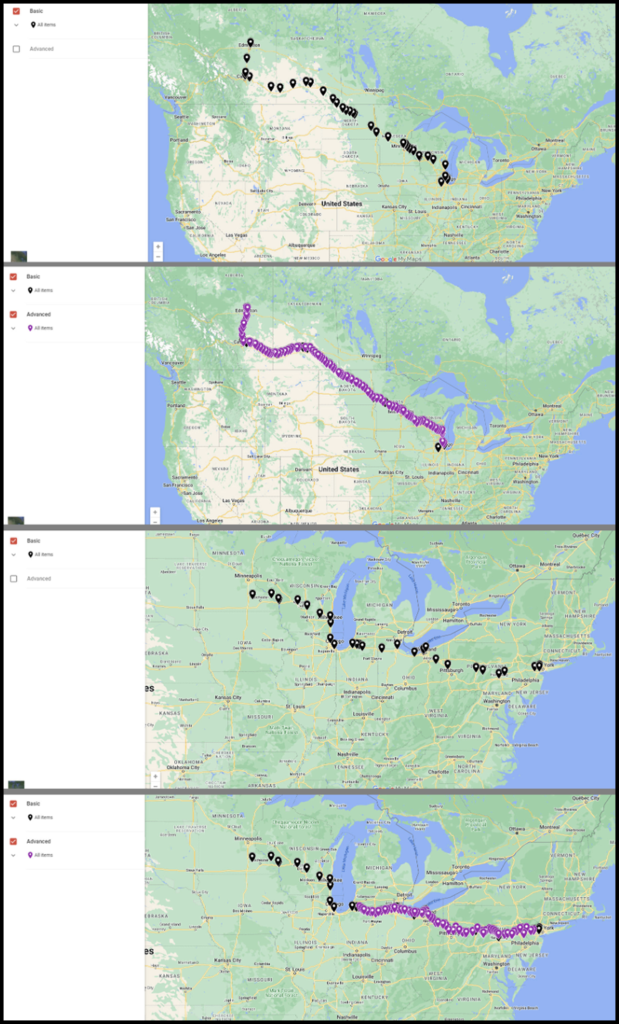
Just as important, today’s technology platforms are able to standardize virtually any data format. Look for a provider that goes even further with systems that are capable of immediately adapting as railroads develop new data and new data sources, as well as data from events happening in real time.
Human-communicated events, for example, are entered in railroad systems by train crews or clerks. A bad order railcar event could be marked by the crew during a pre-trip inspection. Other crew/clerk-entered events include pull, placement, interchange and bad orders that occur during a trip. Now, your supply chain can be updated with these events as they are reported, not hours later.
Sensitive shipment data is also handled securely by North America’s railroads. They have developed strict cybersecurity standards, including party-to-waybill authorization and supplemental checks for hazardous material shipments to ensure only the right people see the information.
PERCEPTION #3: The lack of reliable information about the status of inbound rail equipment makes it difficult to efficiently manage manufacturing and distribution operations.
Reality: Complex manufacturing operations and massive distribution centers have at least one thing in common: They must have full visibility into the flow of inbound parts, commodities and products to plan daily operations. Otherwise, they risk customer disappointment, spiraling costs and a degraded competitive position.
The same rail industry advances being used by shippers are also available to receivers who can now monitor inbound volumes to optimize labor, production equipment and floor space utilization as well as inventory management.
Now, rail shipment receivers can:
- Eliminate visibility gaps with real-time shipment data direct from industry sources, enabling immediate identification and resolution of issues.
- Improve inbound and outbound load tracing.
- Easily manage rail shipments using templates and built-in reports that don’t require years of rail shipping experience to understand, and that can be immediately implemented without training.
- Identify system railcars based on serving yard location and/or waybill city destination for better planning of pipeline and production.
Shippers awaiting empty inbound rail equipment to load for outbound shipment can experience similar positive results.
Perception #4: International container import drayage deliveries are prone to delay and extra expense.
Reality: Now, shippers can access:
- Estimated time of final arrival, the actual final arrival and the unload and notification data for pickup when containers have arrived at depots.
- Data for hold and storage events on containers.
- Platforms and dashboards providing advanced detention notifications for holds and fees.
- Data including last free day, pick-up number, estimated time of grounding, and estimated time of notification for parties on rail waybills.
Once containers are loaded aboard railcars, trackside Automated Equipment Identification (AEI) scanners read tags affixed to them. Railroads strategically place AEI scanners to ensure event coverage as railcars move throughout their trips. Each read identifies the place and time of the railcar event, and the same movement information is recorded for the railcar and container. This information is then transmitted to the respective railroad, turned into an “event,” stored in the railroad’s system and forwarded to relevant parties via the TRAIN-II message system or as a Car Location Message (CLM). The railcar and container association persists until the container is removed (or deramped) from the railcar at the destination intermodal facility.
Moreover, all this data from 600-plus North American railroads can be managed through new, single-source platforms, obviating the need for shippers and 3PLs to perform burdensome searches across multiple rail carrier websites.
PERCEPTION #5: Rail shipments are slow and unreliable.
Reality: Rail shipping’s greater efficiency can more than compensate for somewhat longer-than-truck transit times. By leveraging improved visibility technology to create reliable and predictable origin-to-destination schedules, supply chain operations can increase the percentage of rail used while maintaining high customer satisfaction at lower total costs and significantly reduced CO2 emissions.
Carloads, whether they are hoppers, tanks, boxes, gondolas, or flat cars, are the single most important driver of railroad business. That’s why railroads-—particularly regional and short line operators—are investing in technologies to attract new business in this sector.
Shippers are finding they can improve and increase their use of rail when they have real-time, actionable reporting to achieve key supply chain goals including:
- Easy identification of problem railcars and shipment exceptions.
- Improved operations planning and fleet optimization.
- A birds-eye view of the entire shipment lifecycle.
- Reduced blind spots and unexpected delays.
- Easy railcar, shipment and container tracking.
- Customized reporting and insights.
PERCEPTION #6: Rail shipping can be effectively used only for very large volumes.
Reality: With the right technology providers, 3PLs, transload services and nimble short line railroads, even the occasional single-railcar shipment can be handled efficiently and reliably. With enhanced visibility tools, it’s possible to create a seamless view across the multiple parties often necessary to implement rail shipping, and that previously could create visibility gaps.
Instead of going through the tedious process of accessing different systems, websites and spreadsheets to facilitate shipping, technology platforms have been designed to handle all of a shipper’s freight rail needs under one roof. Customizable interfaces allow users to prioritize the features they need to see at a glance, which creates a much more seamless experience than constantly changing tabs and programs to access necessary data.
With the user experience at the forefront, every shipper can access insights to help them compete in the marketplace.
PERCEPTION #7: This all sounds great, but it’s too disruptive to convert from truck to rail.
Reality: If the transition is handled properly—taking small steps at first—the conversion from truck to rail can be accomplished without disruption, and faster than might be expected.
By working with experienced technology partners, new rail shippers can start with a few test moves and become familiar with the performance of dashboards and alert systems. As experience is gained, the use of rail can be expanded one corridor at a time to gain further experience and to develop internal buy-in across the enterprise, from loading dock to C-Suite. For example, even new-to-rail shippers can initiate shipments simply by creating a Bill of Lading (BOL).
Behind the scenes, railroads operate on complex terminology, systems and location information, using Standard Point Location Codes (SPLCs) to specify station locations. Previously, when creating a BOL, shippers had to figure out the exact SPLC of their shipping location, which was time consuming. Now, customers simply type in the standard type of address they are used to. Deploying embedded rail industry knowledge, the system fills in the SPLC automatically. This is one of many examples of how technology platforms are leveraging embedded rail knowledge and user-experience design to make things simpler for shippers.
As the safety, economic and sustainability advantages are realized, rail logistics will more and more become an integral part of supply chain operations. The sooner shippers get started, the sooner they will achieve more efficient operations while keeping customers happy.
About TransmetriQ: TransmetriQ is a group of Railinc transportation experts, product managers, UX designers, software developers, data scientists and critical thinkers developing insights and solutions that help customers build businesses that compete and win. Our teams work to improve our current products and develop the next generation of business-oriented transportation solutions. Visit us at www.transmetriq.com.




