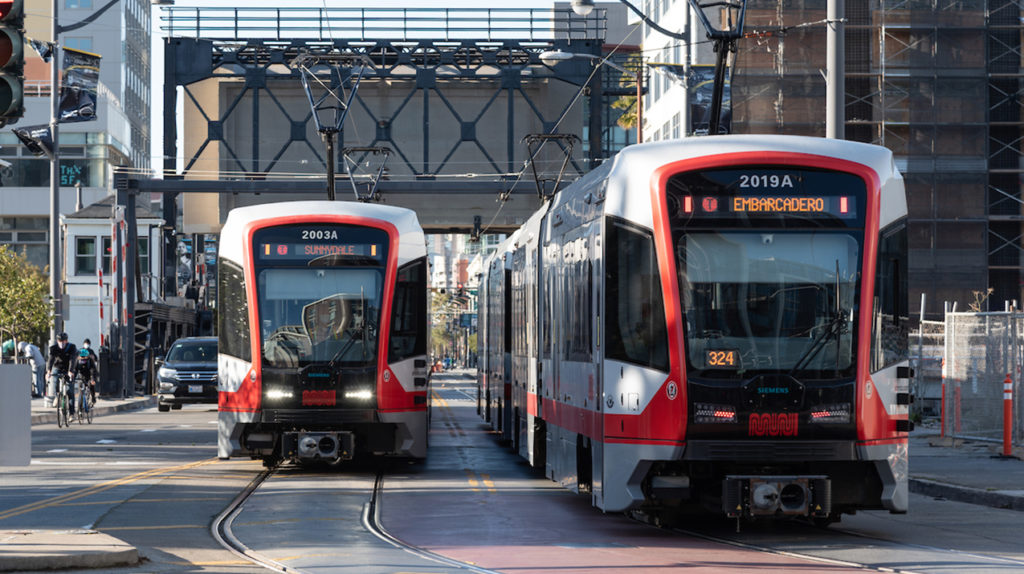
In 1998, the SFMTA (San Francisco Municipal Transportation Agency) Muni Metro was the first U.S. rail transit system to place CBTC (communications-based train control) in revenue service. Also known as TBTC (transmission-based train control), Muni’s ATCS (Automatic Train Control System), which employed a version of Alcatel’s SelTrac™ inductive-loop technology, was installed in the subway portion of its light rail network. Muni’s Train Control Upgrade Project (TCUP) “will replace the current train control system in the subway and extend the modern system to street-level Metro operation for faster, more reliable service.”
Hitachi Rail, which recently acquired the signaling and train control business of Thales—which years ago acquired Alcatel’s signaling and train control assets—has been awarded contract by SFMTA to install SelTrac™ CBTC across the entire 71-mile, 33-station Muni Metro network. Hitachi Rail will expand the train control system to the network’s surface portions, providing a single system for surface and subway areas to regulate the flow of vehicles throughout the entire system. The contract will also include a 10-year-long-term service support agreement for ongoing support and maintenance with an Option for 10 additional years. TCUP is expected to finish in 2032.
The Muni network “is a unique transit system that features heritage vehicles, including cable cars, streetcars and light rail, operating at street level and through underground subway connections,” the agency noted. “TCUP will modernize the train control technology across the entire fleet, including for these historic vehicles [except for cable cars].”
“Modernizing the Muni network of light rail Metro trains and historic streetcars with an industry leading signaling technology is an important step for the city of San Francisco,” said Ziad Rizk, Director of Urban Rail Signaling, Hitachi Rail. ”We look forward to expanding our long-standing partnership with the SFMTA by delivering our SelTrac™ CBTC technology to enhance mobility, sustainability, and passenger experience. Hitachi Rail has a 25-plus-year,-long standing partnership with SFMTA, deploying technology for Market Street and Central Subway lines.” Thaty relationship dates back to Alcatel and Thales.
“We’re eager to start our next-generation partnership with Hitachi Rail,” said SFMTA Acting Director of Transportation Julie Kirshbaum. “Hitachi Rail’s product is the most technologically advanced we have seen. A major strength of their proposal was their thoughtful approach to applying their technology to San Francisco’s unique challenges. Hitachi Rail will help the SFMTA deliver a project that improves daily rail service by improving Muni Metro reliability citywide.”
Background
Muni in June 2024 described TCUP as “a critical, once-in-a-generation investment to modernize and grow Muni Metro for decades to come. TCUP aims to replace the outdated system that controls our light rail vehicles in our subways and on surface rail with a new, state-of-the-art system.”
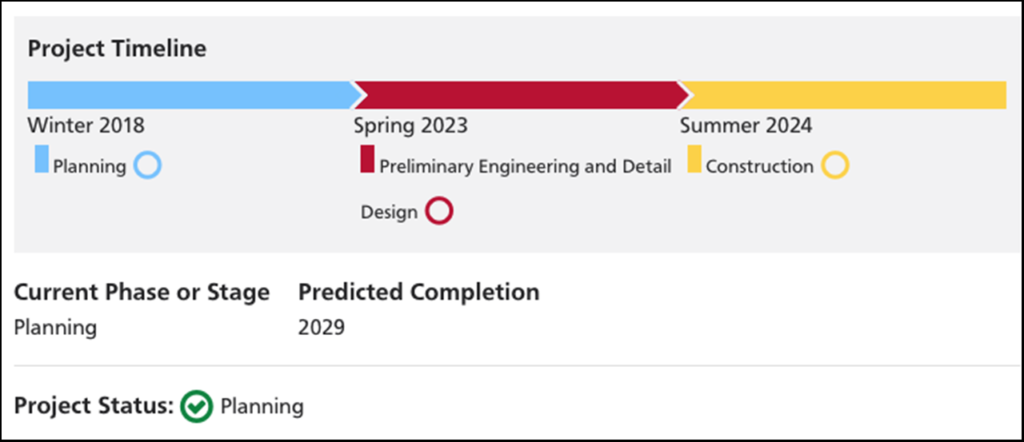
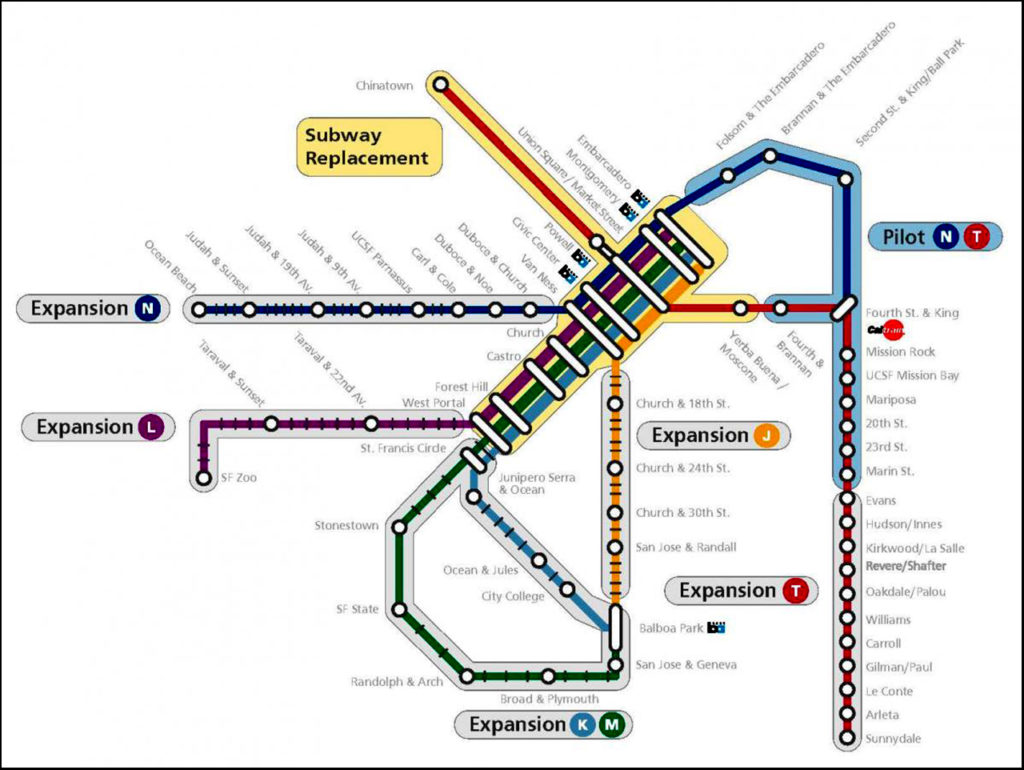
TCUP is projected to be completed in three phases. Phase 1 would pilot a new CBTC system at surface level along the Embarcadero and Third Street corridors, which serve high-traffic destinations such as Oracle Park, Chase Center, Mission Bay and UCSF, and install CBTC in the subway parallel with ATCS. Phase 2 would complete the transition in the Market Street subway from ATCS to CBTC. Phase 3 would expand CBTC to the surface branches of the J Church, K Ingleside, L Taraval, M Ocean View, N Judah and T Third lines. Muni said it was “on track to start building out the pilot phase of the new system by 2025.”
Muni said transitioning to CBTC system-wide is “critical,” for example, noting that ATCS was installed in the Market Street subway in 1998 and “still runs on floppy disks. This system was designed to last 20 to 25 years. Some of its parts are no longer available.” The agency cites CBTC’s well-established benefits, among them improved capacity and throughput, and continuous real-time train-to-train and train-to-wayside communications to “keep trains evenly spaced to prevent bunching and gaps for more consistent wait times and travel times that match the advertised frequency and make trip planning [for passengers] more reliable.“ Muni also cites that CBTC will “automatically push software updates to keep the system current—no more floppy disks!”
CBTC, Muni noted, is expected to reduce Metro delays by 20-25% “on top of the reductions we’ve already achieved. In turn, this will allow us to run more trains through the whole Metro network, making travel faster and more efficient. Customers will no longer be ‘stuck‘ on trains between stations due to subway congestion or slow-moving trains with a communication failure.”
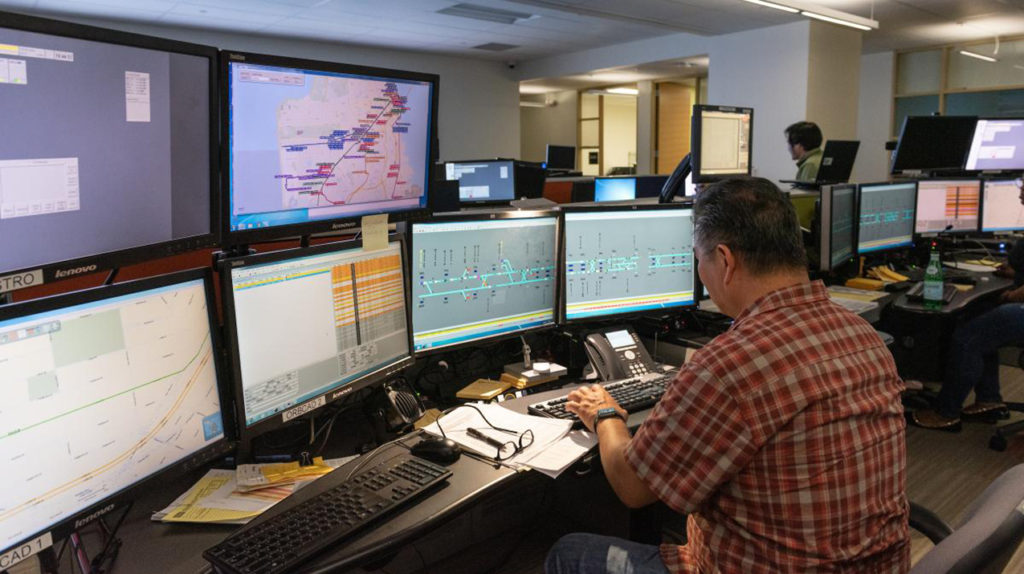
Muni said that CBTC “uses Wi-Fi or cellular connections to precisely track and continually communicate with every LRV in service.” It will function like ATCS and use automatic headway management to adjust train speed and dwell time of trains. For surface operations, CBTC ”will communicate adjustments to Muni Metro operators. who will remain in control of the train. While GPS is currently used to track vehicles on the surface, CBTC telecommunications technology is more accurate and more directly accessible to staff in our Transit Management Center (TMC). CBTC would also allow Muni Metro trains to take advantage of transit priority signals, improving Metro travel times and reliability. Currently, a separate Vehicle Tagging System (VETAG) detects trains above ground and communicates to the nearby traffic signal to request priority for the train to pass while holding other traffic with a red light. However, this technology is also outdated and ineffective.“
Under ATCS, “it can be difficult to switch trains back in the event of delays and prevent vehicles from bunching up,” Muni noted. CBTC will enable “less bunching and fewer gaps and delays both in the subway and on surface rail.” It will also provide “fewer delays entering and exiting subway portals.” Currently, surface operations are manual, and trains have to connect to ATCS at the subway portal before entering the subway, “which causes train delays.” If initialization fails, which Muni says “is common,” the train has to move at restricted speed. Following trains are slowed and ”held back for safety, causing further delays.” With CBTC, trains will be connected to the control system at all times. On top of that, ATCS restricts trains length to two cars. CBTC will enable Muni to operate LRV consists longer than two cars
Environmental Benefits
“For almost 85 years, Muni has continuously operated a network of vehicles, including LRVs, that run on 100% greenhouse-gas-free Hetch Hetchy hydroelectric power,” SFMTA noted. “Our LRV fleet played a key role in reaching the San Francisco Climate Action Strategy goals in 2017. Upgrading the Muni Metro train control system from ATCS to CBTC will help the City meet future environmental goals by allowing the SFMTA to expand sustainable light rail transit for a growing ridership on the greenest transportation system in North America. TCUP is in line with the City’s voter-approved Transit-First Policy established in 1973. The policy prioritizes public transit, bicycling, and walking on San Francisco streets as an economically and environmentally preferable alternative to transportation by individual automobiles.Æ