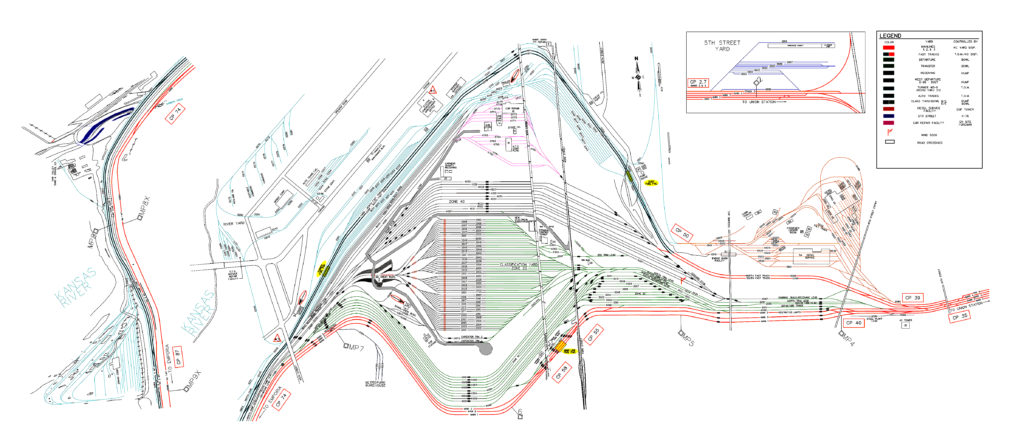
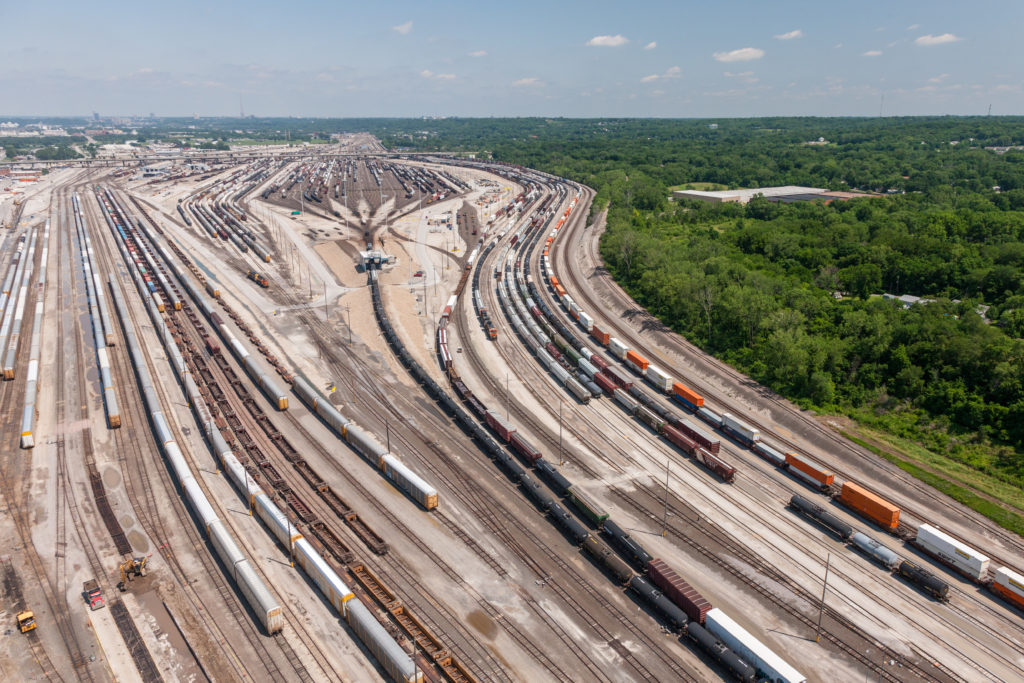
After Chicago, the Kansas City region is the second-busiest railroad hub in the U.S. BNSF Railway’s 780-acre Argentine Yard in Kansas City is the largest classification yard on the Class I railroad’s 32,500-mile network for merchandise traffic. Freight cars carrying everything from chemicals, plastics and construction products to paper, lumber, food and beverages bound for multiple destinations are separated and re-sorted into new trains.
The Atchison, Topeka, & Santa Fe Railway built Argentine Yard (named after the local community) as a flat-switching operation when the railroad came to the area in 1875. For generations, it has been one of the major employers in the area. By 1890, the yard had expanded to 27-plus miles of classification tracks. In 1949, Santa Fe opened its first gravity classification or “hump” yard there. Over the years, more tracks, buildings and locomotive servicing facilities were added.
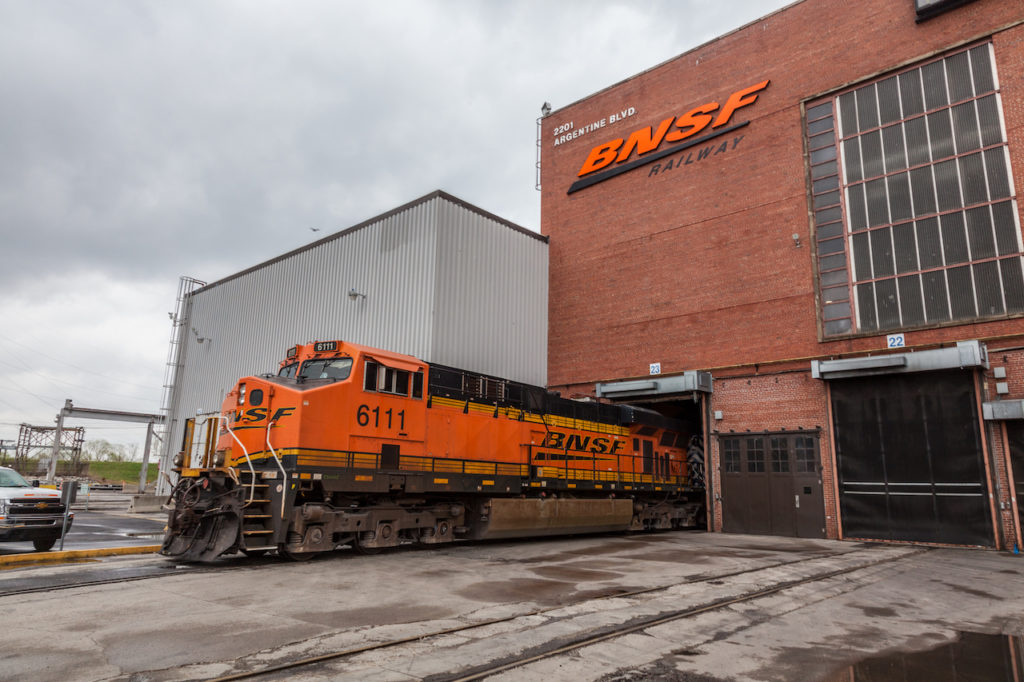
Following the 1995 merger of the Burlington Northern and Santa Fe railroads that created BNSF, Argentine Yard was again significantly and strategically expanded, as it is a midpoint on the Southern Transcon connecting the ports of southern California with Chicago and points beyond. Today, more than 2,100 railcars arrive and depart Argentine Yard every day. There’s also an intermodal terminal, division offices, and a locomotive maintenance and inspection shop (above).
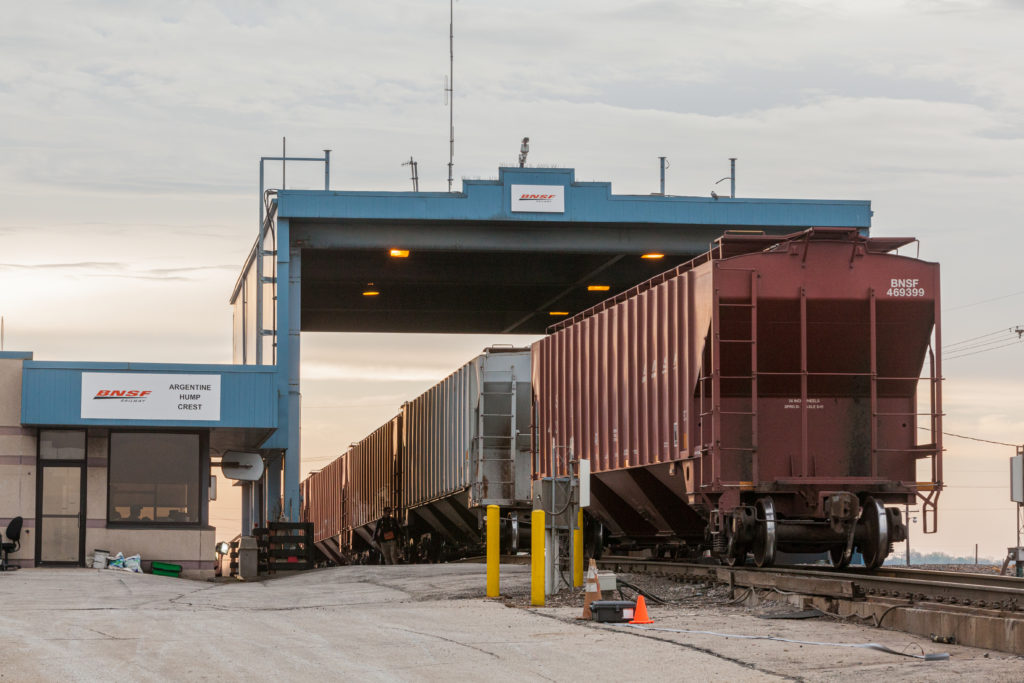
In June, the railroad accomplished a major overhaul at Argentine Yard in just 48 hours. More than 150 BNSF employees completed a long list of improvements. Major tasks included:
- Replacing the yard’s master retarder.
- Replacing the main hump yard “king” switch used to direct freight cars as they come off the hump into tracks where new trains are being built.
- Installing new cameras, an upgraded signal system and more than 13,000 feet of new rail across 60 classification tracks.
- Repairing damaged walkways.
- Testing all equipment before resuming service.
BNSF utilizes many technologies at Argentine, among them an NX traffic control system that allows a control operator to line switches for trains so they can navigate the yard and expedite movements. NX stands for “Entrance and Exit,” a train routing and interlocking technology that has been used for generations on railroads ranging from freight to rapid transit. “BNSF designed and developed an internal NX system as opposed to buying a commercially available system, providing ease in integration to our many different back-office environments,” BNSF General Manager, Kansas Division Michael Frisinger tells Railway Age.
NX is similar to a main line dispatching system, providing routing, protection, switch lists and other yard functions, supporting operational efficiency and safety. “BNSF’s NX system was designed to leverage our internal data centers and networks,” adds Frisinger. “In addition, it leverages a BNSF designed edge-based controller allowing the use of standard industry switching components, such as turnouts, derails, track circuits and indicators.”
BNSF also utilizes TPC (Terminal Process Control), an internally developed proprietary yard automation software platform that classifies inbound cars based on the train blocks in which they belong as outbound trains are built.
“TPC utilizes AEI (Automatic Equipment Identification) and scales to automatically identify car parameters,” says Frisinger. “It then loads the train manifest and verifies the parameters as the car traverses the apex of the hump. Upon cresting the hump, a route is lined to a destination track and the car is detached and allowed to roll to that track. Retarders are used to manipulate the car velocity to ensure proper coupling speed. We have recently implemented a track utilization tool that automates which train blocks get built in each track based on how many cars are going to that block on a particular day. Prior to this innovation, this process was completed manually.”
According to BNSF, NX and TPC boost network fluidity and reduce train and railcar dwell time, improving service as the Class I processes more cars daily.